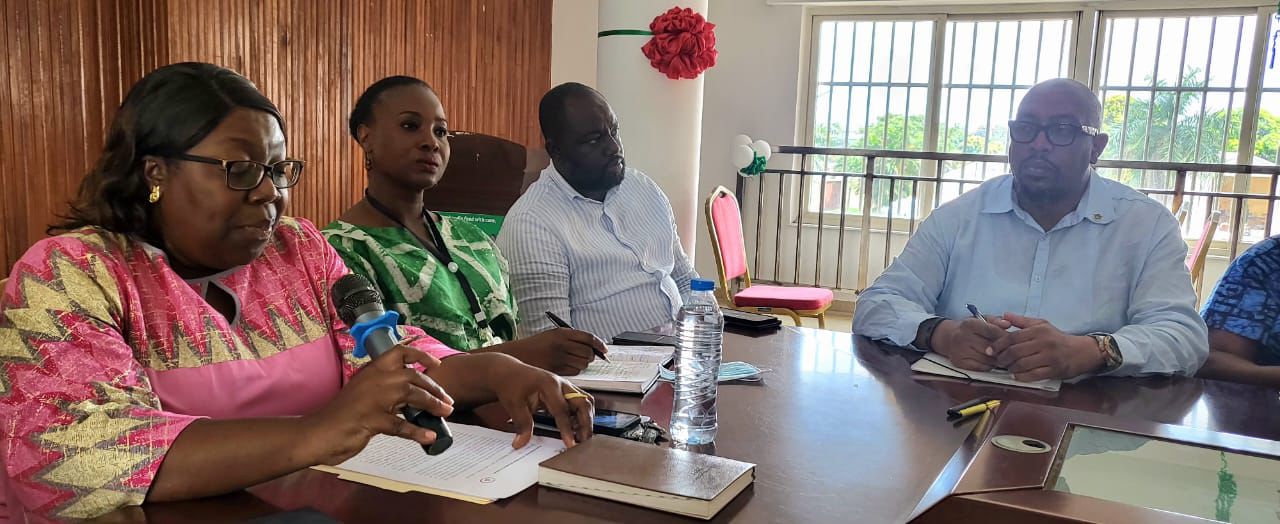
MONROVIA — The Ministry of Health of Liberia has announced new measures to intensify the national response against the ongoing Mpox outbreak as the number of cases continues to rise across the country.
By Selma Lomax [email protected]
In its latest situation update released on November 7, 2025, and signed by Chief Medical Officer Dr. Catherine T. Cooper, the Ministry reported that the virus remains active in several counties despite significant progress in surveillance, case management, and community recovery.
According to the statement, Liberia has recorded a total of 2,447 suspected Mpox cases since the outbreak began in September 2024. Of these, 2,309 samples have been tested, and 1,308 have been confirmed positive, representing a cumulative positivity rate of 56.6 percent.
The Ministry disclosed that cases have been detected in 65 out of the country’s 98 health districts, showing widespread community transmission across all fifteen counties.
The latest figures also show that 148 active cases are currently under monitoring and receiving treatment in infectious disease hospitals, isolation centers, and home-based care facilities. Montserrado County remains the epicenter of the outbreak, accounting for 57 percent of all active cases, particularly in the Bushrod, Commonwealth, Central Monrovia, and Somalia Drive areas.
Nimba County follows with 18 percent of cases, mainly in Sanniquellie Mah, Bain Garr, and Zoe Geh districts. Margibi County has recorded 7 percent of cases in Firestone and Kakata, Grand Bassa has 5 percent in Buchanan and District 4, and Grand Kru accounts for 4 percent in Trehn, Barclayville, and Jroah. The remaining counties report 2 percent or less of total active cases.
Recovery efforts, the Ministry said, have yielded positive results, with 1,154 patients fully recovered following treatment and medical follow-up. However, six deaths have been confirmed, representing a case fatality rate of 0.5 percent.
The Ministry stated that the low fatality rate reflects the effectiveness of the government’s ongoing efforts in clinical care, surveillance, and community awareness, but emphasized that the continued appearance of new cases highlights the need for sustained vigilance and cooperation.
To address the growing number of infections, the Ministry of Health, working in collaboration with the National Public Health Institute of Liberia (NPHIL) and partner agencies, has launched a new 90-day national response strategy. The plan focuses on aggressive case detection, improved treatment capacity, and enhanced public education to curb transmission.
The Ministry said it will strengthen surveillance through active case finding and ensure that all confirmed cases are placed under proper medical care, whether at home or in designated treatment facilities.
Dr. Cooper stated that services at the Liberia Center for Infectious Disease Hospital will be expanded through the provision of additional medical supplies, laboratory equipment, and diagnostic tools. Frontline healthcare workers will undergo refresher training on Mpox management, focusing on the treatment of complications and the use of standardized clinical guidelines.
As part of the new strategy, the Ministry will also intensify risk communication and community engagement by working closely with local and market leaders, youth organizations, and community health volunteers. These efforts aim to promote early reporting, encourage safe hygiene practices such as regular handwashing, and increase public understanding of how Mpox is transmitted, particularly through close physical and sexual contact.
The Ministry announced that a preventive ring vaccination campaign will be launched in Montserrado and other identified hotspots as part of a broader nationwide vaccination effort. Awareness and sensitization activities are expected to begin in November 2025, followed by the official start of vaccination in early December 2025. The campaign, which will run through February 2026, targets individuals aged 18 years and above in all counties.
Liberia recently received a shipment of 42,720 doses of Mpox vaccines in September 2025, donated by a global consortium that includes the United States Centers for Disease Control and Prevention (US CDC), Africa CDC, GAVI, UNICEF, and the Coalition for Epidemic Preparedness Innovations (CEPI). The vaccines will be prioritized for high-risk populations and communities where the virus is most active.
The Ministry has also reactivated daily Incident Management System meetings to coordinate the national response and address emerging operational challenges. These meetings will focus on securing logistics such as fuel, cold chain maintenance, and supplies needed for vaccine deployment. Weekly infection prevention audits will be conducted in healthcare facilities to ensure zero exposure among health workers.
The Ministry’s goals for the period between November 2025 and January 2026 include detecting and investigating at least 90 percent of suspected Mpox cases within 24 to 48 hours nationwide, ensuring all collected samples are tested and results provided within 48 hours, and achieving zero preventable Mpox-related deaths.

It also aims to administer all 42,720 vaccine doses to high-risk populations by the end of January 2026, while ensuring that awareness campaigns reach at least 80 percent of the population, particularly in Montserrado, Nimba, Margibi, and Grand Bassa counties.
In addition, the Ministry plans to reduce the national Mpox positivity rate and sustain low levels of transmission within the next three months through improved case detection, strengthened healthcare capacity, and continuous community outreach.
Dr. Cooper emphasized that Liberia is at a critical juncture in its response to Mpox and that collective action is required to prevent further spread. She warned that without bold and coordinated interventions, the outbreak could escalate, posing serious risks to lives, the healthcare system, and the country’s economy.
She called on all Liberians, including community leaders, civil society groups, and the media, to actively participate in the awareness and vaccination campaigns to help bring the situation under control.
The Ministry of Health reaffirmed its commitment to working closely with national and international partners to maintain transparency and sustain an effective response. It assured the public that all necessary measures are being taken to protect communities and ensure the country moves toward ending Mpox transmission.
Support Independent Journalism
Your support helps FrontPage Africa continue delivering independent, credible, and impactful journalism. Every contribution strengthens our ability to investigate, inform, and hold power accountable while keeping quality journalism accessible to our readers.
Support our journalism or subscribe to receive the latest FrontPage Africa stories and updates.