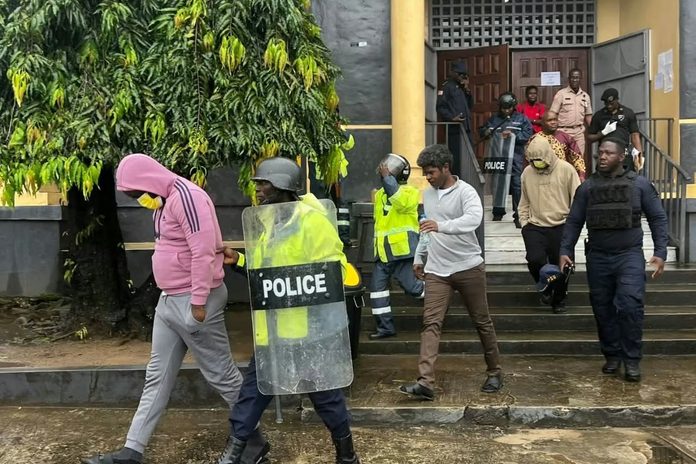
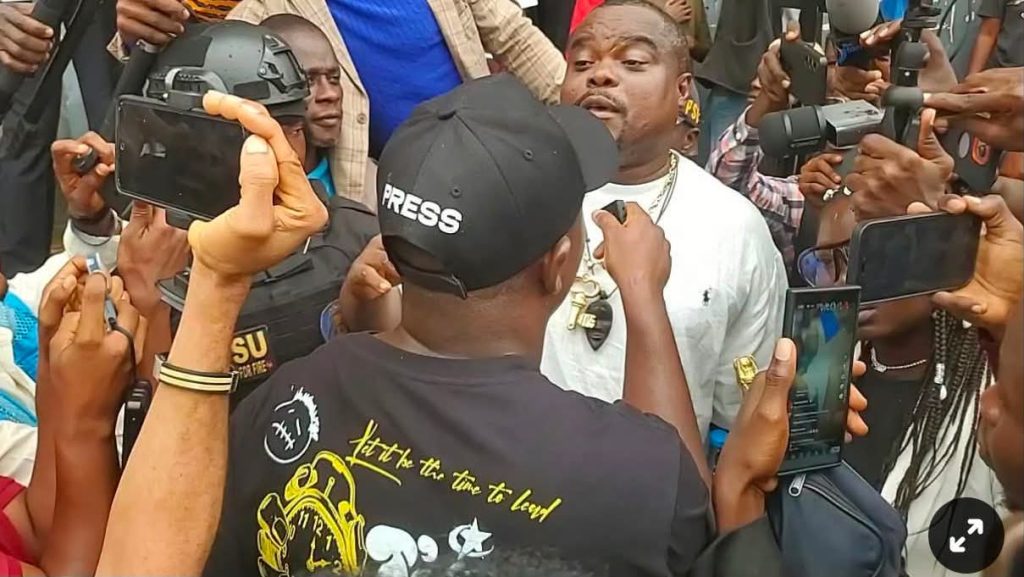
MONROVIA — Justin Oldpa Yeazehn, popularly known as “Prophet Key,” has regained his freedom after spending six months at the Monrovia Central Prison following a contempt conviction by the Supreme Court of Liberia.
By Webster Clayeh
Upon his release, Prophet Key said his time behind bars had changed him, describing the experience as a period of rehabilitation and personal transformation.
He also indicated that he had been relocated following his release, suggesting that his return to society would be accompanied by a deliberate effort to distance himself from some of the circumstances and conduct that preceded his imprisonment.
His release brings to an end one of the most closely followed contempt cases involving a Liberian social media personality in recent years. The case attracted widespread public attention after the Supreme Court took action against Yeazehn over statements made against Chief Justice Yamie Quiqui Gbeisay, members of the judiciary and the Chief Justice’s mother.
The Supreme Court sentenced Yeazehn on February 13, 2026, after he appeared before the Full Bench and admitted wrongdoing while appealing to the justices for mercy.
The Court found his conduct contemptuous and damaging to the dignity and authority of the judiciary. Its official record says the proceedings arose from a podcast in which Yeazehn accused the Chief Justice and Associate Justices of corruption and directed derogatory and vulgar remarks at the judiciary.
The sentence was not limited to imprisonment. The Court also ordered Prophet Key to publish an apology in three local newspapers for five consecutive days and to execute a bond committing himself to refrain from the kind of insulting and inflammatory language that had brought him before the Court.
Reports on the judgment said the apology was directed to the Chief Justice, Associate Justices, judges, magistrates and the judiciary generally, as well as Liberian women whom he had previously insulted.
In the months that followed, the controversial social media personality appeared to move from confrontation to contrition. A handwritten apology dated July 28 surfaced publicly in early August, in which he expressed regret for accusing members of the judiciary of corruption without proof. He also apologized to Liberian women for his offensive remarks and pledged not to repeat such conduct.
That apology became an important part of the public narrative surrounding his anticipated release. While supporters focused on the expiration of the six-month custodial sentence, questions emerged over whether every requirement attached to the Supreme Court’s judgment had been satisfied and whether the prison authorities had received the necessary legal authorization to release him.
Although August 13 had widely been identified as the date on which Prophet Key would complete his six-month sentence, he did not walk out of the Monrovia Central Prison that day.
The delay was linked to the fact that his imprisonment originated directly from an order of the Supreme Court. Current reports indicate that the prison authorities were awaiting a formal release order from the Court before they could discharge him. In other words, the expiration of the custodial period did not, by itself, result in an immediate physical release because the institution holding him required the appropriate judicial authorization.
That distinction became the center of public debate on August 13, with supporters gathering around the prison expecting his release while the necessary documentation had apparently not yet reached the correctional authorities. Reports later indicated that the Supreme Court issued the release order on August 14, clearing the way for his departure from custody.
Support Independent Journalism
Your support helps FrontPage Africa continue delivering independent, credible, and impactful journalism. Every contribution strengthens our ability to investigate, inform, and hold power accountable while keeping quality journalism accessible to our readers.
Support our journalism or subscribe to receive the latest FrontPage Africa stories and updates.