MONROVIA – The National Elections Commission (NEC) has concluded the final phase of its nationwide stakeholder consultations on a draft Communications Strategy, Policy and Protocol, describing the exercise as a major step toward strengthening transparency, accountability and public confidence in Liberia’s electoral process.
The two-day consultation, held in Monrovia on July 2, brought together approximately 30 participants, including journalists from major media institutions in Montserrado County, senior staff of the NEC Secretariat and representatives of media development organizations. The meeting focused on reviewing and validating the draft communication framework before its formal adoption and implementation.
The consultation marked the conclusion of a broader nationwide engagement process that previously included similar regional meetings in Ganta and Buchanan. Throughout the consultations, participants examined ways to improve the Commission’s communication systems and ensure that electoral information is delivered accurately, consistently and in a timely manner.
The exercise was organized by the NEC in collaboration with the United Nations Development Programme (UNDP) through the Liberia Electoral Support Project, with financial support from the European Union, Ireland and Sweden. Organizers said the consultations were intended to provide a platform for constructive dialogue among election administrators, journalists, civil society organizations and development partners on improving electoral communication across Liberia.
Speaking on behalf of NEC Chairperson Jonathan K. Weedor and the Board of Commissioners, Commissioner Ernestine Morgan Awar said effective communication remains one of the most important pillars of credible and peaceful elections.
She emphasized that the Commission is committed to improving its communication systems in order to promote greater transparency, strengthen institutional accountability and increase public confidence in electoral processes.
“The NEC recognizes that effective communication is indispensable to the successful administration of credible, inclusive and peaceful elections. Through timely, accurate and consistent communication, we build public confidence, combat misinformation and disinformation, and ensure that citizens remain informed throughout the electoral process,” Commissioner Awar said.
She described the media as one of the Commission’s most important partners and noted that the NEC is modernizing its communication mechanisms to respond to evolving technologies, changing public expectations and the increasing influence of digital platforms on public discourse.
According to Commissioner Awar, recommendations generated during the consultation will help shape a communication framework that promotes stronger institutional coordination, improves stakeholder engagement and further reinforces public trust in the electoral management body.
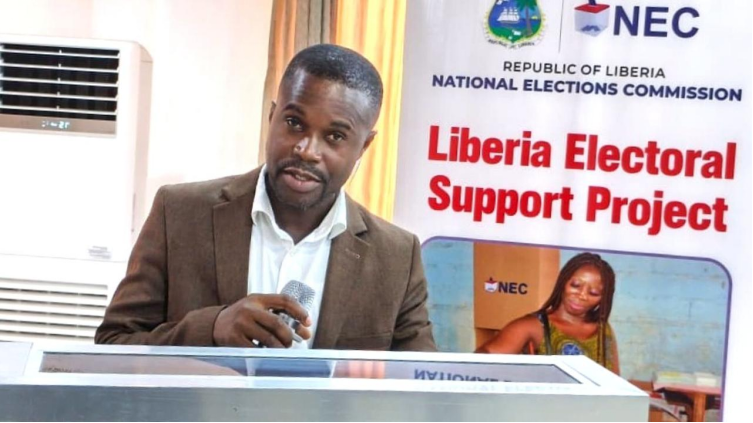
Representing the Liberia Electoral Support Project, Roosevelt Zayzay reaffirmed the project’s continued commitment to supporting the NEC’s institutional development, particularly in the area of strategic communication.
He noted that support for strengthening the Commission’s communication capacity began before the 2023 Presidential and Legislative Elections and remains an important component of ongoing electoral reforms.
According to Zayzay, the proposed Communications Strategy, Policy and Protocol are designed to help the NEC communicate more proactively and consistently with the Liberian public while improving stakeholder engagement and public access to election-related information.
“The draft Communications Strategy, Policy and Protocol are not merely documents but institutional tools that will help the NEC communicate more proactively and consistently, strengthen stakeholder engagement, improve public access to electoral information, enhance crisis communication and information management, combat misinformation and disinformation, and build public trust in Liberia’s electoral processes,” Zayzay stated.
He encouraged participants to carefully review the draft documents, identify any remaining gaps and propose practical recommendations that would strengthen implementation once the strategy is officially adopted.
Also addressing the consultation, Press Union of Liberia President Julius Kanubah praised the NEC for adopting an inclusive consultation process that brought together journalists, election officials and other stakeholders from different parts of the country.
Kanubah stressed that safeguarding the integrity of elections requires collaboration among all institutions involved in the electoral process.
“The integrity of elections is a shared responsibility of all actors in the electoral process. While the NEC bears the primary responsibility as the electoral management body, achieving credible elections requires meaningful engagement with the media,” he said.
He urged journalists to continue adhering to the highest standards of professionalism by promoting fairness, accuracy, impartiality and responsible reporting throughout electoral processes.
Kanubah also encouraged the NEC to maintain continuous engagement with the media beyond election periods by expanding collaboration on civic education and voter awareness programs across the country.
Participants at the consultation proposed several recommendations aimed at strengthening the Commission’s communication systems. Among the proposals were expanding partnerships with community media institutions, establishing a dedicated election coverage network, improving communication between NEC headquarters and county offices, strengthening civic and voter education campaigns and ensuring that all communication materials remain accessible and inclusive for every segment of the population.
NEC officials said the recommendations gathered from consultations held in Ganta, Buchanan and Monrovia will now be incorporated into the final version of the Communications Strategy, Policy and Protocol.
Following the completion of the consultation process, the Commission is expected to finalize the documents and develop a comprehensive implementation plan to guide their execution as part of broader efforts to strengthen electoral governance and public engagement in Liberia.
The Liberia Electoral Support Project continues to assist national institutions in promoting transparent, inclusive and accountable democratic governance. The project is managed by the United Nations Development Programme in partnership with UN Women, the Netherlands Institute for Multiparty Democracy and the National Elections Commission, with financial support from the European Union, Ireland and Sweden.
Support Independent Journalism
Your support helps FrontPage Africa continue delivering independent, credible, and impactful journalism. Every contribution strengthens our ability to investigate, inform, and hold power accountable while keeping quality journalism accessible to our readers.
Support our journalism or subscribe to receive the latest FrontPage Africa stories and updates.