CAPITOL HILL, Monrovia – The Minister of State for Presidential Affairs-designate, Samuel Stevquoah, has named the completion of renovation works on the long-incomplete Executive Mansion as his top priority when confirmed by the Liberian Senate.
By Obediah Johnson
Stevquoah was nominated to the position by President Joseph Nyuma Boakai following the passing of former Minister of State Sylvester Grigsby.
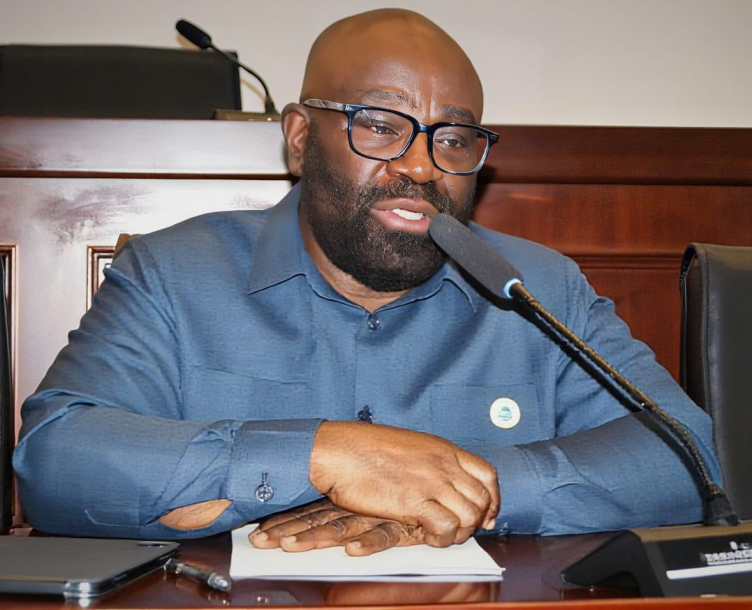
Appearing before the Senate Committee on Executive for confirmation on Wednesday, October 22, Stevquoah described the Executive Mansion as a symbol of strength and unity for Liberia and its people, lamenting that the historic edifice has not been fully renovated for several years.
He noted that President Boakai has emphasized his desire to restore the Mansion to its former glory — not merely as a building, but as a living representation of the dignity of the presidency and the pride of the Liberian people.
“One of the key deliverables that our stewardship is hoping to fulfill would be the completion of the renovation of the historic Executive Mansion. The Executive Mansion is the official seat of the Liberian presidency, and I share the vision of the President wholeheartedly,” Stevquoah stated.
Renovation Progress and Current Challenges
Stevquoah disclosed that engineering experts have estimated the overall renovation progress at 40 percent. He revealed that the Fourth Floor of the Mansion is about 70 percent completed, while several areas remain in poor condition, “boarded up and exposed with electrical wiring.”
He added that the Third Floor, which houses the Deputy Minister for Administration and the Office of the First Lady, is only 35 percent completed.
“The rest of the floors remain in complete ruin,” he said, adding that “during important programs held in the Mansion’s parlor, water seeps from the roof while events are ongoing.”
Stevquoah noted that although President Boakai has repeatedly expressed his desire to move into the Executive Mansion, the current state of the building makes it unsafe for occupancy. As a result, the President continues to reside in the home he built during his days at the Liberia Mechanical and Manufacturing Corporation (LMMC).
Restoring National Symbols and Infrastructure
Stevquoah further pledged that his administration will also focus on restoring other public buildings that once symbolized national pride but are now in disrepair.
He emphasized that President Boakai’s restoration plan forms part of a broader national effort to revitalize Monrovia, improve the working environment of civil servants, and restore public confidence in the state’s capacity to maintain public institutions.
He also vowed to foster a culture of collaboration, discipline, and performance within the Office of the President, ensuring it reflects the core values of humility, integrity, and service.
“The Office of the President should reflect the very values that our President stands for — humility, integrity, service, and results. Together with my team, we will ensure that the President’s vision is clear, consistent, and effectively communicated across the country,” Stevquoah noted.
A Building of Historical Significance
The Executive Mansion, completed in 1964 during the presidency of William V.S. Tubman, was built as a symbol of national pride and modernization.

However, its history has also been marked by tragedy and misfortune. In 1980, President William R. Tolbert was assassinated there during a military coup led by Master Sergeant Samuel Doe.
In July 2006, a fire gutted the Mansion during Independence Day celebrations, forcing then-President Ellen Johnson Sirleaf to relocate to the Ministry of Foreign Affairs. The structure remained closed for over 15 years due to safety concerns.
The Mansion was reopened in February 2022 under former President George Weah after extensive renovation efforts aimed at preserving its historic significance while modernizing its infrastructure and security systems.
Since the fire in 2006, over US$50 million has been spent by successive governments on the Mansion’s reconstruction — yet the project remains incomplete, a symbol of both Liberia’s postwar challenges and the persistence of unfinished national goals.
Stevquoah’s commitment to completing the project, therefore, represents not only a promise to restore a national landmark, but also an opportunity to close a long and costly chapter in Liberia’s postwar history.
Support Independent Journalism
Your support helps FrontPage Africa continue delivering independent, credible, and impactful journalism. Every contribution strengthens our ability to investigate, inform, and hold power accountable while keeping quality journalism accessible to our readers.
Support our journalism or subscribe to receive the latest FrontPage Africa stories and updates.