MONROVIA – President George Weah has instructed the Minister of Foreign Affairs, Dee-Maxwell Kemayah, to correct Liberia’s December 12 vote at the United Nations, which opposed a resolution calling for an immediate ceasefire in Gaza. However, a Liberian diplomat, former Minister of Foreign Affairs Elias Shoniyin, asserts that changing the vote is impossible.
By Lennart Dodoo, [email protected]
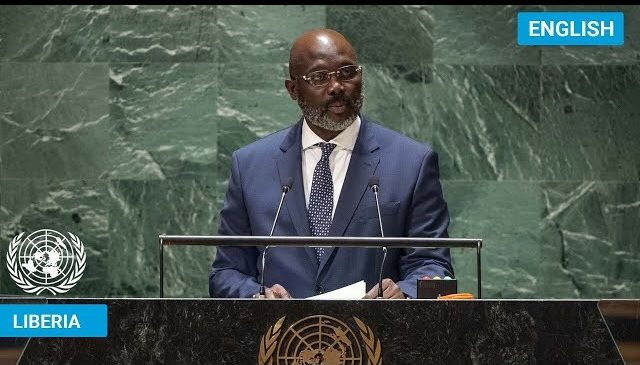
Speaking to members of his Forky Klohn Jlaleh Family Fellowship on Sunday, President Weah said Liberia’s stance has always been against supporting war. He noted that his decision not to support Israel’s bombardment of Gaza and vice versa was long communicated to Prime Minister Benjamin Netanyahu before the December 12 vote.
According to President Weah a Liberian diplomat working at the Liberian Embassy in Washington decided to go against the mandate of the government and voted otherwise.
“A wicked person in the Embassy‚ when they told us to vote, that person whatever they did – that Liberian that voted for war is a wicked Liberian, and God will not spare that person, and every person’s life that was taken in that war because that person voted, they will also feel the wrath of the true living God,” President Weah said.
On Monday, the Ministry of Information, Cultural Affairs and Tourism issued a press statement disclosed that the Foreign Ministry has ensured the reversal of the negative vote through the appropriate channels at the UNGA and registered a new vote in favor of a ceasefire in the Gaza, thereby joining the 153 countries who had earlier voted in favor of the resolution for a ceasefire in the Gaza War.
However, according to Mr. Shoniyin, once votes are cast at the UN General Assembly during any session or on a resolution, it is impossible to change that vote.

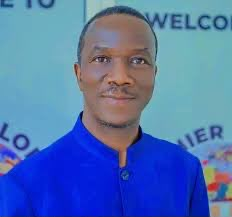
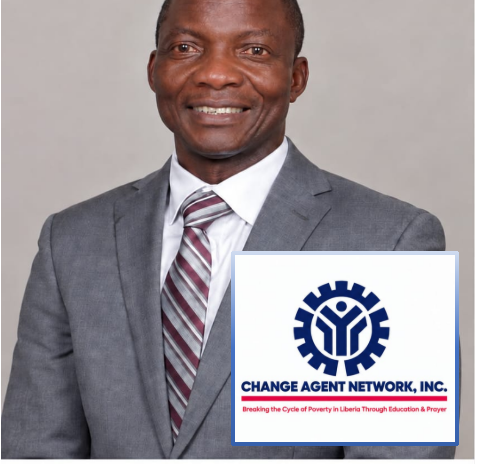
Shoniyin is also an international affairs, development, and policy professional, with over nineteen years’ experience in nonprofit and public service.
According to him, the voting process typically involves the majority of members expressing their support or opposition or abstinence on a particular resolution. He said swhile there may be discussions or negotiations leading up to the vote, once the vote takes place it is considered binding for that session. The outcome of the vote reflects the collective decision of member states at that moment in time.
He said the diplomatic dynamics are complex and countries may engage in ongoing discussions, negotiation, consultation, whatsoever, even after the votes but the final recorded vote at the UNGA is generally considered final for that session. “Any changes in the country’s position like in the case of Liberia recently would typically be reflected in subsequent resolutions or discussions other than altering the outcome of the vote that was taken recently,” he said.
On December 12 Member States of the UN adopted a resolution, demanding an “immediate humanitarian ceasefire”, the immediate and unconditional release of all hostages and well as “ensuring humanitarian access”.
It passed with a large majority of 153 in favour and 10 against, with 23 abstentions
The resolution also reiterated the General Assembly’s demand that all parties comply with their obligations under international law, including international humanitarian law, “notably with regard to the protection of civilians”.
Prior to the resolution, two amendments making specific reference to extremist group Hamas were voted down by members.
The General Assembly will resume the emergency session on Friday afternoon in New York starting at 3pm.
At the start of the session, Assembly President Dennis Francis underscored the urgency of ending the suffering of innocent civilians in Gaza. “We have one singular priority – only one – to save lives,” he stressed.
Check out this explainer on what an emergency special session of the Assembly is and how it works
Support Independent Journalism
Your support helps FrontPage Africa continue delivering independent, credible, and impactful journalism. Every contribution strengthens our ability to investigate, inform, and hold power accountable while keeping quality journalism accessible to our readers.
Support our journalism or subscribe to receive the latest FrontPage Africa stories and updates.