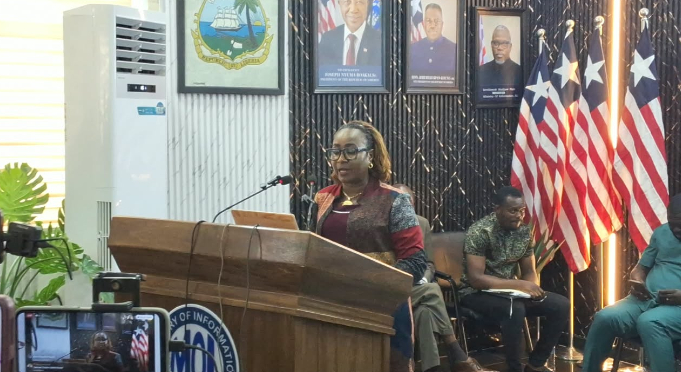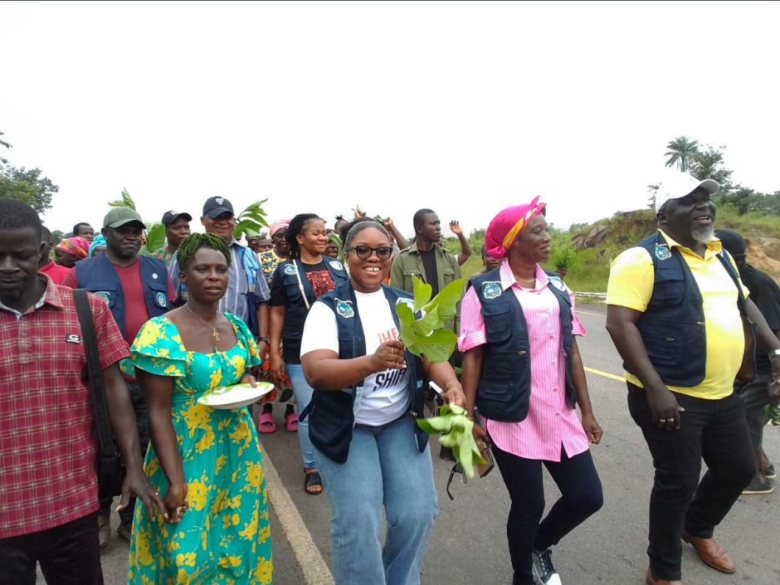
Sanniquellie- Mehn, Nimba County — A high‑level delegation from government ministries and agencies, including Gender and Social Welfare Minister Gbeme Horace‑Kollie, Youth and Sports Minister Cornelia W. Kruah and Liberia Agency for Community Empowerment (LACE) Executive Director Julius Kollie‑Sele and Deputy Project Coordinator for the (REALISE Project) Anita S. Kulbah Marshall concluded a tour of Recovery of Economic Activity for Liberian Informal Sector Employment (REALISE) Project sites across Nimba County.
By Franklin Doloquee / Nimba County
The delegation visited communities including Gehwee, Tonwee, Gbei‑Yonyee and Gboybayee, where officials reported strong local uptake and visible benefits from the program’s investments.
“We travelled to see how residents are feeling the impact of government‑funded interventions, and I am very pleased,” Minister Gbeme Horace‑Kollie told reporters.
The steering committee’s purpose was to observe project activities and hear directly from beneficiaries.
Officials toured multiple agricultural sites, including a communal cluster farming more than 40 acres managed by men and women.
Delegation members praised women’s active role in technical agriculture and the community organization around shared plots. Beneficiaries are growing rice and maize and managing communal farms and equipment.
Beyond agriculture, the REALISE Project has supported community development initiatives, with funds used for electrification, boreholes, town halls and other infrastructure.
Officials emphasized that the program pairs cash transfers with training: beneficiaries receive guidance on how to invest, manage and sustain their projects rather than receiving money without support.
Project design includes communal and individual components. Households received communal investment amounts that vary by cluster size — typically between US$1,800 and US$2,800 per group member over time — plus an individual lump sum of USD $350 to meet personal needs.
The split is intended to reduce misuse of communal funds while allowing participants to cover immediate expenses.
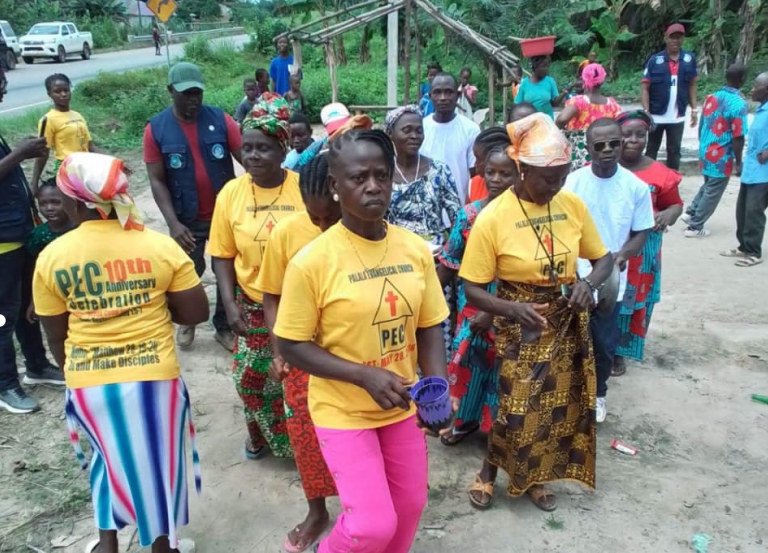
During one‑on‑one meetings with beneficiaries, residents expressed gratitude and described how training changed their decision‑making. Several farmers said they had harvested rice but were delaying sales after being trained to time the market to maximize returns.
Some community members who have not yet benefited asked to be included in future phases. The chairperson said the cluster model, together with village savings and loan components and elder‑led oversight, allows successful groups to expand and absorb new members.
Initial capital can be rotated and reinvested and the committee is exploring additional funding to scale the program. Deputy REALISE Project Coordinator, Anita S. Kolubah Marshall, addressed misconceptions, stressing the program is not women‑only.
“This is a citizen project,” she said, noting the initiative seeks gender balance and serves both men and women. The steering committee praised Nimba County communities for managing investments responsibly and reiterated the ministry’s commitment to continued support.
The Ministry of Gender and Social Welfare Protection will compile observations from the visit into a report for government review. Ministers Kruah and Horace‑Kollie and LACE Executive Director Kollie‑Sele said the report will highlight successful practices, beneficiary feedback and recommendations for expanding social protection initiatives nationwide.
“We will continue to visit our communities and see how the government continues to support them,” the chair concluded.
LACE Executive Director Julius Kollie‑Sele said the initiative is already producing tangible results, including increased crop production, improved household incomes and new infrastructure.
“Today we are hearing success stories coming out of the towns we visited,” an agency representative said. “They were able to produce crops, sell the crops, and use some of the proceeds to build their homes and community facilities.”
LACE emphasized that its approach targets the most vulnerable residents without steady income. Local leaders, including the county superintendent and town chiefs, helped identify beneficiaries to ensure community buy‑in and target those with greatest need.
“We selected people who had absolutely nothing to do, people who were not engaged in economic activities so we could help get their lives restarted,” Kollie‑Sele said.
Although current funding for the project runs through December, Kollie‑Sele said discussions are ongoing with donors and the national government about extending the program to other communities and counties.
He also referenced a draft social protection policy that will be submitted to the legislature to support long‑term efforts to address poverty, employment and basic services.
Beneficiaries, who spoke with reporters, described major impacts. Rosina Newah, Terry Domah and Everlyn Gono thanked President Joseph Boakai and his government for the REALISE Project, saying it transformed their lives taking them from hardship to ownership of land and property in their communities.
The program is part of the government’s broader push to improve food security and livelihoods across Liberia, with officials describing REALISE Project as a catalyst for local economic recovery and replication in neighboring communities.
Support Independent Journalism
Your support helps FrontPage Africa continue delivering independent, credible, and impactful journalism. Every contribution strengthens our ability to investigate, inform, and hold power accountable while keeping quality journalism accessible to our readers.
Support our journalism or subscribe to receive the latest FrontPage Africa stories and updates.