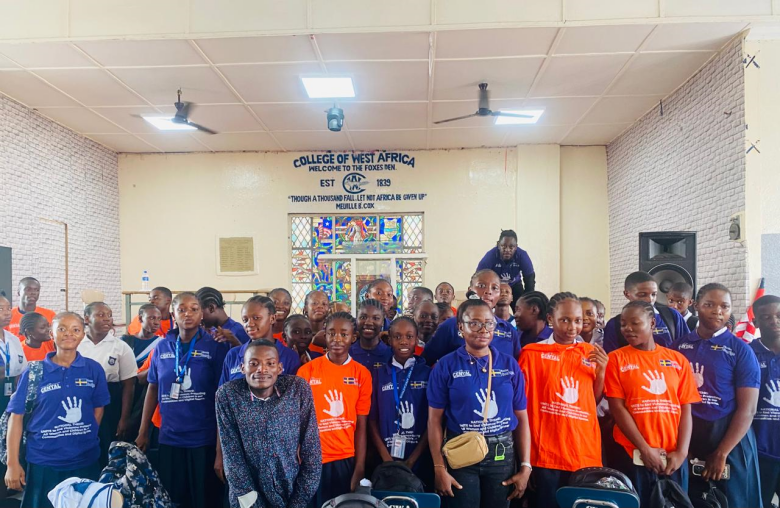
Monrovia — As part of global and national efforts to end violence against women and girls, the Center for Transparency and Accountability in Liberia (CENTAL) on Tuesday, December 9, 2025 hosted a One-Day Dialogue at the College of West Africa (CWA) on Ashmun Street.
By Patience M. Jones
The engagement focused on “Digital Violence against Women and Girls” under this year’s global theme: “UNiTE to End Digital Violence against All Women and Girls” and Liberia’s national theme: “Unite to End Violence: Protecting All Women and Children in our Communities and Digital Spaces.”
The event forms part of CENTAL’s interventions through its National Integrity Building and Anti-Corruption Program (NIBA) and the Open Expenditure Initiative (OEI) aimed at strengthening accountability, protecting rights, and increasing public awareness on digital harms.
CENTAL Reinforces Role in Accountability and Anti-Corruption Reform
Giving an overview of the program, Mark Boahnado, Media Assistant at CENTAL, highlighted the organization’s longstanding advocacy work across sectors including governance, education, agriculture, health, and mining since 2004.
He stressed that young people dominate digital spaces and, as users, they hold power to either fuel or prevent harmful actions online.
“Some youth engage in cyberbullying just to chase likes and views, without thinking about how it damages others,” he said.
“As much as we are contributing to the problem, we can also be part of the solution.”
Mr. Boahnado emphasized that the objective of the dialogue is to spark youth-led awareness and ensure they understand their rights and responsibilities in digital spaces.
Keynote Presentation: Understanding Digital Violence
Madam Clara K. Mallah, Gender and Inclusion Officer at CENTAL, delivered the keynote presentation focused on digital violence and its intersection with corruption, harassment, and gender inequities.
Presenting background statistics collected between December 2020 and November 2025, she disclosed that:
152 complaints were received through CENTAL’s reporting platforms
55 of those cases involved women facing abuse, corruption, or domestic-related issues
Madam Mallah explained that digital violence includes:
Cyberbullying and harassment
Blackmail and sextortion
Image-based abuse and revenge porn
Hate speech and body shaming
Deepfakes and false information
Identity theft and account hacking
“Digital violence is real-world violence. It violates human rights, destroys confidence, and forces many victims out of school and other spaces,” she stated.
She encouraged students to make use of CENTAL’s national reporting hotline �� 4432 to report corruption-related abuses, including online harassment leveraged for sexual exploitation.
Students Demand School-Based Reporting Mechanisms
Representing the student community as a panelist, Miss Christiana Kanwee, a 12th-grade student of CWA, stressed the need for safe reporting channels within educational institutions.
“Schools should establish complaint boxes where students can report bribery for grades, teacher harassment, or digital violence without fear,” she said.
“If you don’t want to watch it, don’t share it. Reporting inappropriate content can help platforms remove it.”
Panelist Perkins E. T. Boyce, Regional Director for Africa and professional disability advocate, highlighted the extremely harmful impact of online bullying especially on students with disabilities.
He called for: Blocking harmful online accounts, School regulations to include cyberbullying punishments, and Zero-tolerance enforcement for online shaming. “Your student handbook must protect you from digital violence just as it protects you from physical violence,” he noted. “We all deserve an inclusive and safe digital space.”
Speaking on behalf of the Government, Sylvia Brown-Pay, representative of the Ministry of Gender, Children & Social Protection, emphasized the urgency of addressing cyber harms impacting school-aged girls.
She described how digital blackmail forces victims out of school, lowers self-esteem, and leads to trauma or self-harm.
“Schools must take accountability seriously by reporting cases to the Ministry of Gender, CENTAL, and the Women & Children Protection Section of the Liberia National Police,” she said.
She further explained the significance of the 16 Days of Activism Campaign observed globally from November 25 to December 10 each year to raise awareness on violence against women and girls.
Support Independent Journalism
Your support helps FrontPage Africa continue delivering independent, credible, and impactful journalism. Every contribution strengthens our ability to investigate, inform, and hold power accountable while keeping quality journalism accessible to our readers.
Support our journalism or subscribe to receive the latest FrontPage Africa stories and updates.