Summary
- The health ministry has launched a monthly National Exercise and Wellness Day as the country confronts rising risks from hypertension, diabetes, obesity and other chronic or “noncommunicable” diseases.
- A national health survey found nearly one in four adults had raised blood pressure, while six in ten were overweight obese, putting them at heightened risk. Few of those with raised blood pressure are taking medication.
- Health officials are urging Liberians to make physical activity, healthier eating and regular health checks part of their everyday lives.
By Tetee Gebro, gender and health correspondent with New Narratives
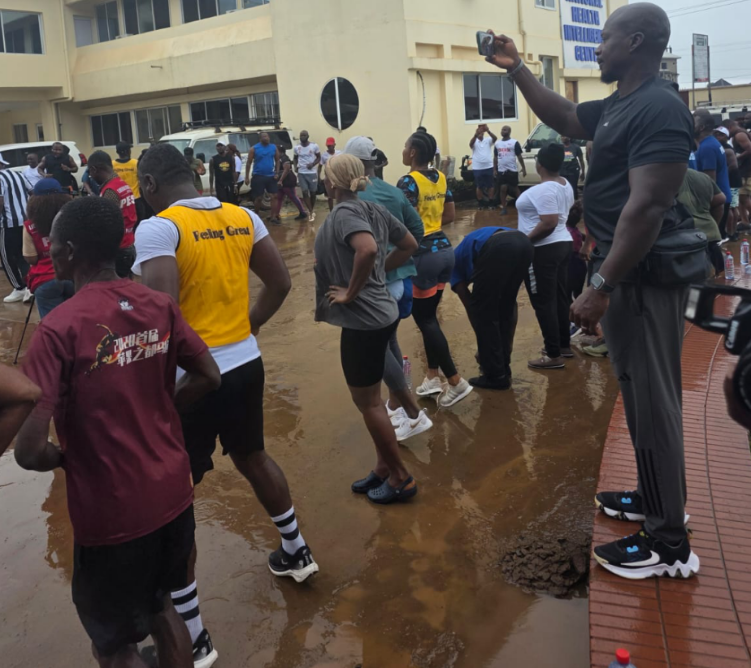
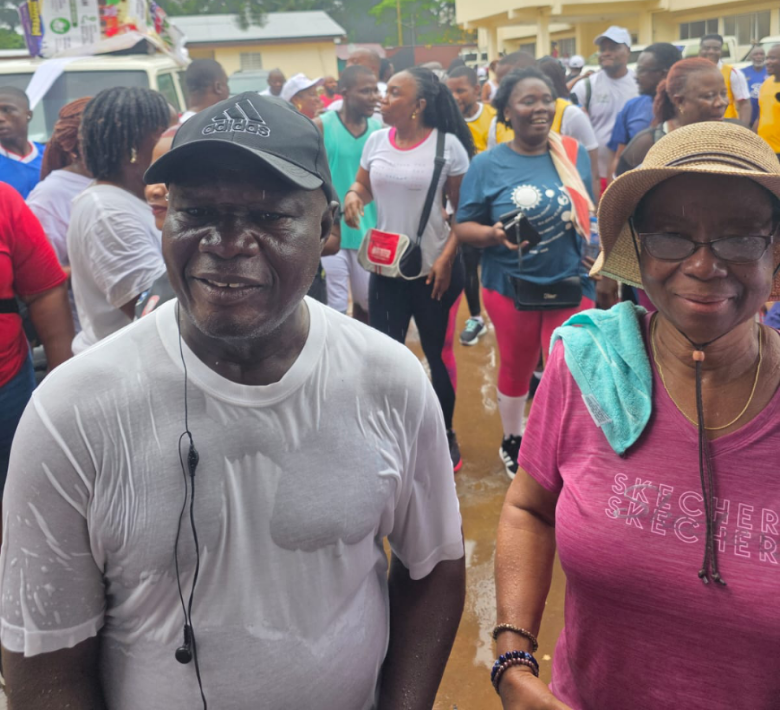
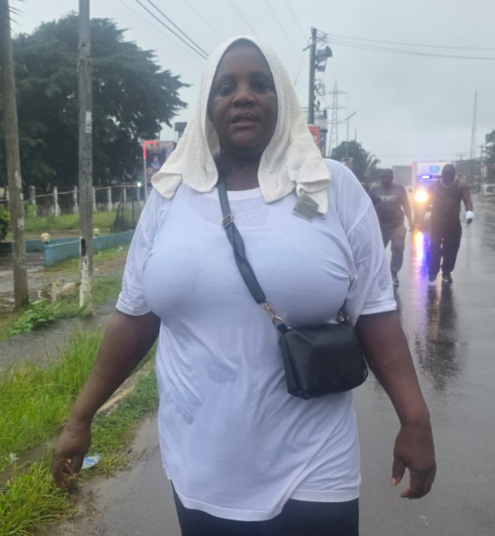
CATHOLIC JUNCTION, Monrovia – Rain was falling Saturday morning when Nadia S. Jolo joined a group of people walking from through Monrovia’s streets as part of the country’s first National Exercise and Wellness Day.
For the 51-year-old, getting wet was not enough to turn her back. Just days earlier, Jolo had watched a colleague at work collapse from a stroke. Jolo has hypertension herself. The incident frightened her. So when Jolo, who works with the Ministry of Health’s Malaria Division, heard about Saturday’s walk, she decided to join.
“I need to exercise. I need to reduce my diet,” Jolo said.
Jolo is among a growing number of Liberians confronting noncommunicable diseases such as hypertension, stroke and diabetes – illnesses that can develop without obvious symptoms and lead to strokes, heart disease and other illnesses, and premature death. Liberians’ vulnerability was documented in a FrontPage Africa/New Narratives series last year. They are called chronic or “lifestyle” diseases because they are mostly caused by lifestyle decisions – a diet heavy in sugar, processed foods and fat – lack of exercise and sleep, smoking and too much stress. NCDs are now the second most common cause of death in Sub Saharan Africa.
Liberia’s 2022 STEPS survey, — a nationwide World Health Organization-supported survey that measures NCDs and their risk factors among adults — found nearly one in four adults aged 18 to 69 had raised blood pressure and almost six in ten were overweight or obese, putting them in the danger zone. More than eight in ten people found with raised blood pressure were not taking medication for it meaning they were at great risk of developing a chronic disease.
The growing burden has prompted President Joseph Boakai to declare the last Saturday of every month National Exercise and Wellness Day, part of a government effort to encourage physical activity and prevent noncommunicable diseases. Six to eight a.m. on the last Saturday of every month will be reserved for the nationwide observance. It calls on government institutions, businesses, schools and communities to participate in activities including walking, jogging, cycling, stretching, health education and screenings.
“This helps the Ministry of Health to be able to reinforce the issue of physical activity because it helps to minimize those risks,” said Jamesetta Smith, director of the Ministry’s Noncommunicable Diseases and Injury Unit.
Saturday’s inaugural event was a 4.7 kilometer walk from Catholic Junction on Tubman Boulevard to the Ministry of Health off SKD Boulevard in Congo Town.
Regular physical activity can help prevent and manage NCDs including heart disease and diabetes and can lower the risk of developing hypertension. Health experts also recommend healthier diets, avoiding tobacco and harmful alcohol use, and regular screening for conditions such as high blood pressure and diabetes.
“Most people think you have to go to the supermarket and buy something expensive, but we have potato greens, cassava leaves, we have our palava sauce, our okra,” Smith said.
The Ministry is also urging Liberians to regularly check their blood pressure and blood sugar so that people with abnormal readings can be identified early and referred to health facilities for treatment. And they’re also urging them to make exercise a daily thing.
“We want to enforce it beyond just that one day,” Smith said. “We want to make it as part of our lifestyle and culture in our country.”
The Ministry plans to work with other government agencies and institutions to develop their own exercise routines rather than create a separate government-run exercise program. Institutions can choose their own days for regular physical activity. The initiative is also intended to extend across all 15 counties.
For some participants at Saturday’s event, fitting exercise in has been challenging. Jolo had not exercised regularly in two years. When she was diagnosed with hypertension, her doctor told her to exercise regularly, eat healthier and stop drinking alcohol. She stopped drinking, but her busy work schedule got in the way of her exercising. She says this walk gave her the encouragement she needed to reset.
Ansumana Morris, a 61-year-old retired employee of the Liberia Petroleum Refining Company, said a doctor previously told him that his cholesterol was high and advised him to watch his diet and exercise. But Morris admits that he has struggled to exercise. Morris blamed his own “laziness”. “I’ve not been regular,” he said. “Sometimes I do and sometimes I don’t.”
He said the new national exercise day could give people like him another reason to get moving. He plans to return for the next event.
Dr. Olushayo Olu, the World Health Organization representative to Liberia, said noncommunicable diseases are increasing in Liberia, as they are in other African countries. One of the dangers, he said, is that people can live with hypertension without realizing it.
“If you have high blood pressure, you don’t know,” Olu said in an interview with New Narratives after participating in Saturday’s walk. “You are fine, you are okay, until you get a problem.”
“Liberians should not only make it a monthly thing,” Olu said. “They can put their exercise regime into their daily life.”
Smith acknowledged that public awareness of noncommunicable diseases remains limited and that funding to address them is inadequate. She said health donors – which have funded more than 50 percent of Liberia’s health care until last year’s cuts – have traditionally directed support toward communicable diseases that need heavy medical intervention including malaria, HIV and tuberculosis. Those donors expect government to take on more of the burden of their own healthcare starting with education.
“It’s now time for our donor community, our government to shift our attention and support to NCDs,” Smith said.
Smith said about 63 health facilities supported by the World Diabetes Foundation are providing free diabetes services and treatment. Government health facilities also provide services for hypertension and diabetes, she said. Some services charge minimal fees intended to help facilities maintain supplies.
The Ministry is also encouraging communities and businesses to organize their own exercise events to serve as an opportunity for early detection. People found with abnormal blood pressure or blood sugar readings can be referred to health facilities.
For Rosetta Stubblefield, 70, the message about exercise was familiar.
Stubblefield travelled from ELWA Junction to join Saturday’s walk despite the rain. She also has hypertension. She used to exercise but had stopped. After hearing about the government’s exercise day on the radio Friday, she decided to come out.
“You don’t have to have symptoms or be diagnosed,” Stubblefield said. “Your body needs to move.”
For Jolo, however, the warning was more immediate. This time, she said, she knows exercise must be a priority.
“I will join the march every last Saturday,” Jolo said. “And even at my house, I will be doing it in my yard.”
This story was a collaboration with New Narratives.
Support Independent Journalism
Your support helps FrontPage Africa continue delivering independent, credible, and impactful journalism. Every contribution strengthens our ability to investigate, inform, and hold power accountable while keeping quality journalism accessible to our readers.
Support our journalism or subscribe to receive the latest FrontPage Africa stories and updates.