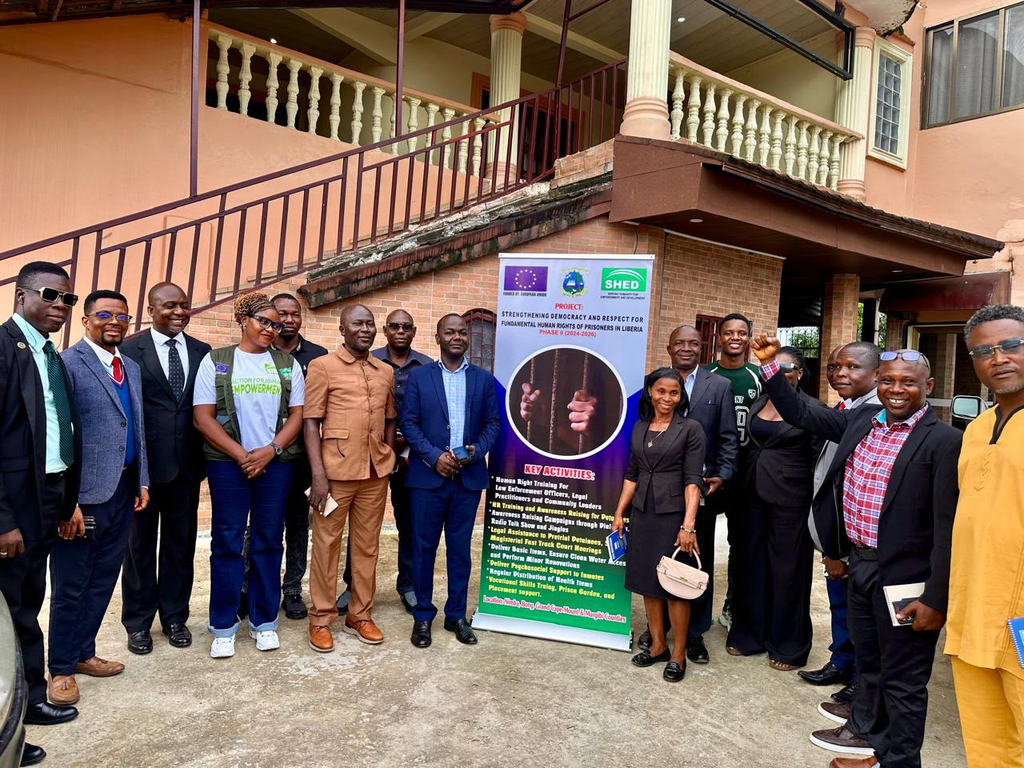
MONROVIA — SHED Liberia, in partnership with the European Union (EU) and the Ministry of Justice, has trained 36 legal practitioners from four Liberian counties under an EU-funded initiative aimed at strengthening democracy, improving access to justice, and protecting the fundamental human rights of prisoners in Liberia.
By Francis G. Boayue
The training workshops, held in Margibi and Nimba Counties, were conducted under the project titled, “Strengthening Democracy and Respect for the Fundamental Human Rights of Prisoners in Liberia through the NDICI Instrument.”
The initiative seeks to strengthen respect for the rights of people in detention, promote the rule of law, and address institutional and legal challenges affecting the administration of justice in Liberia.
The workshops brought together 36 legal practitioners from Grand Cape Mount, Margibi, Bong, and Nimba Counties, providing them with an opportunity to deepen their understanding of prisoners’ rights and strengthen their capacity to advocate for improved access to justice.
Key areas addressed included combating unlawful detention, advocating for access to justice, promoting community-based rehabilitation as an alternative approach to handling misdemeanor offenses, and improving understanding of Liberia’s criminal justice system.
Participants also examined measures to prevent torture and other forms of cruel, inhuman, or degrading treatment or punishment, with particular emphasis on the United Nations Convention against Torture (CAT) and its Optional Protocol (OPCAT).
The project comes amid persistent concerns over prison overcrowding and other structural challenges confronting Liberia’s correctional system, particularly the need to ensure that individuals in detention are afforded timely justice and treated in accordance with established legal standards.
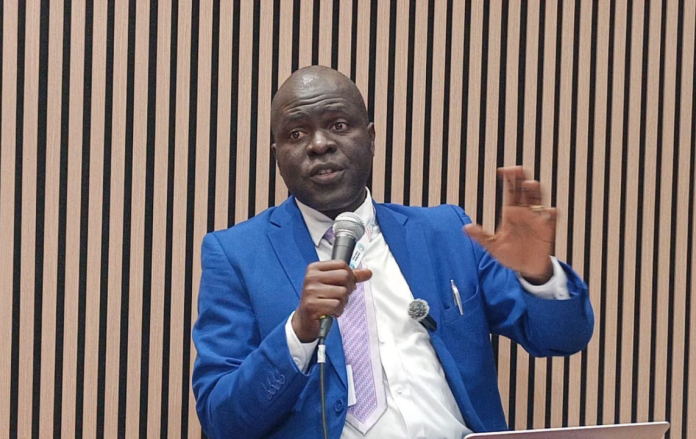
Speaking during the engagement, Nimba County Resident Circuit Court Judge, Pape Suah, stressed the importance of ensuring that arrests are conducted in compliance with the law and established judicial procedures.
Judge Suah called on law enforcement officers and other justice sector stakeholders to address unlawful arrests, emphasizing the need to respect legal requirements governing the timing and execution of arrests.
He also stressed on the act to amend sections 10.2, 10.4, and 10.6 of chapter 10 of the criminal procedure law, title 2, The Liberian code of revised laws to provide conditions for time off and the authority to arrest
He also highlighted restrictions on arrests after midday from Monday through Thursday, as well as arrests between Friday and Sunday and on public holidays, urging relevant authorities to adhere to the applicable legal provisions.
The judge further underscored the need to upgrade and expand Liberia’s correctional facilities, noting that addressing prison overcrowding requires both improved infrastructure and stronger compliance with the rule of law.
SHED Liberia reaffirmed its commitment to working with the Ministry of Justice and other justice sector stakeholders to advance the objectives of the EU-funded project, particularly in strengthening access to justice, promoting accountability, and ensuring that the fundamental rights and dignity of people in detention are protected.
The organization also expressed appreciation to the European Union for its financial support and the Ministry of Justice for its continued partnership in advancing justice sector reforms and the protection of prisoners’ rights in Liberia.
Support Independent Journalism
Your support helps FrontPage Africa continue delivering independent, credible, and impactful journalism. Every contribution strengthens our ability to investigate, inform, and hold power accountable while keeping quality journalism accessible to our readers.
Support our journalism or subscribe to receive the latest FrontPage Africa stories and updates.