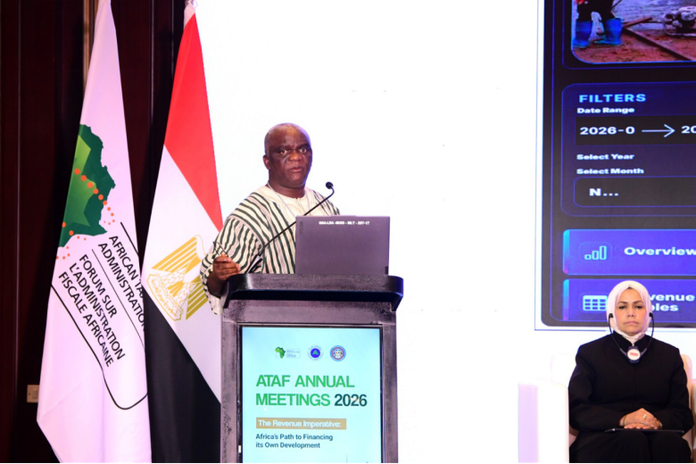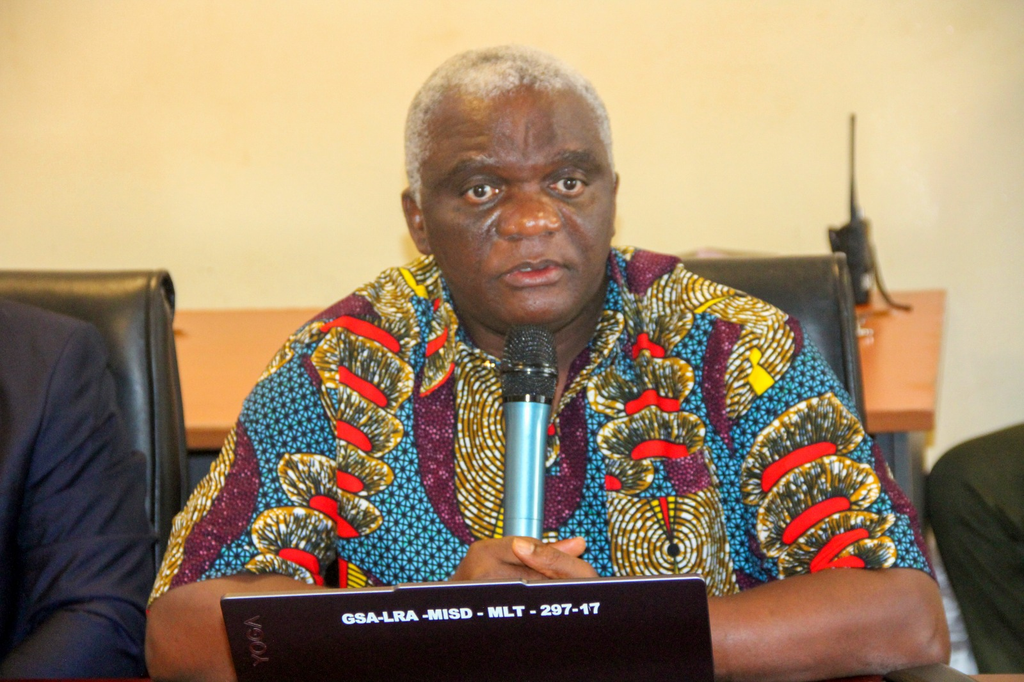
Capitol Building, Monrovia – The Committee on Ways, Means, Finance and Budget of the House of Representatives has kicked off hearings on the revenue component of the proposed US$1.539 billion Fiscal Year 2027 National Budget, a process that began with some startling revelations and staggering numbers that surprised the gathering.
By Emmanuel Weedee-Conway
The main irony is that a government that waived US$442 million in customs duties in 10 months is now asking Liberians to pay 26% more in tax to fund a US$1.54 billion budget and that US$95 million of that budget is not even new money.
Exemptions, A Major Threat
Speaking at the opening day of the revenue hearings on Monday, November 23, 2026, the Commissioner General of the Liberia Revenue Authority (LRA), Dr. James Dorbor Jallah revealed how the country has lost massively in revenue due to tax exemptions.
Startlingly, he told the gathering of lawmakers and financial experts that between January and October 2026, customs exemptions amounted to US$442 million, compared with US$278 million actually collected on international trade.
In other words, he pointed out that more than 60 percent of potential trade revenue is being waived, citing it as one of the major challenges confronting revenue generations.
“Honorable Members, I must be candid. The greatest threat to our revenue base is the growth of tax exemptions.”
From 2023 to date, he intoned, exemptions have totaled US$1.3 billion, indicating that duty waivers on petroleum products alone rose to about US$10.7 million in 2025.
The Success Story – FY 2026 Performance
In what stands out to be a very encouraging statistic, CG Jallah disclosed that as of November 21, 2026, the LRA has collected US$1.260 billion in total revenue, which is 97 percent of the approved budget of US$1.302 billion.
He pointed out that domestic revenue stands at US$1.181 billion, which means LRA surpassed its full-year domestic target with about six weeks remaining.
Also, of these amazing numbers, he asserted that Customs collected 105 percent of its annual target; the Domestic Tax Department collected 99 percent, while Tax revenue alone reached 102 percent.
“The shortfall in total revenue is in external resources, mainly borrowings, which are not collected by the LRA. To put this in context, domestic revenue for the whole of 2025 was US$847 million. In about eleven months of 2026, we have already collected about 39 percent more than that, and domestic revenue has nearly doubled since 2023,” he furthered.
It is a projection by the LRA boss that total revenue will close the year at about US$1.380 billion, stating: “This is the result of the hard work of our staff, staff of other revenue-generating agencies, the cooperation of taxpayers, and the support of this Legislature.”
The FY 2027 Outlook
The draft budget projects total revenue of US$1.539 billion, of which US$1.392 billion is domestic revenue. For the first time, tax revenue is projected to exceed one billion United States dollars, at US$1.072 billion.
The envelope also includes US$92 million in external budget support, a US$55 million carry-forward from FY 2026, and US$40 million in contingent revenue from the APM Terminals and Marsa Maroc port agreements.
Accordingly, Dr. Jallah points out that, these projections rest on real GDP growth of 5.1 percent, with inflation easing to 6.8 percent, and four key policy measures.
One of these policy measures, he claims, is the replacement of Good Services Tax (GST) with a 15 percent Value Added Tax (VAT) from January 1, 2027. He noted that the result is expected to yield about US$225 million.
Also, CG Jallah cited a two (2) percent advance corporate income tax on the turnover of mining and agriculture companies as one of the policy measures, which is estimated at US$57.3 million.
Also, the LRA boss named the collection of petroleum taxes on import volumes rather than on gallons lifted and the provisions of the Tax Amendment Bill 2026, which will be submitted to the House of Representatives as some of the most critical policy measures taken.
The Reforms
To deliver these numbers, Jallah accentuated that the LRA will implement 24 reforms.
Key among them are the full rollout of ASYCUDA to all border posts and the National Single Window, VAT implementation and electronic invoicing; extending LITAS and real property tax administration to all 15 counties, the revenue assurance monitoring system in the gaming, telecommunications and mobile money sectors; integration with the Central Bank payment switch, and stronger integrity controls, including background verification and lifestyle audits for staff in sensitive positions.
Request For Five Percent
To bolster greater revenue generation, the LRA is proposing to the Legislature through the House of Representatives for the amendment of the LRA Act that will allocate five percent of the tax revenue it assesses and collects as its operational budget, excluding royalties, SOE and maritime contributions, fees, fines and external resources.
“We also ask this Body to work with us to review and rationalize exemptions. Fund the collector, and the collector will grow the collection,” he added.
Issues For Legislative Attention
Like Commissioner General Jallah, the Chairman of the House Committee on Ways, Means, Finance and Budget, Representative P. Mike Jurry, also identified revenue leakages, exemptions, concessions, weaknesses in revenue administration and statutory obligations of state-owned enterprises as key issues requiring legislative attention.
In his opening remarks, Chairman Jurry vowed that the Committee will work tirelessly to achieve its objectives for the hearing by identifying and finding remedies to revenue leakages, exemptions, concessions and weaknesses in revenue administration, among others.
“The Joint Committee will seek to achieve the following objectives: Examine the credibility and feasibility of the proposed FY2027 revenue projections; assess the assumptions and methodologies underpinning the revenue estimates; examine FY2026 revenue performance against approved targets; evaluate domestic revenue mobilization strategies and institutional collection capacities; identify and find remedies to revenue leakages, exemptions, concessions and weaknesses in revenue administration; examine statutory revenue obligations and contributions by state-owned enterprises; identify opportunities for expanding the domestic revenue base and provide evidence-based recommendations to inform legislative consideration and approval of the FY2027 National Budget,” he asserted.
A ‘Realistic’ Projection
At the same time, Deputy Minister for Fiscal Affairs at the Ministry of Finance and Development Planning, Anthony G. Myers, told the House Joint Committee on Ways, Means, Finance and Budget and the Public Accounts Committee that the proposed budget is expected to reach US$1,538,916,274 is nothing but realistic.
He explained that this projection represents an 11.5 percent increase over the FY2026 year-end revenue estimate of US$1.380 billion and 18.1 percent above the approved FY2026 budget of US$1.303 billion.
Myers noted that the FY2027 revenue projection is built primarily on recurring domestic revenue rather than one-off receipts, noting that tax revenue is expected to increase by 26.5 percent, from US$847.5 million to US$1.072 billion.
He explained that the FY2026 revenue performance benefited from exceptional mining receipts, including more than US$220 million in signature bonuses, but said the FY2027 forecast deliberately excludes similar windfalls from its baseline assumptions.
The Deputy Minister dismissed concerns that the proposed budget could face a significant shortfall without another major mining signature bonus, arguing that the country’s economic growth is increasingly driven by sectors beyond mining.
He stated that Liberia’s economic output was US$3.9 billion in 2025, with preliminary estimates placing it at US$4.1 billion in 2026 and projecting US$4.3 billion for 2027.
He said the services sector is expected to remain the largest contributor to economic activity, averaging US$1.5 billion annually over the medium term, followed by agriculture and fisheries at US$1.1 billion, while mining and quarrying are projected to average US$800 million.
Myers identified wholesale and retail trade as the largest projected revenue source, contributing US$466.2 million, including US$313.7 million from taxes on international trade. Services revenue is projected at US$378 million, while recurrent revenue from mining and quarrying, excluding signature bonuses, is estimated at US$323.3 million.