
Summary:
- Rising fertilizer prices and shortages caused by the US-Israeli war with Iran are putting pressure on Liberia’s small farmers.
- Farmers reported struggling to afford supplies, raising concerns about smaller harvests, higher food prices and lower incomes.
- Duty exemptions and government-backed distributions offer some support, but farmers outside those programs continue to face unaffordable prices.
By Nemenlah Cyrus Harmon, climate and environment reporter with New Narratives
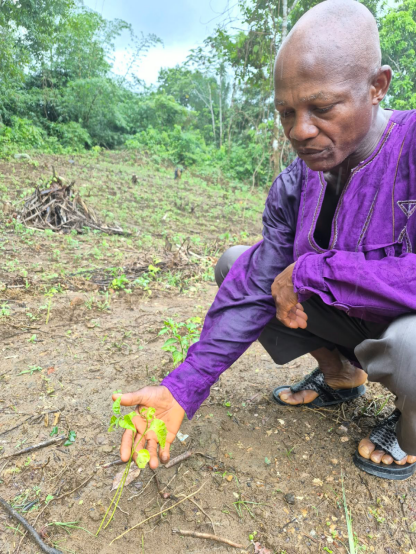
MILLER HILL, Careysburg — Aaron Moore stopped among his pepper plants and pointed to the yellowing leaves. They should have been deep green by now. For a farmer whose harvest helps pay school fees and feed his six children, the pale leaves were alarming.
Moore, 49, has grown peppers and cucumbers on this plot for more than four years. He works there every morning and evening. But now he can no longer afford the fertilizer he needs to keep his crops growing.
“When the fertilizer is not there, the plant will not grow good,” he said. “The crops will die.”
Moore’s struggle reflects a widespread problem for Liberia’s small farmers. Agriculture specialists said the US-Israeli war with Iran, which began in February, has pushed fertilizer prices up and cut supplies. Iran has largely closed the Strait of Hormuz, a shipping route that carried nearly a third of the world’s traded fertilizer before the war. That threatened the vegetable harvests that support rural families and feed local markets. The stakes are high in a country where about one in five people do not have enough food year-round and a quarter of young children are stunted, according to the World Food Programme.
Francis Mulbah, the Ministry of Agriculture’s assistant minister for planning and development, said the government provided fertilizer to rice farmers through an emergency food production program funded by the African Development Bank, which ended in 2024. The amount each farmer received depended on the size of the land they farmed. Some government-supported projects also provide fertilizer to farmers growing rice, cassava and vegetables, but he could not say how many farmers had benefited.
Mulbah said the government is also in talks with OCP Africa, a fertilizer company based in Morocco, to supply fertilizer at lower prices. Under the plan, the government would buy fertilizer from the company for major importers in Liberia. The deal would also improve supply, provide soil testing and train farmers, but nothing has been signed. The ministry has also hired county-level agriculture staff to advise farmers on how to use fertilizer.
Mulbah said the crisis in the Middle East had added to fertilizer shortages and higher prices around the world, making it harder for Liberia to get supplies. He did not provide a current retail price for fertilizer.
Mulbah said fertilizer subsidies could make farm supplies more affordable.
“If we want to get the rightful yield as a country, it means that we have to invest into fertilizer usage,” he said. “It’s the only way to afford the maximum output.”
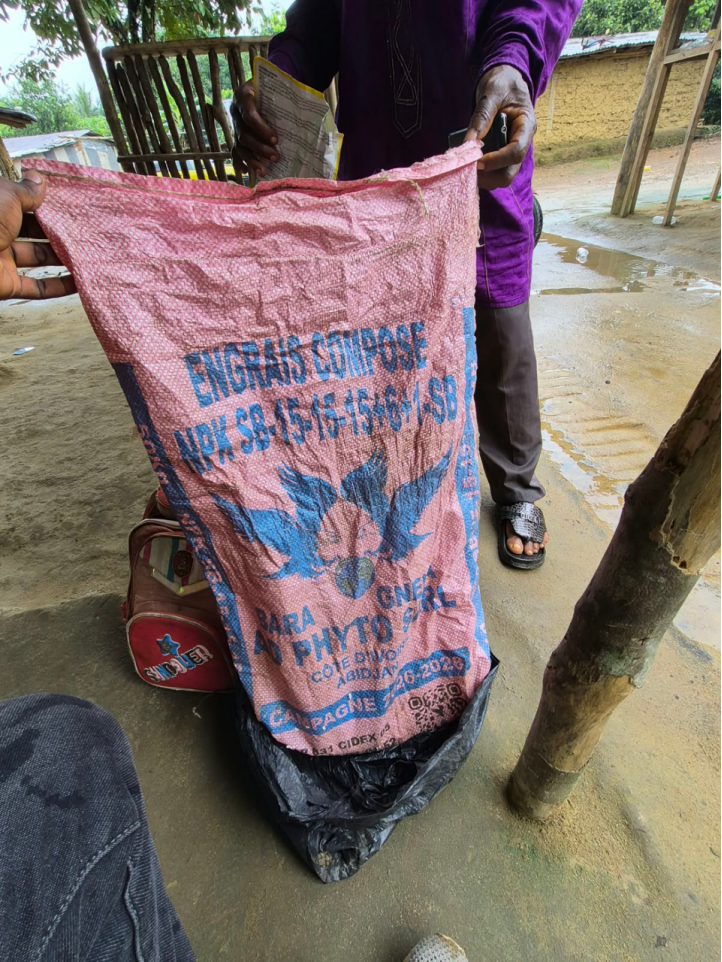
For Moore, the pressure is immediate. Fertilizer now costs about L$12,000 (about US$65) a bag, he said, compared with L$9,000 to L$11,000 a few years ago. Prices tend to dip during the rainy season and rise in the dry months. That offers little comfort when he does not have the money to buy a bag.
Experts said farmers across the country faced the same problem. Jonathan S. Stewart, chief executive of Agrotech Liberia, which supports farmers and food security projects, said just finding a bag can be a challenge. Some sellers have run out. Major suppliers are based in Monrovia, so farmers in other areas must also pay for transport.
“If you add the transportation, that’s a lot for people who are literally making less,” Stewart said.
The costs begin before fertilizer is even used. Stewart said a small pack of cucumber seeds costs US$20 to US$25. With fertilizer and other supplies, growing a cucumber crop can cost more than US$100, with no guarantee the harvest will earn that money back. A shovel that once cost US$7 now sells for about US$10.
The smallest buyers have little bargaining power. A customer ordering 100 or 200 bags can negotiate a discount, Stewart said. Someone buying one or two usually pays the full price.
Julius M. Bass, a cocoa farmer who previously led the Farmers Union Network, said those costs can overwhelm farmers working small plots. He has spent about 24 years in agriculture. The network brings farmers together to seek support from donors and aid programs, which has given Bass a close view of the problems growers face.
“Can you imagine a farmer using a hectare to grow cucumbers, and he needs fertilizer?” Bass said. “How does he get the money to buy it at that kind of astronomical cost?”
For Moore, money for these supplies must come from earnings spread across a long season. He said he makes about L$50,000 (about US$270) in some seasons and up to L$75,000 (about US$410) when the crop does well. His peppers take at least three months to begin producing. A full growing season lasts six to eight months.
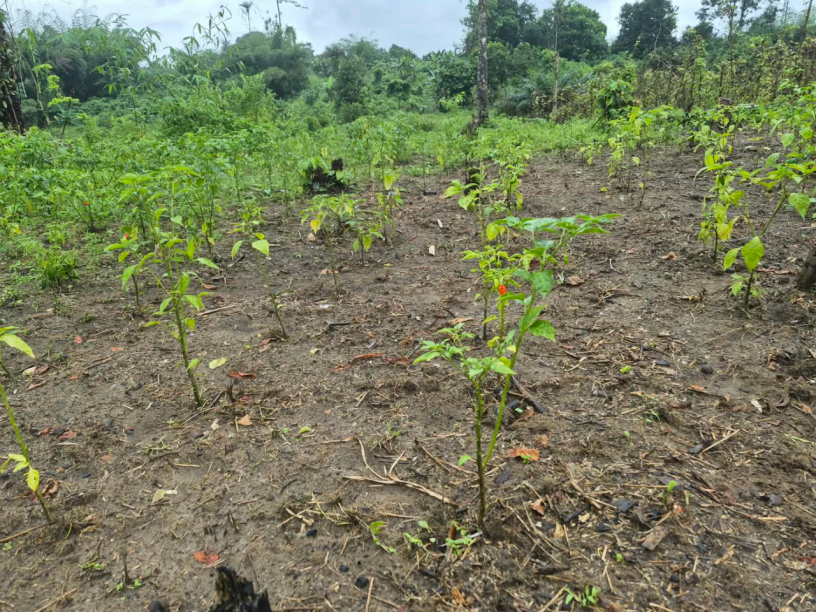
Without enough fertilizer, Bass said, a farmer expecting half a ton of peppers from a hectare might harvest only a quarter ton. “That’s a great slap in your face. But what do you have to do? You need food to eat, you need to send the children to school.”
The government has tried to ease import costs. In November 2024, President Joseph Boakai signed an executive order suspending import tariffs on farm supplies, including fertilizer. Government and donor projects also buy fertilizer in bulk and give it to farmers who take part in them.
But those programs are shrinking as foreign aid is cut, and growers outside them must buy at market prices. Importers set their own prices, and paperwork or delays at the port can add storage fees to their costs. There is no national fertilizer price. Each importer adds up its costs and decides what to charge.
For now, growers try to manage with what they have. Stewart said some have learned to mulch with leaves, which break down and add nutrients to the soil. But heavy rains can wash nutrients away. Moore loosens the soil around his plants to help them grow, but he said it does not work as well as fertilizer.
Wars far away squeeze Liberia’s farmers
Stewart blamed part of the squeeze on the Iran war and Russia’s invasion of Ukraine. Both have disrupted global supplies and shipping routes, raising costs for importers.
He said Liberia buys fertilizer from Turkey, China and Europe, while some local suppliers buy through neighboring Ivory Coast. Those supplies must reach Ivory Coast before they travel on to Liberia, which adds costs along the way.
Bass cautioned against treating overseas wars as the sole explanation, saying fertilizer was expensive before the latest disruptions. He urged Liberians with money to invest in agriculture and bring in cheaper fertilizer from other sources, so farmers are not stuck with costly supply routes even when global trade is running normally.
Food on the table
Experts warned that Liberia’s food supply, already strained by climate change and a lack of investment in farming, could be stretched further. Bass said small farmers grow much of Liberia’s everyday food, including peppers and other vegetables. When they cannot afford supplies, families feel it through less food and higher prices.
“These are the people putting food on our table,” Bass said.
Help that misses some farmers
Moore said he has received no government support.
“We don’t want to depend on the government,” he said. “But if they help us, you will see the progress of it. You will see the produce.”
Bass said farmers have long called for subsidies, where the government pays part of the cost of supplies. He welcomed the government’s push to bring in farm machinery but said fertilizer support must also reach growers with small plots. On Oct. 30 at Camp Ware in Careysburg, China handed over 304 pieces of farm machinery, including tractors and small harvesters, to the Liberian government.
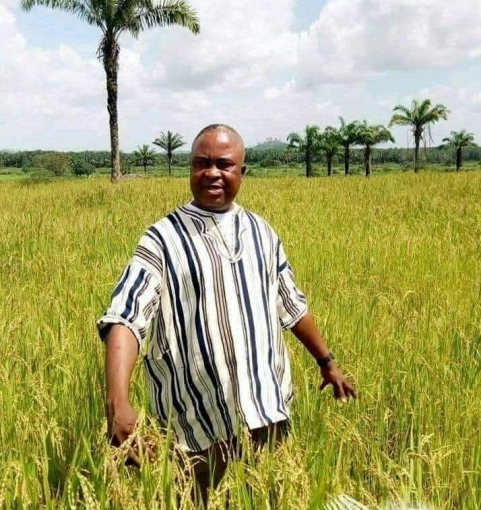
Stewart proposed making fertilizer and certified seeds in Liberia to cut reliance on imports. Those ideas would take investment. For farmers facing costs now, the question is how to pay for the next bag.
He also pointed to gaps in national agricultural data, which make it difficult to establish how much harvests have fallen. His concern rests on what he sees in farmers’ fields.
On Miller Hill, Moore keeps tending his peppers and cucumbers. He said he will keep planting and try to bring another crop through to harvest.
“If there is no money, we will try,” he said.
This story was a collaboration with New Narratives as part of the Investigating Liberia Project.