
MONROVIA – As Liberia accelerates its transition toward a digitally connected economy, growing concerns are emerging over the country’s ability to protect critical national infrastructure, financial institutions, government databases, and citizens’ personal information from potential cyberattacks.
By Willie N. Tokpah
Cybersecurity architect and digital policy specialist Ernest “Paju” Tarpeh has warned that Liberia’s increasing dependence on digital services, combined with what he describes as inadequate cybersecurity infrastructure and limited operational preparedness, could expose the country to serious economic and national security risks.
In a commentary titled “Trapped on a Single Fiber-Optic Wire: Why the LTA’s ‘Cyber Marathon’ Leaves Liberia’s Digital Economy Unprotected,” Tarpeh argued that although Liberia has made progress in establishing laws and policies to regulate its digital space, the country has yet to develop the operational capacity required to defend its expanding digital economy against sophisticated cyber threats.
He particularly questioned the cybersecurity priorities of the Liberia Telecommunications Authority (LTA), arguing that public awareness campaigns, school outreach programs, and nationwide street activities must be accompanied by sustained investments in technical infrastructure, specialized personnel, and round-the-clock monitoring of critical digital systems.
According to Tarpeh, Liberia’s growing reliance on electronic banking, mobile money transactions, online tax administration, customs platforms, and government databases means that cybersecurity can no longer be treated as a secondary regulatory concern.
Instead, he maintained that protecting digital infrastructure must become a central component of national security, economic planning, and public service delivery.
His warning comes as government institutions increasingly embrace digital platforms to improve efficiency, facilitate financial transactions, expand access to public services, and strengthen revenue administration.
However, Tarpeh cautioned that the same digital transformation could create significant vulnerabilities if the infrastructure supporting it is not adequately protected.
Single Undersea Cable Raises National Security Concerns
At the center of Tarpeh’s concerns is Liberia’s dependence on the Africa Coast to Europe (ACE) submarine fiber-optic cable, whose landing infrastructure in Monrovia provides a major gateway for the country’s international internet connectivity.
He described the arrangement as a potential single point of failure, warning that physical damage to the cable or a major disruption at its landing infrastructure could affect several essential services that depend on uninterrupted international connectivity.
According to him, disruptions could have consequences for government payment platforms, commercial banking operations, mobile money services, customs administration, business transactions, and emergency communications.
He compared Liberia’s digital infrastructure to a busy commercial town connected to the outside world through a single bridge, warning that damage to that bridge could bring significant economic activities to a standstill.
“Liberia cannot afford to leave its entire national economy hanging on a single digital thread,” Tarpeh argued, calling for alternative connectivity routes and stronger protection of the country’s international telecommunications gateways.
He stressed that digital modernization should not be measured solely by the number of people connected to the internet or the expansion of online government services.
Rather, he said, the country must also consider whether its telecommunications infrastructure can withstand physical damage, cyberattacks, technical failures, and other emergencies.
For Liberia, he maintained, the absence of adequate backup connectivity could turn a technical failure into a broader economic disruption.
His concerns highlight the importance of developing alternative international internet routes, including additional submarine cable connections and cross-border terrestrial fiber-optic links that could provide backup connectivity if the primary route becomes unavailable.
LRA, Central Bank Among Critical Institutions at Risk
Tarpeh identified the Liberia Revenue Authority (LRA) and the Central Bank of Liberia (CBL) as two institutions requiring particular cybersecurity attention because of their central roles in the country’s financial and economic operations.
He warned that a successful cyberattack against the LRA could disrupt electronic customs declarations, tax administration, revenue collection, and other essential services.
Such an incident, he argued, could affect the processing of goods at the Freeport of Monrovia, delay government revenue collection, and expose confidential corporate and taxpayer information.
With customs and tax administration increasingly dependent on electronic systems, he said, a prolonged disruption could create difficulties for importers, exporters, businesses, and government agencies that rely on the Authority’s digital platforms.
The Central Bank, which oversees important components of Liberia’s financial and payment systems, is another institution he identified as potentially vulnerable.
Tarpeh cautioned that a breach affecting critical financial infrastructure could disrupt electronic payments, interbank settlements, and other banking services, with consequences for commercial activities and ordinary citizens.
He further identified the National Identification Registry, Liberia Electricity Corporation, and National Port Authority as institutions whose digital operations could have significant national consequences if compromised.
A breach involving national identification records, he warned, could expose sensitive personal and biometric information, potentially creating opportunities for identity theft, fraud, and other forms of exploitation.
Similarly, attacks against electricity and port infrastructure could affect essential public services, cargo movement, commercial operations, and the broader economy.
Tarpeh’s argument is that cybersecurity planning must extend beyond individual institutions to consider how interconnected government systems could be affected by a single successful attack.
He believes that protecting these institutions requires coordinated security standards, continuous monitoring, effective incident response procedures, and regular independent assessments of their digital infrastructure.
Questions LTA’s Cybersecurity Priorities
While acknowledging the importance of public cybersecurity education, Tarpeh questioned whether the LTA’s nationwide Cybersecurity Marathon adequately addresses Liberia’s most pressing technical vulnerabilities.
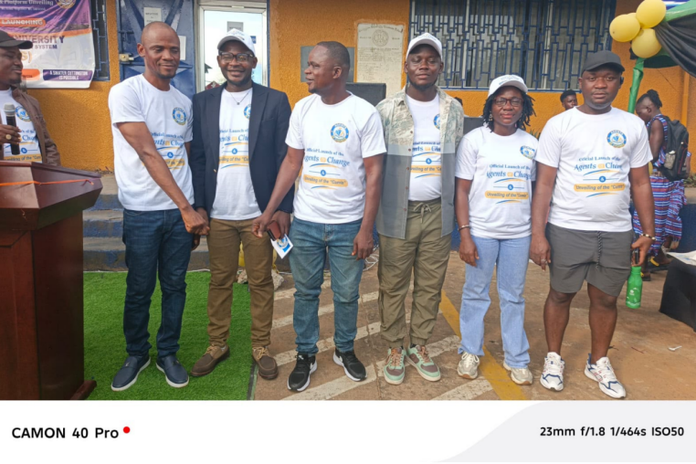
The campaign included activities such as carrying ceremonial torches across counties, engaging junior high school students in Tubmanburg, and conducting public awareness activities, including a street walk from Rehab Junction to the Samuel Kanyon Doe Sports Complex.
Tarpeh described public education as necessary but insufficient, arguing that awareness campaigns cannot substitute for specialized cybersecurity personnel, active threat detection, and continuous protection of critical national infrastructure.
He maintained that teaching students responsible internet practices and encouraging citizens to protect their personal information are important elements of cybersecurity preparedness.
However, he argued that these initiatives must be accompanied by the capacity to identify malicious network activities, detect unauthorized access to government systems, respond to ransomware attacks, and protect financial institutions against organized cybercriminal operations.
According to him, Liberia needs technical teams capable of identifying vulnerabilities before criminals exploit them and responding quickly when security breaches occur.
He questioned whether the country’s current approach places sufficient emphasis on these operational requirements.
His central criticism is that cybersecurity awareness must be matched by investments in the systems and personnel responsible for defending the country’s digital infrastructure.
Cybersecurity Laws Alone Cannot Stop Attacks
Tarpeh also examined Liberia’s emerging legal and regulatory framework, including the Cybercrime Act and Data Protection Act, which provide an important foundation for addressing cybercrime and protecting personal information.
However, he cautioned that legislation alone cannot prevent cyber intrusions or guarantee the security of government and private-sector information systems.
He questioned aspects of the LTA’s Infrastructure and Cybersecurity Regulations, particularly the enforcement timelines, financial penalties, and reliance on periodic compliance reporting.
According to his interpretation of the regulations, telecommunications operators are given a one-year period before certain financial penalties take effect, while penalties for some violations involving critical national infrastructure could be as low as US$3,000, alongside a percentage-based component.
He argued that such penalties may not provide sufficient financial deterrence for large telecommunications companies, particularly where violations could expose national infrastructure to significant risks.
Tarpeh also raised concerns about the reliance on annual self-submitted reports and periodic penetration testing, warning that cyber threats can emerge and exploit vulnerabilities between scheduled assessments.
“Hackers do not respect good intentions or policy papers,” he argued, emphasizing the need for continuous monitoring, active threat tracking, and rapid incident response.
He maintained that cybersecurity compliance should not be treated as an exercise conducted once or twice a year but as an ongoing responsibility requiring institutions to identify and address vulnerabilities continuously.
Beyond the regulatory requirements, Tarpeh questioned the coordination of responsibilities among the LTA, the Office of Technology, Digitalization and Innovation (OTDI), and the proposed independent data protection oversight framework.
In his view, unclear operational responsibilities during a major cyber incident could complicate the government’s response and delay efforts to contain an attack.
He therefore called for a clearly defined coordination structure establishing which institution leads during a cyber emergency, which agencies provide technical support, and who is ultimately responsible for protecting critical national information systems.
Calls for Stronger Institutional Coordination
Tarpeh identified the LTA and OTDI as two central institutions that must work together to strengthen Liberia’s digital security architecture.
While the OTDI is expected to coordinate government digitalization, establish technical standards, and promote secure information sharing across public institutions, he argued that the LTA must exercise stronger oversight of telecommunications networks and international connectivity infrastructure.
He said the two institutions should establish a coordinated framework to ensure that digital government services are not only accessible and efficient but also resilient against cyber threats.
One of his major recommendations is the adoption of a Zero-Trust security framework across government digital systems.
Under this approach, no user, device, or system is automatically trusted, even when accessing an internal government network. Every access request must be verified, with security controls designed to limit unauthorized access and prevent attackers from moving between connected systems.
Tarpeh believes such safeguards could reduce the risk of an intrusion into one government institution spreading to sensitive financial, identification, or national security databases.
He argued that government institutions should adopt stronger identity verification procedures, access restrictions, network segmentation, and continuous monitoring to ensure that sensitive information remains protected.
He also emphasized the importance of strengthening information-sharing arrangements among government agencies, telecommunications operators, and relevant national security institutions.
Lessons from Ghana, Rwanda and Nigeria
To demonstrate possible approaches, Tarpeh pointed to Ghana, Rwanda, and Nigeria as African countries whose cybersecurity and telecommunications arrangements offer lessons for Liberia.
He cited Ghana’s multiple submarine cable connections and the work of its Cyber Security Authority, which oversees cybersecurity regulation and the protection of critical information infrastructure.
He also referenced Rwanda’s cross-border fiber-optic connections through neighboring countries and the work of its National Cyber Security Authority.
Nigeria, meanwhile, was highlighted for its multiple international connectivity gateways and specialized Computer Security Incident Response Teams (CSIRTs) operating across important sectors.
According to Tarpeh, these examples demonstrate the importance of combining alternative connectivity infrastructure with specialized cybersecurity institutions and coordinated incident response systems.
He suggested that Liberia could draw from these experiences by investing in alternative internet routes, developing specialized technical teams, and strengthening collaboration between telecommunications companies and government security agencies.
He maintained that the country’s relatively small telecommunications market should not be an excuse for failing to establish adequate cybersecurity protections.
Rather, he argued, the government should prioritize investments based on the potential economic and national security consequences of a major digital disruption.
Four-Pillar Plan for Liberia
To address the vulnerabilities he identified, Tarpeh proposed a four-pillar action plan centered on strengthening national cybersecurity capacity, improving institutional accountability, and reducing Liberia’s dependence on a single international internet gateway.
First, he called for a 24-hour national cybersecurity response system.
He urged the LTA to work with major telecommunications operators and internet service providers to establish and co-finance a Computer Security Incident Response Team capable of monitoring threats, coordinating responses to cyber incidents, and working with network operators to protect Liberia’s international connectivity infrastructure.
The proposed team would provide continuous monitoring and help identify suspicious activities before they escalate into major security incidents.
He also called for the development of alternative submarine cable connections and other backup internet routes to reduce the country’s dependence on a single international gateway.
Second, he recommended enforcing Zero-Trust security standards across government institutions.
He said particular attention should be given to institutions operating sensitive financial, identification, and public service databases.
Under this approach, government systems would require continuous identity verification and controlled access, reducing the possibility of unauthorized users gaining access to sensitive information or moving across interconnected networks.
Third, he called for greater investment in technical cybersecurity training and local expertise.
Tarpeh argued that Liberia must develop a homegrown workforce capable of conducting threat analysis, digital forensics, reverse engineering, and advanced cyber defense operations.
He proposed partnerships involving government institutions, universities, and private technology companies to provide specialized training and build the technical capacity required to defend national infrastructure.
According to him, relying heavily on external expertise without developing local professionals could weaken the country’s ability to respond independently and effectively to cyber incidents.
Fourth, he advocated stronger regulatory enforcement and independent cybersecurity assessments.
He called for mandatory independent cybersecurity audits for telecommunications operators and institutions responsible for critical national infrastructure.
He also recommended stronger financial penalties for regulatory violations and a mandatory 24-hour window for reporting significant security breaches.
According to Tarpeh, these measures would move Liberia away from a system that relies heavily on periodic compliance documentation toward one built around continuous monitoring, accountability, and rapid response.
He believes the proposed reforms would strengthen public confidence in digital services while making it more difficult for cybercriminals to exploit weaknesses in critical systems.
A Digital Economy That Must Be Protected
Tarpeh maintained that Liberia’s digital transformation presents an important opportunity to improve public administration, expand financial inclusion, strengthen economic productivity, and make government services more accessible.
However, he warned that expanding digital services without corresponding investments in security and infrastructure resilience could expose the country to risks capable of disrupting essential economic activities.
He argued that cybersecurity must be treated as an essential national infrastructure priority rather than an administrative responsibility limited to regulatory compliance and public awareness campaigns.
“Connectivity without operational defense and backup capacity is reckless exposure,” he cautioned.
He is therefore calling for stronger cooperation among the LTA, OTDI, government institutions, telecommunications operators, and national security agencies to establish a coordinated defense system capable of protecting Liberia’s digital economy.
For Tarpeh, the central challenge is ensuring that as Liberia moves more of its economy and public services online, the systems supporting that transformation are sufficiently protected against disruption.
His warning also raises broader questions about the government’s digital development priorities, particularly whether investments in connectivity and online services are being matched by adequate investments in cybersecurity, infrastructure redundancy, and institutional preparedness.
As more government transactions, financial services, and commercial activities move online, the consequences of a major cyber incident could extend beyond individual institutions to affect public confidence, revenue collection, business operations, and national economic stability.
The challenge, therefore, is not simply to connect Liberia to the global digital economy but to ensure that the country has the technical capacity, regulatory safeguards, and backup infrastructure to remain connected and operational when disruptions occur.
About Ernest Tarpeh
Ernest “Paju” Tarpeh, formerly Ernest “Paju” Rodgers, is a senior cybersecurity architect and digital policy specialist with experience in technology infrastructure, network security, and public-sector modernization.
He began his public-sector career at the Ministry of Finance’s Department of Budget in Monrovia, where he participated in the development of Liberia’s first electronic national budget platform.
According to his professional profile, he has spent more than 18 years designing, monitoring, and securing critical networks for Microsoft Corporation, Fortune 500 companies, and United States federal agencies, including the U.S. Department of Defense.
He holds a Bachelor of Science degree in Cybersecurity and Information Assurance, a Master of Science degree in Information Technology and Security Management, and a Master of Arts degree in International Affairs Leadership. He is also completing a Master of Public Policy and Management, specializing in global digital and cybersecurity policy.
Click on this link to read the full details of Tarpeh’s article.