Monrovia — Liberia’s ongoing recruitment drive for the Armed Forces of Liberia has ignited widespread public debate following viral social media videos showing some applicants struggling to read basic elementary-level sentences.
By J.H. Webster Clayeh [email protected]
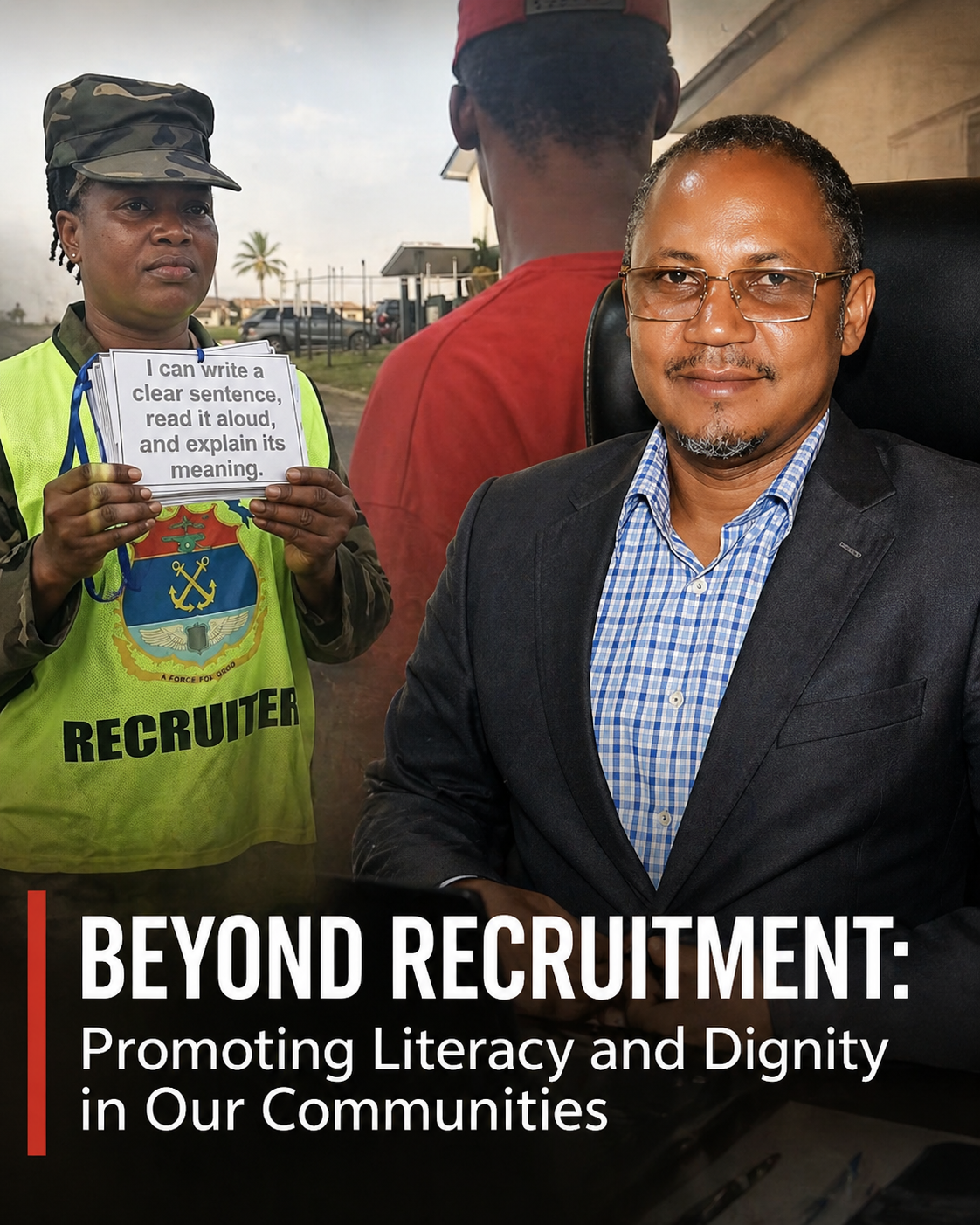
The footage, recorded on the first day of enlistment at the Barclay Training Center, captured several young applicants unable to correctly pronounce simple words such as “just,” “top,” and “each.” The clips quickly circulated online, drawing mixed reactions from the public.
Public Reaction Divided
As discussions intensified, opinions remained sharply divided. Some observers argued that nervousness and the high-pressure nature of the recruitment process may have contributed to the applicants’ difficulties. Others pointed to deeper concerns about gaps in Liberia’s education system.
The Managing Director of the Liberia Water and Sewer Corporation initially downplayed the issue in a social media post, stating, “What we need is a well-trained army, not merely sentence readers.”
However, following a wave of criticism, he later reversed his position, expressing support for including literacy assessments in the recruitment process.
Menledy Towah, veteran educator and proprietor of the Raneh Christian School Network in Nimba and Montserrado blamed the dismal performance of some of the applicants to a fail school system. “The AFL’s basic reading test—consisting of one-vowel, one-syllable words like “cat,” “dog,” and “run”—has become an unlikely mirror reflecting the true state of Liberian education,” he said. “When young men and women holding high school certificates cannot decode such simple words, it is not a failure of the military’s recruitment standards. It is the final, public indictment of a school system that prioritizes appearance over ability, enrollment over excellence, and revenue over results.”
Morrison Morris, a Liberia education specialist, warn that the inability of some applicants to read simple three-letter words points to a broader failure in early childhood and primary education, where literacy fundamentals should be firmly established. Without urgent reforms, he say, the implications could stretch beyond military recruitment into governance, workforce development, and national competitiveness.
“This crisis demands a national strategy that makes foundational learning a central priority. Curriculum, teacher training and all else must be aligned to help shift the trajectory and improve learning outcomes. It is upon the foundation that the rest of learning in later life rest. If we can get foundational learning right, Liberia can unlock the potential of the next generation of students. If not, the consequences will surge beyond what we witnessed today.”
Experts Cite Multiple Factors
Providing a psychological perspective, Musu W. Davis suggested that the issue cannot be attributed to a single cause.
“Some people may have struggled because they didn’t get strong reading skills in school, which could point to gaps in the education system,” she said. “At the same time, anxiety in high-pressure situations like recruitment can make even simple words difficult to read.”
Davis also noted that factors such as poor eyesight could have played a role, emphasizing that both systemic challenges and individual circumstances should be considered.
Differing Views on Accountability
Media practitioner Zoquay Beysolow Konneh disagreed with attributing the problem to the education system alone.
“We cannot put all the blame on the system,” she said. “Almost all of us were schooled by the same system. Some individuals are simply not prepared.”
Meanwhile, Francis Nah described the situation as a reflection of broader national concerns.
“It is sad to see the condition of Liberia’s education system, especially when able young men and women cannot read simple sentences,” he said. “This points to deeper issues that need urgent attention.”
Defense Ministry Responds
Efforts to obtain direct comments from Oscar Mulbah, Public Affairs Officer at the Ministry of National Defense, were unsuccessful.
However, the Ministry issued an official statement confirming the commencement of the recruitment exercise at the Barclay Training Center, describing it as part of the government’s efforts to strengthen national security and build a professional military force.
The Ministry praised applicants for maintaining order and discipline throughout the process and urged continued adherence to guidelines.
It also cautioned the public against engaging with unauthorized individuals claiming to influence recruitment outcomes, stressing that the process is being conducted transparently and strictly on merit.
Nationwide Exercise Continues
According to the Ministry, the recruitment process will extend to other counties, with authorities encouraging prospective applicants to remain disciplined and follow all official procedures.
“The Armed Forces of Liberia remain a symbol of national pride and unity,” the statement noted, adding that the exercise provides an opportunity for qualified Liberians to serve their country with honor.
As the debate continues, the incident has renewed calls for improvements in both education and candidate preparation, while highlighting the challenges faced in balancing national service requirements with broader social realities.
Support Independent Journalism
Your support helps FrontPage Africa continue delivering independent, credible, and impactful journalism. Every contribution strengthens our ability to investigate, inform, and hold power accountable while keeping quality journalism accessible to our readers.
Support our journalism or subscribe to receive the latest FrontPage Africa stories and updates.