Liberia’s own judges have warned of bribery, favouritism and delay in the courts, as seven in ten prisoners sit untried and investors shun the courts altogether. The Supreme Court and the Judiciary’s leadership must answer that call by delivering justice that is prompt, clear and blind to power — beginning with the Kolubah case and before a bench fully appointed by one president faces the 2029 elections.
WHEN JUDGES THEMSELVES warn that the scales of justice are tilting, a nation should listen. This month, opening the November term of court, several of Liberia’s circuit judges did something rare. They turned a ceremonial occasion into a public reckoning with their own branch of government.
IN ZWEDRU, JUDGE J. Kennedy Peabody declared that “no Judge is above the Constitution” and that the courts cannot condemn retaliation in government while tolerating it within the justice system. In Monrovia, Judge Roosevelt Z. Willie asked whether Liberia has learned anything from the corruption and inequality in its courts before the civil war. In Grand Kru, Judge Peter W. Gbeneweleh warned against the commercialization of justice. In August, Judge Onesimus Banwon described a Monrovia Central Prison crowded not with convicts but with people presumed innocent.
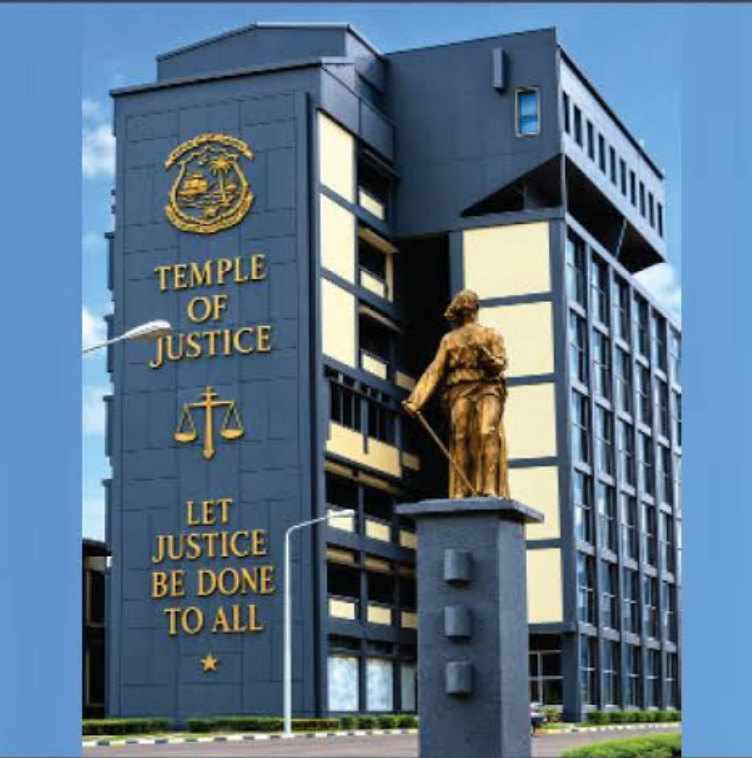
THESE ARE NOT the complaints of opposition politicians or foreign critics. They come from inside the Temple of Justice. The Supreme Court and the leadership of the Judiciary should treat them as a call to action, not an embarrassment to be quietly filed away.
THE FACTS SUPPORT the
judges. As of September, 2,848 of the 4,125 people in Liberia’s prisons — about 69 per cent — had never been tried, according to the Justice Minister-designate. Many are poor and cannot afford a lawyer or a bond. The Constitution promises an arrested person a court appearance within 48 hours. For thousands of Liberians, that promise has become months, sometimes years.
THE U.S. STATE Department has reported that some judges used bail to solicit bribes and that some magistrates asked complainants for money to move the accused to and from detention. An Afrobarometer survey found that 52 per cent of Liberians see widespread corruption among judges and magistrates. When half the public believes justice can be bought, the courts have a problem that no ruling alone can fix.
THE COST REACHES well beyond the prison gates. Washington’s 2026 Investment Climate Statement says commercial cases take two to five years, that judgments are hard to enforce and that investors prefer arbitration abroad to Liberian courts. Foreign companies can take their disputes elsewhere. The market woman fighting for her plot of land, the worker chasing unpaid wages and the family of a detainee awaiting trial cannot.
She
IMPARTIALITY MUST BEGIN at the top. The Supreme Court’s handling of the Yekeh Kolubah case is a test of whether the Court will defend its own authority. Its order to halt proceedings was delivered by its own marshal, yet the House expelled Kolubah the next day. Seven months on, the full bench has heard the appeal and reserved its ruling. Liberians deserve a clear answer on whether a Supreme Court order can be ignored.
THE QUESTION OF
independence will only sharpen. If justices retire at 70 as the Constitution requires, every seat on the bench will have been filled by President Joseph Boakai by the 2029 elections or shortly after. Two seats, including the Chief Justice’s, fall vacant in the election year itself. A bench that may rule on disputes over that election must be — and must be seen to be — beholden to no one.
WE THEREFORE URGE Chief Justice Yamie Quiqui Gbeisay and his colleagues to act on the warnings from their own judges. Rule promptly and clearly in politically sensitive cases. Apply the same standards to former ministers and market traders alike. Discipline judges and court officers who demand money to act on cases, and do so openly. Expand the Magistrate Sitting Program and press the Legislature to extend circuit court terms so that no one sits in jail simply because the court has no time to hear them.
WE ALSO URGE the Executive and the Legislature to respect the courts’ independence and to fund them properly. A judiciary that must beg for its budget or bow to political pressure cannot deliver even-handed justice.
JUDGE PEABODY REMINDED officials that public office “is not your inheritance.” The same is true of the bench. The courts belong to every Liberian — the powerful and the powerless alike. The judges have spoken. It is now up to those at the top of the Judiciary to show that they were heard.
Support Independent Journalism
Your support helps FrontPage Africa continue delivering independent, credible, and impactful journalism. Every contribution strengthens our ability to investigate, inform, and hold power accountable while keeping quality journalism accessible to our readers.
Support our journalism or subscribe to receive the latest FrontPage Africa stories and updates.