More for lawmakers’ fuel than for the nation’s medicines. More for retired politicians than for the poor. Liberia’s biggest-ever budget has its priorities upside down.
LIBERIA HAS NEVER had this much money to spend. The draft national budget for 2027 comes to US$1.54 billion, 18 percent more than this year. In September, revenue collection passed US$1 billion in a single year for the first time. The Finance Ministry’s slogan for the budget is “A Growing Budget for Bigger Impact.”
THE QUESTION IS who gets the impact. Read the budget’s 845 pages line by line, as we have, and the answer is uncomfortable. The extra money goes mainly to the people who write the budget, approve it, guard it and lend to it. The Liberians the budget says it serves, the farmer in Lofa, the mother in a Rivercess clinic, the poorest household in West Point, are left with what remains.
Fuel for the Capitol, crumbs for the farm
START WITH THE Legislature, which will soon review and pass this budget. It is set to receive US$58.2 million. That is more than three times what the entire agriculture sector gets, in a country where farming produces more than a quarter of the economy and feeds most rural families.
THE DETAIL IS worse. Lawmakers’ vehicle fuel is budgeted at US$5.47 million. The Ministry of Health’s budget for drugs and medical consumables, for the whole country, is US$4.23 million. The Legislature’s allowance for “entertainment and representation” is US$2.66 million. The Ministry of Agriculture gets just under US$1 million for seeds, tools and other farm inputs.
WHEN A GOVERNMENT plans to spend more fuelling lawmakers’ cars than buying medicine for its hospitals, the problem is not a lack of money. It is a choice.
Rewarding those who overspend
THE LEGISLATURE IS not being rewarded for discipline. By 30 September, with a quarter of the 2026 fiscal year still to run, it had already spent US$64.3 million against an approved US$57.2 million. Its “constituency visits” line was budgeted at US$1.12 million; it spent more than US$6.2 million. Committee hearings were budgeted at US$1.4 million and cost US$6.5 million.
THE 2027 BUDGET responds by more than tripling the constituency-visit allowance. The National Security Agency, which also overspent its 2026 budget by more than 20 percent, gets an increase too. Meanwhile, the Ministry of Health had not spent a cent of its 2026 capital budget by September, and the Ministry of Agriculture had spent nothing of the US$5.5 million approved for farm projects. Money flows freely to the Capitol and the security services, and barely to the clinic and the farm.
Promises broken on paper
LIBERIA, LIKE OTHER African Union members, has pledged to spend 10 percent of its budget on agriculture. This budget gives it 1.2 percent. Under the 2001 Abuja Declaration, African governments promised 15 percent for health; this budget gives 8.8. Education, at 10.6 percent, is below the 15 to 20 percent recommended internationally.
PRESIDENT JOSEPH BOAKAI’S ARREST Agenda puts Agriculture first in its name, yet agriculture comes last in this budget. If that mismatch is unintended, the Finance Ministry should fix it. If it is intended, the government should say so.
The poor and the powerful
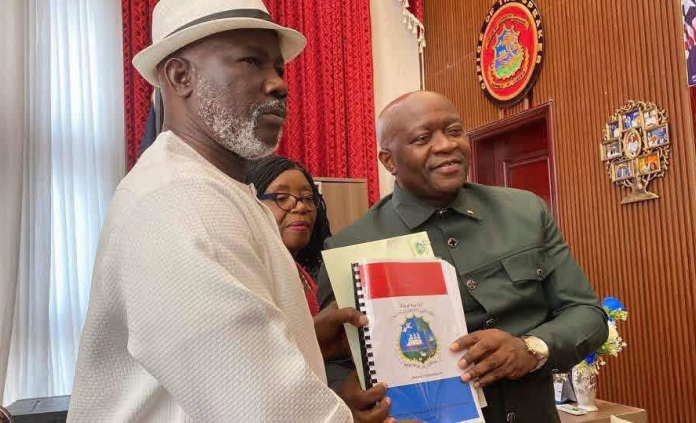
THE BUDGET’S FLAGSHIP Social Protection Safety Net, meant for Liberia’s poorest households, receives US$1.05 million. The same budget sets aside US$2.23 million in benefits for former elected officials. Debt service, much of it owed to Liberian commercial banks and the Central Bank, takes US$275.5 million, twice the entire health budget. Debts must be paid. But the budget makes room for retired politicians before it makes room for the poor.
GEOGRAPHY REPEATS THE pattern. Of the spending the budget assigns to a specific county, Montserrado, home to the capital Monrovia, takes US$52 million. Rivercess gets US$837,710. The Monrovia City Corporation’s budget rises 74 percent, partly for a US$4 million “smart sanitation and city beautification” programme, while much of the countryside waits for basic services.
Questions that demand answers
SOME LINES RAISE questions beyond priorities. They go to transparency, and the Finance Ministry owes the public clear answers before the Legislature votes.
• WHY DOES THE Ministry of Local Government’s budget include new “transfers” of US$7.1 million to three mining companies: Cavalla Resource Liberia Inc., China Union Mining Company and Hummingbird Resource Liberia Inc.? Is the government paying these companies, or passing on money they owe to communities? The budget does not say.
• WHAT IS THE US$14 million “Transfer to Vendor Share”?
• WHY DOES SPENDING on “intelligence services” across government rise from US$21 million to nearly US$29 million, with no explanation of what it buys?
• WHY IS NIMBA University’s US$2 million subsidy booked under Grand Bassa University, leaving Nimba University’s own allocation at US$386,200?
• WHY DOES FOREIGN air travel at the Ministry of Local Government jump 44-fold, from US$17,690 to US$780,357, and domestic travel at the Ministry of State for Presidential Affairs rise more than fifteenfold?
THE DOCUMENT IS also full of basic errors. Its cover reads “Fiscal Year 20276.” It gives two different figures for how much the budget has grown and two for how many soldiers will be recruited. Seventeen of the 20 state-owned enterprises missed the deadline to submit their budgets. A budget this careless with its own numbers cannot ask citizens to trust it with their money.
What must happen now
THERE IS GOOD news in this budget, and it deserves credit. Revenue is rising. The economy is growing. Teachers will finally be paid according to their qualifications, with the same minimum salaries in every government school. Police officers will see raises tied to their rank. These are real gains.
BUT A BUDGET is a statement of values, and this one says that comfort for those in power comes before the welfare of ordinary people. The Legislature, which benefits most from this budget, now has the job of scrutinising it. We urge lawmakers to show they can put the country ahead of their own allowances. Cut the fuel, the entertainment and the inflated travel. Move that money to medicines, farm inputs and the safety net. Demand answers on the mining transfers and the unexplained lines before a single vote is cast.
LIBERIANS HAVE HEARD enough slogans. They will judge this budget not by how much it grows, but by whether any of it reaches them.
Support Independent Journalism
Your support helps FrontPage Africa continue delivering independent, credible, and impactful journalism. Every contribution strengthens our ability to investigate, inform, and hold power accountable while keeping quality journalism accessible to our readers.
Support our journalism or subscribe to receive the latest FrontPage Africa stories and updates.