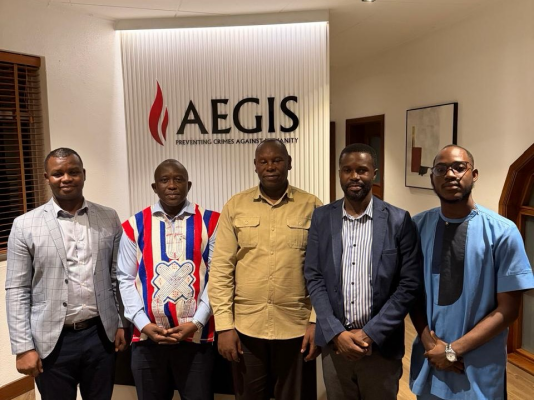
MONROVIA— A Liberian delegation comprising officials from the Office for the Establishment of War and Economic Crimes Court for Liberia (OWECC-L) and the Press Union of Liberia (PUL) has returned from Rwanda following a study tour aimed at strengthening Liberia’s efforts to establish the War and Economic Crimes Court (WECC) and the National Anti-Corruption Court (NACC).
By Patience M. Jones,[email protected]
The delegation returned late Monday, October 12 after a study tour conducted from September 24 to October 12 during which members engaged Rwandan transitional justice institutions, government agencies, media organizations, memorial centers, and civil society groups to examine lessons from the country’s post-conflict recovery and accountability processes.
The visit sought to promote institutional learning, technical cooperation, and partnerships that could support Liberia’s efforts to address the legacies of its civil conflicts, strengthen accountability, and advance national reconciliation.
Dr. Cllr. Jallah A. Barbu, Executive Director of OWECC- and Julius Kanubah, President of the PUL, led discussions on how Rwanda’s experience could inform Liberia’s transitional justice process, particularly in establishing mechanisms to address war-related atrocities and economic crimes.
The discussions also explored opportunities for cooperation in national healing, memorialization, digital archiving, institutional capacity-building, and assistance for victims and survivors of Liberia’s civil conflicts.
According to the delegation, Rwanda’s experience offers lessons on confronting painful national histories, promoting social cohesion, strengthening public confidence in institutions, and pursuing accountability for serious human rights violations and economic crimes.
Media Responsibility and Transitional Justice
The delegation also prioritized engagement with Rwandan media institutions, recognizing the role of journalism in both conflict and post-conflict recovery.
Rwanda’s history illustrates the devastating consequences of media being used to promote hatred and incitement during the 1994 Genocide against the Tutsi, as well as the potential for responsible journalism to contribute to public education, reconciliation, and national recovery.
Against this backdrop, the delegation held strategic engagements with the Rwandan Journalists Association (ARJ), the Rwanda Media Commission (RMC), and the Liberian Media Institutions Network-Rwanda (LMIN-R), a network of online media platforms operated by Liberian students living in Rwanda, including journalists and other media practitioners.
OWECC-L and the PUL expressed confidence that the engagements could lead to practical cooperation in transitional justice reporting, professional development, digital documentation, peace education, and exchanges between media practitioners in both countries.
The institutions also indicated that prospective collaborations could complement existing memoranda of understanding and strengthen professional solidarity and democratic accountability between Liberia and Rwanda.
For Liberia, stronger media engagement in transitional justice could help improve public understanding of the proposed justice institutions, encourage informed national dialogue, and ensure that the experiences of victims and survivors remain part of discussions surrounding accountability and reconciliation.
Study Tour Covered Five Rwandan Locations
The study tour covered Kigali, Musanze, Rubavu, Kibuye, and Nyanza, exposing delegates to Rwanda’s transitional justice institutions, memorialization initiatives, and post-conflict recovery programs.
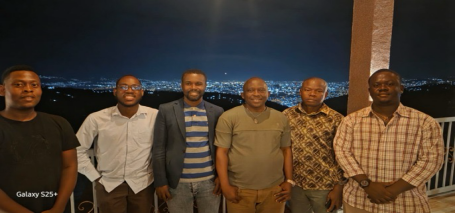
The delegation comprised Dr. Barbu; Kanubah; Ezekiel E. Fayia, a Liberia National Police intelligence and investigative officer assigned to OWECC-L; Simeon J. Lomah, Head of Information and Communications Technology at OWECC-L; Edmond S. Kamei, Assistant Director for Operations at OWECC-L; and Patrick Niyongabo, an adviser and escort for the Rwanda engagements.
The delegation also received support from Tyfred B. Teh, a Liberian student pursuing a Master of Laws degree in Rwanda and a member of the Steering Committee of the African Transitional Justice Youth Network (ATJYN), who assisted with and participated in several engagements.
The visit comes as Liberia continues efforts to establish the WECC and NACC as part of its broader pursuit of accountability and justice.
The proposed WECC is intended to address crimes committed during Liberia’s civil conflicts, while the NACC is expected to strengthen efforts to prosecute corruption-related offenses.
As the country advances these initiatives, lessons from Rwanda’s experience could inform institutional development, public education, documentation, and engagement with victims and survivors.
However, the practical impact of the study tour will depend on how the lessons and relationships developed during the visit translate into concrete institutional cooperation and progress toward establishing the proposed courts.
Support Independent Journalism
Your support helps FrontPage Africa continue delivering independent, credible, and impactful journalism. Every contribution strengthens our ability to investigate, inform, and hold power accountable while keeping quality journalism accessible to our readers.
Support our journalism or subscribe to receive the latest FrontPage Africa stories and updates.