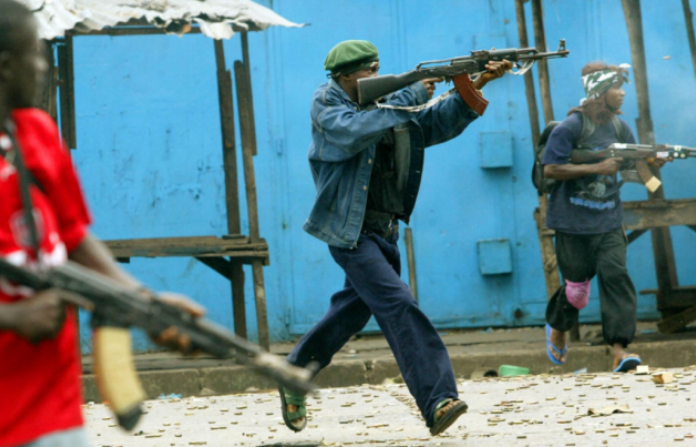
KIGALI, Rwanda — For thousands of Liberians still waiting for justice for atrocities committed during the country’s brutal civil conflicts, the establishment of a court to prosecute war and economic crimes represents more than a legal undertaking. It is a long-awaited opportunity to confront the past, hold perpetrators accountable and give victims and survivors a greater sense of justice.
By Patience M. Jones,[email protected]
Against this backdrop, a high-level Liberian delegation is looking to Rwanda for lessons, technical support and strategic partnerships that could help shape Liberia’s transitional justice process.
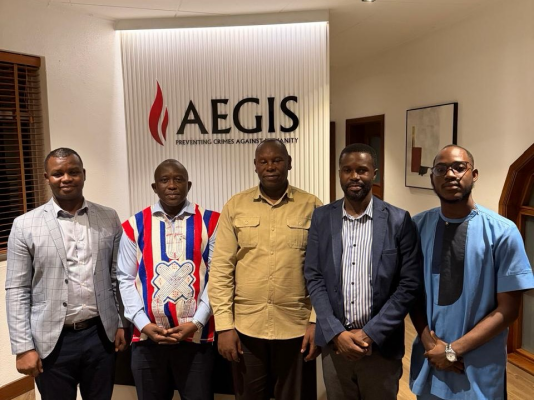
The delegation, comprising representatives of the Office for the Establishment of War and Economic Crimes Court for Liberia (OWECC-Liberia), the Press Union of Liberia (PUL) and the Liberia National Police (LNP), has undertaken a series of engagements with Rwandan institutions working in transitional justice, law enforcement, academia, civil society and the media.
The engagements, which began following the delegation’s arrival in Rwanda on October 2, are aimed at identifying practical lessons and opportunities for collaboration as Liberia moves toward establishing and operationalizing its proposed War and Economic Crimes Court (WECC) and National Anti-Corruption Court (NACC).
For Liberia, where questions of accountability for past atrocities remain central to national reconciliation, the initiative presents an opportunity to learn from another African country’s experience in confronting a violent past and pursuing justice.
LOOKING BEYOND THE COURTROOM
Led by Cllr. Professor Jallah A. Barbu, Executive Director of OWECC-Liberia; Julius Kanubah, President of the Press Union of Liberia and Ezekiel E. Fayia, Superintendent of the Liberia National Police, the delegation has held discussions across Kigali, Musanze and Rubavu.
The delegation is also scheduled to visit Kibuye and Nyamata before returning to Liberia.
The discussions have focused on transitional justice, reconciliation, accountability, national healing, memorialization, digitalization and support for victims and survivors of Liberia’s armed conflicts.
These issues extend beyond the creation of judicial institutions. They also raise questions about how victims can access justice, how survivors can have their experiences acknowledged, how evidence can be preserved and how society can confront the consequences of violence without abandoning accountability.
For the Liberian delegation, Rwanda’s experience offers an opportunity to examine approaches that could inform the country’s own efforts, while recognizing that Liberia must develop solutions suited to its history, institutions and national circumstances.
During engagements with Rwandan transitional justice actors, Barbu and Kanubah emphasized the importance of cross-cultural learning, technical assistance and institutional capacity-building in strengthening Liberia’s transitional justice process.
The delegation includes Simeon J. Lomah, Head of Information and Communications Technology at OWECC-Liberia; Edmond S. Kamei, Assistant Director for Operations at OWECC-Liberia; and Patrick Niyongabo, Escort and Adviser to the delegation.
Media Partnerships To Strengthen Accountability
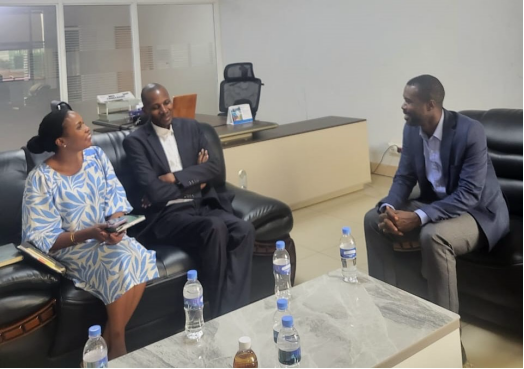
Beyond judicial institutions, the delegation is also exploring opportunities to strengthen cooperation between Liberian and Rwandan media organizations.
Kanubah expressed confidence that discussions with the Rwanda Journalists Association (ARJ) and the Rwanda Media Commission (RMC) would lead to a memorandum of understanding to promote collaboration between the two countries’ journalism communities.
The proposed partnership is expected to create opportunities for professional exchange, knowledge-sharing and stronger media solidarity.
For Liberia, where public understanding of transitional justice will be essential to meaningful national participation, stronger journalism partnerships could help expand public education and improve reporting on accountability, reconciliation and the work of institutions responsible for addressing past and present injustices.
A well-informed public is critical to ensuring that transitional justice is not treated solely as a government or legal-sector initiative, but as a national process in which citizens understand their rights, responsibilities and opportunities to participate.
Turning International Lessons Into National Action
The delegation’s engagements come as Liberia continues efforts to advance the establishment of the War and Economic Crimes Court and the National Anti-Corruption Court.
While international exchanges can provide valuable insights, their significance will ultimately depend on how those lessons are translated into practical action at home.
For victims and survivors of Liberia’s civil conflicts, the promise of transitional justice will be measured not simply by international partnerships or institutional announcements, but by whether credible mechanisms emerge to pursue accountability, recognize suffering and contribute to national healing.
The delegation’s ongoing engagements in Rwanda therefore represent an opportunity to build relationships and strengthen institutional knowledge that could support Liberia’s justice and accountability agenda.
The ultimate test, however, will be whether the knowledge gained and partnerships developed can help move Liberia closer to a transitional justice process that responds meaningfully to the needs of victims, survivors and the wider public.
Support Independent Journalism
Your support helps FrontPage Africa continue delivering independent, credible, and impactful journalism. Every contribution strengthens our ability to investigate, inform, and hold power accountable while keeping quality journalism accessible to our readers.
Support our journalism or subscribe to receive the latest FrontPage Africa stories and updates.