When Alexander B. Cummings called for international investigators and technical experts to assist Liberia following the reported US$19.2 million cocaine seizure at Roberts International Airport (RIA), the reaction was immediate and polarized.
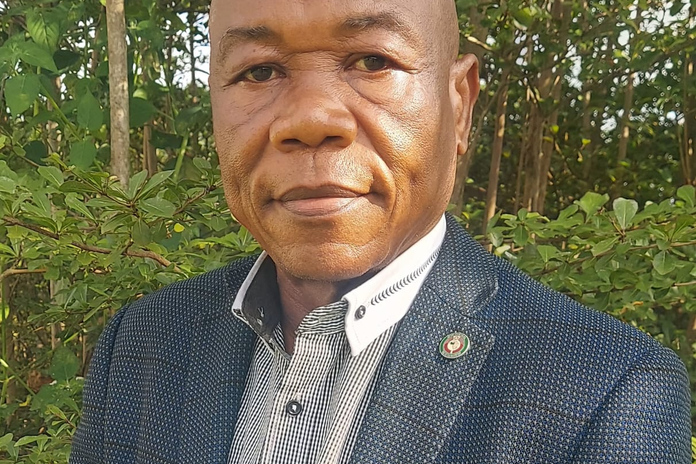
By Dr. Clarence R. Pearson, Sr.
Supporters viewed the proposal as a necessary response to one of the largest drug seizures in Liberia’s history. Critics dismissed it as an unnecessary invitation for foreign interference, arguing that Liberia possesses sufficient capacity to investigate its own affairs and that calling in outsiders would undermine national sovereignty.
It is a debate worthy of serious consideration.
But it is also a debate that begins with the wrong question.
The issue is not whether Liberians are capable of investigating crime.
The issue is whether any nation—particularly one confronting sophisticated transnational criminal organizations operating across multiple continents—can realistically dismantle modern drug syndicates without specialized international technical cooperation.
Experience from around the world provides a clear answer.
The world’s most successful counter-narcotics campaigns have never been purely national enterprises. They have been partnerships that combine sovereign authority with specialized international expertise.
The lesson for Liberia is equally clear.
International technical assistance is not a surrender of sovereignty.
It is an investment in strengthening it.
The Nature of the Enemy Has Changed
Drug trafficking today bears little resemblance to the smuggling operations of previous decades.
Modern criminal syndicates function as multinational corporations.
Their logistics span continents. Their financial transactions move through cryptocurrencies, shell companies, informal banking systems, and sophisticated money-laundering networks. Their communications are encrypted. Their operations depend upon cyber technology, commercial shipping, aviation logistics, digital finance, and corruption that often crosses national borders.
A shipment leaving South America may transit several African countries before reaching Europe. Financing may originate in one jurisdiction, coordination occur in another, and profits ultimately be laundered through multiple financial systems.
No developing country—regardless of political will—can independently master every aspect of this complex criminal architecture.
The challenge is no longer simply policing.
It is technology.
It is financial intelligence.
It is cyber forensics.
It is international cooperation.
Every Major Democracy Uses Outside Expertise
Ironically, many critics who oppose international technical assistance assume that powerful nations investigate major transnational crimes entirely on their own.
They do not.
The United States regularly contracts private companies to support counter-narcotics operations through satellite surveillance, cyber intelligence, forensic accounting, financial investigations, aircraft maintenance, artificial intelligence, blockchain analysis, and secure communications.
European governments do the same.
So do Canada, Australia, and numerous Asian democracies.
International organizations including INTERPOL, the United Nations Office on Drugs and Crime (UNODC), Europol, and the World Customs Organization routinely support national investigations with specialized expertise that individual governments cannot efficiently maintain alone.
None of these partnerships transfers sovereignty.
They expand capability.
Law enforcement powers remain exclusively with the state.
Arrests are made by government officers.
Prosecutions are conducted by government prosecutors.
Judgments are rendered by national courts.
Private experts and international specialists simply provide the technical capabilities governments require to confront increasingly sophisticated criminal enterprises.
Africa Has Already Adopted This Model
Liberia would not be entering unfamiliar territory.
Across Africa, governments increasingly rely on carefully structured public-private and international partnerships to strengthen national security.
Ghana has modernized security at the Port of Tema by integrating advanced cargo-scanning technologies supplied through international commercial partnerships while maintaining government control over customs enforcement and criminal investigations.
Maritime security programs across West Africa combine national naval forces with international technical assistance in radar systems, drone surveillance, vessel tracking, intelligence fusion, and port security assessments.
Countries throughout the continent work closely with INTERPOL, UNODC, the European Union, the United States, and regional organizations to strengthen border management, financial investigations, digital forensics, and organized crime intelligence.
These arrangements do not replace African governments.
They strengthen African institutions.
The distinction is fundamental.
Strong states are not those that refuse assistance.
Strong states are those that know how to use international expertise without surrendering sovereign authority.
Public Trust Is Part of National Security
Perhaps the strongest argument for international technical assistance has little to do with technology.
It has to do with trust.
Whenever a narcotics seizure reaches extraordinary proportions—as the reported Roberts International Airport case has—it inevitably generates public scrutiny and legitimate questions.
Citizens naturally ask how such a sophisticated operation could develop.
They ask whether criminal organizations exploited weaknesses within public institutions.
They ask whether every lead will be pursued regardless of where the evidence points.
These are legitimate questions in every democracy.
They must also be answered responsibly.
It is essential to distinguish between suspicion and proof.
Public speculation is not evidence.
Allegations of official complicity must never be accepted as fact without credible investigation, due process, and judicial determination.
Equally, governments cannot ignore the institutional damage caused when serious public concerns remain unanswered.
Around the world, transnational criminal organizations deliberately seek to corrupt customs officials, airport personnel, border agents, police officers, politicians, and commercial actors. The United Nations Office on Drugs and Crime has consistently identified corruption as one of the principal enablers of organized crime worldwide. Criminal syndicates succeed not only because of their financial resources but because they exploit institutional vulnerabilities wherever they exist.
That reality makes transparency indispensable.
An investigation that is technically rigorous, professionally independent, and internationally credible protects more than the integrity of the evidence.
It protects the integrity of honest public servants.
If investigators conclude that no government official facilitated criminal activity, an independent process strengthens that conclusion.
If wrongdoing is discovered, accountability demonstrates that no one stands above the law.
Either outcome strengthens the Republic.
International technical assistance should therefore never be interpreted as a vote of no confidence in Liberia’s security institutions.
It should be understood as a confidence-building measure—one that assures Liberians, investors, and international partners that every piece of evidence has been professionally examined, every lead pursued, and every suspect investigated without fear, favor, or political interference.
The Real Capability Gap
Public reporting surrounding the Roberts International Airport investigation has highlighted broader concerns about institutional capacity, including reported shortages of advanced forensic equipment, specialized cargo-screening technologies, and technical investigative resources.
Whether every reported deficiency proves accurate is ultimately less important than the broader institutional reality.
Modern organized crime increasingly depends upon technologies that many developing countries cannot afford to maintain independently.
Digital forensic laboratories.
Artificial intelligence.
Blockchain tracing.
Encrypted communications analysis.
Biometric identification systems.
Financial intelligence platforms.
Advanced cargo imaging.
These capabilities require highly specialized expertise and continuous investment.
Drug cartels understand this.
They deliberately target jurisdictions where institutional capabilities lag behind criminal sophistication.
Patriotism cannot substitute for forensic science.
Political determination cannot replace digital intelligence.
National pride alone cannot decrypt encrypted communications or reconstruct complex international financial transactions.
Technology matters.
Sovereignty Is Measured by Competence
Perhaps the greatest misconception surrounding international assistance is the belief that accepting outside expertise somehow diminishes independence.
History suggests precisely the opposite.
A country unable to protect its borders becomes increasingly vulnerable to external criminal influence regardless of how fiercely it proclaims its sovereignty.
Conversely, a nation that selectively acquires international expertise strengthens its sovereign capacity by improving its ability to enforce its own laws.
Hiring international forensic specialists is no different from hiring international engineers to design a modern bridge or specialists to build a national power plant.
The expertise may be international.
The ownership remains national.
Likewise, inviting internationally respected technical experts to assist in dismantling sophisticated criminal networks does not transfer Liberia’s justice system to foreign governments.
Liberian investigators would remain in charge.
Liberian prosecutors would decide whom to charge.
Liberian judges would determine guilt or innocence.
Liberian law would govern every proceeding.
The international experts would provide knowledge—not authority.
The Appropriate Model
International technical assistance should therefore be carefully structured to strengthen, not supplant, domestic institutions.
Liberia could benefit from internationally recognized specialists in digital forensics, financial crime investigations, aviation security, cargo logistics, blockchain analytics, forensic accounting, customs risk management, and organized crime intelligence.
INTERPOL and UNODC technical advisers could facilitate cross-border cooperation where evidence extends beyond Liberia’s jurisdiction.
Advanced laboratories could provide scientific analysis unavailable domestically.
Every operational decision, however, should remain under Liberian legal authority.
This is not foreign control.
It is sovereign capacity-building.
Patriotism Requires Results
The true measure of patriotism is not how loudly a nation proclaims its independence.
It is how effectively it protects its people.
Drug trafficking is no longer simply a criminal justice issue.
It threatens public health.
It undermines investor confidence.
It weakens border security.
It corrodes democratic institutions.
It fuels corruption.
It finances transnational criminal enterprises capable of destabilizing entire regions.
Liberia cannot afford to confront such threats with yesterday’s tools.
Calls for international technical assistance should therefore not be interpreted as accusations against every member of the Liberian government or security services. Thousands of public servants perform their duties with professionalism, integrity, and personal sacrifice every day.
Indeed, independent technical expertise protects honest officials as much as it exposes wrongdoing.
Its purpose is to distinguish the innocent from the guilty through credible evidence rather than political speculation. It reassures the public that justice is impartial, strengthens confidence that institutions remain accountable, and demonstrates that the Republic is committed to the rule of law rather than the protection of individuals.
Ultimately, the debate is not about choosing between sovereignty and cooperation.
It is about choosing between symbolism and effectiveness.
History consistently rewards nations that possess the confidence to strengthen themselves through knowledge, partnerships, and institutional excellence.
Strong countries do not isolate themselves from expertise.
They marshal every lawful resource available to defend the Republic.
The question before Liberia is therefore not whether it should accept international technical assistance.
The question is whether it can afford not to, when confronting criminal organizations whose resources, technology, and international reach often exceed those of the states they seek to undermine.
In the twenty-first century, sovereignty is not diminished by acquiring capability.
It is secured by it.
Support Independent Journalism
Your support helps FrontPage Africa continue delivering independent, credible, and impactful journalism. Every contribution strengthens our ability to investigate, inform, and hold power accountable while keeping quality journalism accessible to our readers.
Support our journalism or subscribe to receive the latest FrontPage Africa stories and updates.