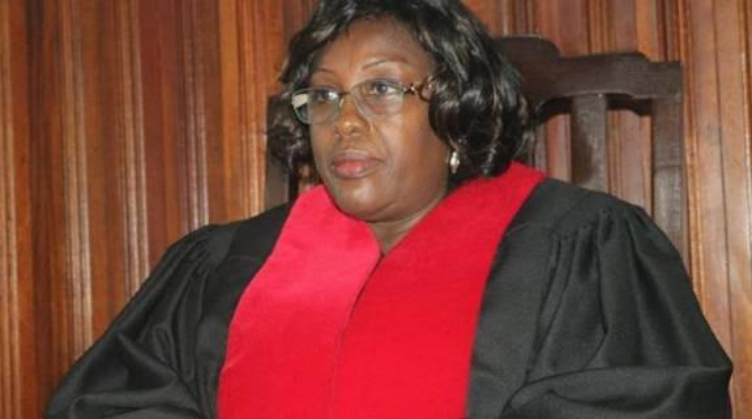
Monrovia – Justice-in-Chamber Jamesetta H. Wolokolie has declined to issue an alternative writ of certiorari in the ongoing Capitol arson case involving former House Speaker J. Fonati Koffa and 14 others, a decision that has sent shockwaves through legal and human rights communities.
The ruling, handed down by Justice Wolokolie, effectively lifts a prior stay on the proceedings and orders Judge Roosevelt Z. Willie of Criminal Court “A” to resume jurisdiction.
The Court’s move has been described by defense lawyers, civil society groups, and legal analysts as a stunning dismissal of verified evidence of torture, unlawful searches, and potential violations of Liberia’s constitutional protections and international human rights obligations.
Central to the defense’s certiorari petition were medical reports from AMI Hospital in Monrovia, which confirmed that several of the defendants bore physical injuries consistent with torture.
The court-ordered medical assessments documented waterboarding, blunt-force trauma, burns, and severe bruising, allegedly inflicted by agents of the National Security Agency (NSA) during detention and interrogation.
The NSA, as noted by defense counsel, has no statutory authority to investigate or detain civilians in ordinary criminal matters, raising alarms over jurisdictional overreach and due process violations.
Unlawful Searches Cited; Article 21(f) Invoked
In addition to the torture claims, the defense submitted evidence that key materials used by prosecutors, including mobile phone data and personal effects, were seized without a valid search warrant.
The warrant was reportedly obtained after the searches were conducted, in direct violation of Article 21(f) of the Liberian Constitution, which prohibits unreasonable searches and seizures.
Despite this, both Judge Willie and now Justice Wolokolie have declined to suppress the evidence.
In her ruling, Justice Wolokolie stated that the trial should proceed, and the credibility of the contested evidence should be assessed by the jury, not excluded at the preliminary stage.
A Setback for the Defense, But Not the End
The decision is a major procedural setback for the defense, which had hoped to halt the trial and force the judiciary to confront what they claim are gross human rights violations and constitutional breaches.
“This is not just a legal disappointment, it’s a moral one,” said a visibly frustrated Attorney Lovette Wuo, a member of the defense team.
“We expected more from our Supreme Court, especially in a case implicating torture.”
Nonetheless, the defense is expected to reintroduce these issues during trial and may ultimately appeal any final judgment, or raise reserved constitutional questions should the trial court fail to address their concerns.
Legal scholars have pointed to Anderson v. Republic of Liberia, a landmark Supreme Court case, where the Court held that evidence or confessions obtained through torture are void ab initio, meaning they are null from the outset and must be excluded from proceedings.

The ruling also appears to conflict with Liberia’s international obligations under the United Nations Convention Against Torture and the Geneva Conventions, both of which prohibit the use of torture-tainted evidence in any judicial forum.
“This ruling undermines both Liberia’s legal credibility and the integrity of its judicial system,” said a constitutional law expert at the University of Liberia.
“It sends a dangerous message that state agents can abuse citizens without consequence if the courts are unwilling to enforce the Constitution.”
Prosecution Claims Vindication
From the prosecution’s perspective, the Supreme Court’s decision validates Judge Willie’s earlier ruling that the admissibility of evidence should be left to the discretion of the jury.
“We are pleased with the decision,” said a senior official at the Ministry of Justice, speaking on condition of anonymity.
“This confirms that the trial court acted within its authority. The evidence will now be heard by a jury, as the law intends.”
Capitol Arson Case Closely Watched
The charges stem from the December 2024 fire that ravaged sections of Liberia’s Capitol Building, an act authorities described as deliberate and politically motivated.
Koffa, a prominent political figure, and his co-defendants face charges of arson, criminal mischief, conspiracy, and sedition.
The case has attracted national and international attention, not only for the seriousness of the alleged crime but for what it may reveal about power dynamics, human rights enforcement, and the independence of Liberia’s judiciary.
With the trial now set to resume, all eyes are on Judge Willie and whether he will address the alleged rights violations in full or move forward with a case that many argue is already compromised by procedural misconduct.
Beyond the fate of the defendants, legal observers say this case will test Liberia’s commitment to constitutionalism, human dignity, and the rule of law.
Support Independent Journalism
Your support helps FrontPage Africa continue delivering independent, credible, and impactful journalism. Every contribution strengthens our ability to investigate, inform, and hold power accountable while keeping quality journalism accessible to our readers.
Support our journalism or subscribe to receive the latest FrontPage Africa stories and updates.