Liberian traditional wisdom offers an important contribution to the question of who deserves the name “reformer.” The saying, “One tree does not make a forest,” reminds us that national transformation can not depend on one individual alone. The proverb, “The big man is they alone represent the center of leadership. And “Empty pots make a lot of noise” warns against mistaking political rhetoric for meaningful achievement.
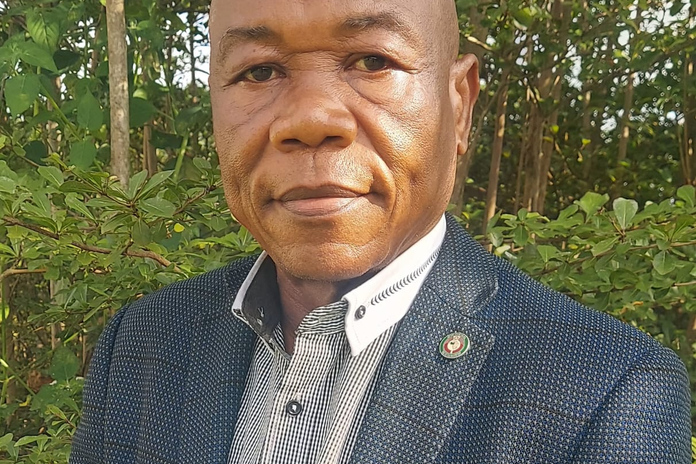
By: Austin S Fallah – A True Son of the Planet Earth Soil: [email protected]
Bassa proverb: “On the old mat is woven the new,” offers a perspective on themselves
President Joseph Nyuma Boakai: Democratic reform and cooperation: “Liberia’s contributions to the Security Council’s discussions and decisions” are shaped by its experience in “democratic reform, political transition, and governance.” Source: President Boakai’s address to the 80th United Nations General Assembly, September 2025.
Former President Ellen Johnson Sirleaf: Accountability and transparency: “Words like accountability, transparency, and reform are not just the calling card of some foreign donor.” Source: Sirleaf’s 2011 speech at Harvard University. She connected these principles to African governments’ decisions and responsibilities.
Former President George Manneh Weah:Equality and freedom: “Equality and freedom are never just a final destination that a people or a nation reaches.” Source: Weah’s inaugural address, January 22, 2018. He argued that these rights must be measured against leaders’ actions, policies, laws, and purposes.
John Stuart Mill:The moral duty to oppose wrongdoing
“He is not a good man who, without a protest, allows wrong to be committed in his name.” Source: Inaugural Address Delivered to the University of St. Andrews, 1867. Relevance: A genuine reformer must be willing to challenge wrongdoing, even when it is committed by their own political party or allies.
Edmund Burke: The importance of collective responsibility: “When bad men can also struggle.” Source: Thoughts on the Cause of the Present Discontents, 1770. Application: Reform is not achieved by one person alone; collective groups can be essential to democratic change.
In every society that calls itself democratic, the word ‘reformer’ carries powerful moral and political weight.
It suggests courage, public service, intellectual seriousness, and a willingness to confront injustice.
Reformers are commonly understood as people who seek to improve existing institutions rather than destroy society or merely replace one ruling group with another.
Yet the term has become increasingly easy to claim and hard to deserve.
Political parties, advocacy organizations, leaders, law enforcement, activists, and even wealthy business figures often present themselves as reformers simply because they criticize the government, oppose the status quo, or promise change.
However, opposition is not automatically reform.
Change is not always improvement.
A person or group may speak the language of democracy while practicing corruption, self-enrichment, exclusion, or manipulation.
To recover democracy’s true meaning and moral sense, society must ask an important question: who should be called a reformer?
Is reformism a title that an individual can seize for himself or keep?
Is it a label that a political organization may grant itself? Or is it a title that must be earned through conduct, sacrifice, integrity, and public recognition?
A meaningful answer requires comparing individual reformers and reformist groups, as well as comparing genuine reform with false reform.
Both individuals and groups can contribute to democratic progress, but neither deserves the name “reformer” merely by claiming it.
A true reformer is defined by a commitment to the common good, moral integrity, intellectual excellence, accountability, and measurable improvement in ordinary people’s lives.
At its core, democracy is more than elections, political parties, and speeches about freedom.
Democracy is a moral system of public responsibility.
It rests on the idea that government, lawmakers, the judiciary, political parties, and appointed officials should serve citizens, not exploit them.
It requires leaders to respect human dignity, listen to criticism, obey laws, protect minority rights, and create fair opportunities for people to improve their lives.
When democracy works, it lets citizens help shape the society in which they live.
When democracy is weakened, political power becomes a private tool for a small number of people who use public resources for personal gain.
For this reason, democratic societies need reformers.
Every society has institutions that become matters most; neglecting education may fail children, and care may be inaccessible.
Elections may be controlled by money, intimidation, or misinformation.
Economic systems may produce wealth for a few while leaving many families trapped in unemployment, hunger, and insecurity.
Reformers recognize these failures and work to correct them.
They do not simply complain about the country’s problems, or legislative issues; they offer practical, ethical, and inclusive ways to solve them.
Individual reformers also play a particular role in this process. We often remember reform through the names of strong individuals: activists, writers, lawmakers, lawyers, teachers, and judicial officials who speak when others are silent.
An individual can become a reformer by refusing to accept injustice as normal.
Such a person may expose corruption, defend oppressed communities, organize peaceful resistance, propose new laws, or educate the public about issues that powerful interests prefer to hide.
Individual reformers are often important because they provide moral clarity.
They can say, “This is wrong,” even when they face criticism or personal loss.
However, individual leadership has both strengths and limitations.
Its strength lies in courage, vision, and responsibility.
A principled individual can inspire others and make complex problems understandable.
In moments of crisis, people may need a leader who can articulate a clear moral direction.
Yet individual reform can become dangerous when it turns into personality worship.
A leader who begins by serving the people may eventually believe that they alone represent the people.
When that happens, reform becomes less democratic. The leader may reject criticism, silence opponents, and use the language of national renewal to justify personal power.
Therefore, no individual should be able to appoint himself or herself a reformer simply through speeches, slogans, or popularity.
A self-awarded title has little value.
If a politician repeatedly calls himself a reformer while stealing public money, intimidating opponents, or promoting relatives and allies, the label is false.
If an activist claims to defend the poor but uses the poor only as an audience for personal fame, that claim is also false.
Genuine reform requires consistency between words and actions.
The public should judge reformers not by how loudly they announce their virtue but by whether their conduct demonstrates it.
Reformist groups, such as political movements, lawmakers, civil society organizations, unions, student associations, professional bodies, and community coalitions, are equally important.
In some ways, groups may be more effective than individuals because social problems are too large for one person to solve alone.
Poverty, institutional corruption, traditional or ethnic discrimination, poor public services, and unequal access to education require collective action.
A reformist group can bring together people with different knowledge, talents, and experiences.
Lawyers can address legal problems, economists can propose policies, educators can train communities, journalists can investigate wrongdoing,educated policymakers can advance good policies, and local organizers can connect national issues to daily life.
A group also has the potential to make reform more democratic.
Instead of relying on one heroic leader, a healthy reform movement distributes responsibility among many people.
It listens to citizens, debates ideas, develops policies, and creates systems of accountability.
In this sense, group reformism can protect democracy from the weaknesses of individual ambition.
A leader may fail, become corrupt, or leave office, but a strong institution can continue serving the public.
Reform should not depend entirely on the personality of one person.
It should become part of the political culture and public institutions of the country.
Nevertheless, groups can misuse the term “reformist” just as easily as individuals can.
A political party may adopt the word reform in its name while behaving exactly like the corrupt institutions it criticizes.
It may promise transparency but hide its finances.
It may speak about equality while being controlled by wealthy donors.
It may condemn authoritarianism while refusing to allow internal debate.
It may claim to represent ordinary citizens while selecting candidates only from powerful families or privileged social classes.
In such cases, the organization uses reform as a marketing strategy rather than a moral commitment.
The difference between a genuine reformist group and a false one is found in its internal practices as well as its public promises.
A true reform organization should practice democracy within itself.
It should allow members to question leaders, participate in decision-making, and demand accountability.
It should keep transparent financial records, set clear ethical standards, and adopt policies that benefit society rather than a small inner circle.
It should be willing to correct its own mistakes.
A movement that cannot reform itself cannot credibly claim that it will reform a nation.
This comparison between individuals and groups reveals an important truth: neither one has an automatic right to the title of reformer.
An individual may possess vision but lack accountability.
A group may possess numbers and organization but lack moral direction.
The most effective reform often occurs when principled individuals work within accountable groups.
The individual contributes courage and moral leadership; the group contributes participation, continuity, expertise, and institutional strength.
Together, they can transform public demands into lasting social change.
Another essential comparison is between genuine reformers and those who merely imitate reformers.
Genuine reformers pursue the common good. False reformers pursue power, money, revenge, or status.
Genuine reformers understand that political authority is a public trust.
False reformers treat political authority as private property.
Genuine reformers ask how society can become more just for everyone, especially the poor, excluded, and vulnerable.
False reformers ask how political change can benefit themselves, their families, their business partners, or their loyal supporters.
This distinction is especially important in countries where the semblance of democracy exists only in appearance.
Some governments hold elections but do not protect free speech.
Some leaders speak of the people while weakening courts, attacking journalists, or manipulating voters.
Some political figures describe themselves as champions of the poor while accumulating luxurious homes, foreign bank accounts, and private businesses.
Their public language may sound democratic, but their behavior reveals exploitation.
They are not reformers. They are political opportunists.
The public has a responsibility in this process as well.
Journalists and citizens should not give the title of reformer too easily.
Democracy requires an informed population capable of asking difficult questions.
Who finances this leader or organization?
What policies have they actually implemented?
What laws have they introduced in legislative sessions, or advance or seconded?
Do their promises match their behavior?
Do they respect criticism? Do they protect public resources?
Do they defend the rights of people who disagree with them?
Have they improved schools, hospitals, jobs, justice systems, and public safety, since receivong developmentfunds(Whoch of courseis undemocratic. My next articles will address this)?
These questions help citizens distinguish between real public servants and performers who use reformist language to gain support.
The image of citizens watching “like eagles” is meaningful.
Eagles are known for their sharp vision from above.
In a democratic society, citizens must observe political leaders with similar precision.
They should not be blinded by emotional speeches, ethnic loyalties, party symbols, religious claims, or temporary gifts.
They must see the larger pattern of a leader’s behavior.
At the same time, citizens must listen carefully, like elephants whose hearing and sensitivity allow them to recognize movements in their environment.
Political deception often begins quietly: a small attack on a journalist, an unexplained public contract, a threat against an opponent, or a rule changed for the benefit of those in power.
If citizens pay attention early, they can protect democracy before corruption becomes normal.
A genuine reformer also understands that the poor are not political tools.
People living in social, economic, and political poverty should not be used as campaign decorations or objects of pity.
They are citizens with intelligence, dignity, and rights.
Reform means creating conditions in which people can participate fully in society.
This includes access to quality education, decent work, affordable health care, fair courts, safe communities, and political representation.
It also means removing barriers that prevent people from speaking for themselves.
Reform is not charity from above; it is the expansion of justice and opportunity.
Moral integrity is therefore central to reformism.
Intellectual excellence matters because reformers must understand complicated social problems and develop realistic solutions.
Good intentions alone are not enough. But intelligence without morality can be destructive.
A clever politician may know how to win elections, manipulate public opinion, and control institutions, yet still cause great harm.
Likewise, moral passion without practical knowledge may lead to ineffective policies.
The true reformer needs both: the ethical commitment to serve the public and the intellectual discipline to design responsible change.
The title of reformer should not be treated as a personal possession, a political slogan, or an advertisement.
It is a serious moral description that must be earned.
Both individuals and groups(particularly lawmakers, political parties)can be reformers, but only when they demonstrate a sustained commitment to the common good.
Individuals must show courage, humility, and accountability.
Groups must practice internal democracy, transparency, and respect for the people they claim to represent.
Above all, genuine reformers must improve the lives of citizens rather than use citizens to improve their own lives.
Societies should stop honoring those who wear the name of reform while practicing corruption, greed, and deception.
The reformer is not a predator feeding on public resources, nor a performer seeking applause from the suffering of the masses.
The reformer is a servant of democratic progress: someone who helps move people from social exclusion, economic hardship, political powerlessness, and institutional neglect toward dignity, justice, and meaningful participation.
The people are watching.
They see more than leaders may think, and they hear more than politicians may admit.
In the end, it is not the claim to reform that matters.
It is the character, conduct, and consequences of those who make the claim.
Support Independent Journalism
Your support helps FrontPage Africa continue delivering independent, credible, and impactful journalism. Every contribution strengthens our ability to investigate, inform, and hold power accountable while keeping quality journalism accessible to our readers.
Support our journalism or subscribe to receive the latest FrontPage Africa stories and updates.