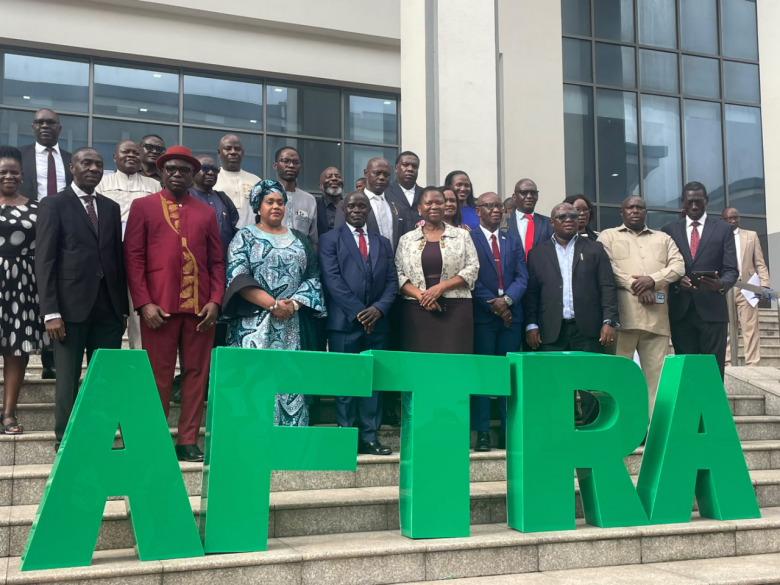
Congo Town– Liberia is stepping onto the continental stage of education reform as it prepares to host the 14th Africa Federation of Teaching Regulatory Authorities (AFTRA) Conference and 16th Roundtable in 2027, bringing together education leaders, regulators, researchers and policymakers from across Africa to discuss the future of teaching and learning.
By Jaheim T. [email protected]
AFTRA is a continental organization established in 2010 through an initiative led by education ministers from South Africa and Nigeria.
The body brings together teaching councils, ministries of education, teacher service commissions, teacher unions, and development partners to promote professional standards, best practices and collaboration in education across Africa.
It serves as a platform where countries share experiences and lessons on teaching and learning.
Delivering her remarks, Education Minister, Jarso Maley Jallah, called for stronger efforts to professionalize the country’s teaching workforce as the nation prepares to host the 2027 Conference of the Africa Federation of Teaching Regulatory Authorities (AFTRA).
Minister Jallah said the gathering should be viewed not only as an honor for the country but also as a responsibility that must lead to tangible improvements in the education sector.
“We must strengthen the professionalization of our teaching workforce,” Minister Jallah said, noting that Liberia continues to face challenges including “qualification gaps, teacher shortages, inequitable deployment, retention, continuous professional development and the need for stronger systems of professional accountability.”
She emphasized that improving the teaching profession is a concern shared by countries across Africa.
She said no country has found all the answers to the challenges facing teachers, making collaboration among African nations essential.
“None of our countries has answered every question about the teaching profession. But none of us should have to confront those questions alone,” she stated.
The Education Minister noted that the ultimate measure of any education system should be the confidence parents have in the people teaching their children.
She argued that teacher preparation, professional standards, accountability and continuous learning must work together to build public trust.
“A parent should be able to trust that the person has been properly prepared,” she said. “There are professional standards governing the work that person does, that professional learning did not end with qualification that brought the teacher into the classroom.”
She also highlighted Liberia’s ongoing work to introduce stronger systems for teacher licensing and professional regulation. Minister Jallah said the country has benefited from lessons learned in other African nations while recognizing that reforms must be adapted to local realities.
“We must build a professional framework that responds to the realities of Liberia,” Minister Jallah intimated.
“But we can ask one another better questions. We can examine what has worked. We can be candid about what has not.”
Looking ahead to the 2027 AFTRA conference, Minister Jallah averred that Liberia hopes to demonstrate meaningful progress rather than simply hosting another international event.
She said the period between the current executive meeting and next year’s conference should be used to advance reforms in teacher development and accountability.
“When ACTRA returns to Liberia next year, I do not want the only difference to be that there are more delegates in the room, a larger program, and a conference banner outside,” she said. “I want you to find that something has moved.”
The Education Minister said Liberia should be able to present clear evidence of progress in strengthening teacher standards, improving professional development opportunities and enhancing accountability mechanisms.
“We should be able to sit together and speak more concretely about the progress Liberia has made in strengthening its teacher professionalization,” she said.
The Education Minister stressed that professionalization efforts must support both future teachers and those already working in classrooms. She said raising standards must go hand in hand with providing teachers opportunities to improve their skills and advance their careers.
“If a teacher needs further preparation, the system must have a pathway for that development,” she said. “If teachers are expected to meet higher professional standards, they must know those standards and have meaningful opportunities to develop them and also be compensated for them.”
She further argued that teacher development and accountability should not be treated as separate issues. “Accountability and professional development have to speak to each other,” Minister Jallah said.
The minister described Liberia’s hosting of the AFTRA conference as an opportunity to hold itself accountable for progress in education reform. She said the return of delegates in 2027 will provide a chance to evaluate both achievements and remaining challenges.
“Hosting should create accountability for us,” she said. “When we welcome you next year, we should be prepared to discuss what we attempted, what worked, what did not work, and what we learned.”
Minister Jallah reminded participants that the success of educational reforms would ultimately be measured not in conference halls but in classrooms across the country.
“The greater responsibility is to use this opportunity to strengthen the profession that stands at the center of every education reform we hope to achieve,” she said.
“After the conference next year, the delegates will return to their respective countries. Our teachers will return to their classrooms. Our children will be waiting for them. That is where the value of everything we discuss here must eventually be seen.”
Delivering his special remarks, AFTRA President Dr. Ebby Mubanga described Liberia’s selection as host country as an important opportunity not only for education but also for national visibility and international engagement.
He said the annual conference creates a platform for African countries to exchange ideas and showcase successful approaches to teaching and learning.
“What we do every year in the month of May, we organize a conference on teaching and learning in Africa,” Mubanga said. “This is an opportunity or a platform for the exchange of best practices in teaching and learning in Africa.”
Mubanga said discussions about Liberia hosting the conference began several years ago following Minister Jallah’s participation in the AFTRA conference held in Angola.
He praised Liberia’s willingness to accept the responsibility and expressed confidence that the country is capable of hosting a successful event. “It is an opportunity for Liberia to host this conference because, first of all, you’ll be marketing your country,” he said. “Apart from just marketing your country in education, you’ll also be marketing it in terms of tourism, business and opportunities.”
The AFTRA president also highlighted the organization’s broad continental reach and the participation of international institutions, including the African Union and several education-focused partners.
He stated that the gathering provides a space for researchers, policymakers, and educators to share innovations and solutions that can strengthen educational systems across Africa.
“Knowledge not shared is not knowledge at all,” Mubanga said. “As educators, I think we should always share what we come across.”
Also speaking, Deputy Minister for Fiscal Affairs at the Ministry of Finance and Development Planning, Anthony G. Myers, underscored the importance of teachers in shaping society.
He said every successful individual is a product of educators whose contributions often leave a lasting impact. “We have to be here because we learn to read and write,” Deputy Myers said.
“To learn to read and write means there was a teacher in your life.”
Deputy Myers praised Minister Jallah for pursuing what he described as deep-rooted reforms aimed at addressing long-standing challenges in Liberia’s education system.
He said her efforts have focused not just on examination results but on fundamental classroom issues affecting teaching quality.
“She has been getting to the roots and branches, where she has been bold enough to state the problem as is,” Deputy Minister Myers said.
“For example, a teacher not being able to do lesson planning.”
The Deputy Minister said hosting AFTRA’s continental gathering will also help Liberia reconnect with developments taking place elsewhere in education after years of conflict and recovery slowed progress in the sector. “This forum offers opportunity for knowledge exchange,” Deputy Myers asserted.
“So that our teacher and teaching regulators can see new developments happening out there.,’’ he added.
Support Independent Journalism
Your support helps FrontPage Africa continue delivering independent, credible, and impactful journalism. Every contribution strengthens our ability to investigate, inform, and hold power accountable while keeping quality journalism accessible to our readers.
Support our journalism or subscribe to receive the latest FrontPage Africa stories and updates.