Part 1.
“Experts and world leaders have warned that drug cartels create national crises, undermining governments and fueling violence, specifically to expand their trafficking operations.
These groups prioritize “shaping the political environment” to ensure their business thrives, often at the cost of national stability and human life.”
US Senate Committee on the Judiciary (.gov).
“The cartel’s objective is not to institute the new ideology … but to shape the political environment to enable their business in legal and illegal economies.” — Vanda Felbab-Brown, foreign policy expert.
“Cartels present a major national security threat to us all. We can not and will not allow them to continue.” — Representative Dan Crenshaw.
“Drugs are the fuel in the car of misery in this part of the world.” — Admiral James G. Stavridis, former commander of U.S. Southern Command.
“If the U.S. wants to stem the flow… we must do everything we can to stabilize the regions of origin.” — Editorial on cartel-driven destabilization.
“It affects all of our member countries, undermining political and economic stability, ruining the lives of individuals and damaging communities.” — Interpol official statement.
“The villains are kept in check. But the drug trade does go on, and so does the war.” -Historical perspective on the “giant hammer” of drug enforcement.- Interpol.
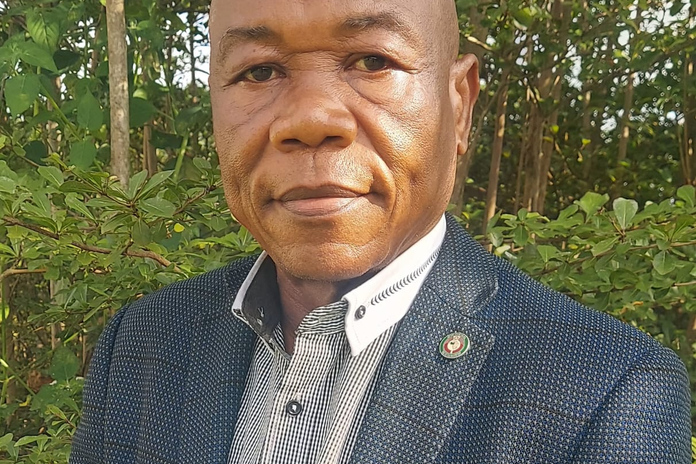
By: Austin S Fallah – A True Son of the Planet Earth Soil: [email protected]
Liberia, a country with a storied past and an arduous path to recovery, faces a multifaceted challenge that threatens the foundations of its society: the growing influence of drug cartels.
The recent incursions by the Guinean military into Liberia, particularly the Foya Kama incident, raise pertinent questions about their motivations and implications.
Some analysts propose that these incursions may not simply be military actions but rather a strategic maneuver orchestrated by drug cartels seeking to divert the attention of the Liberian government, thereby facilitating the smuggling of narcotics into a nation already grappling with its identity.
This disquition will analyze the current situation in Liberia through the lens of strategic distraction by drug cartels, underscore the role of neighboring actors in this emerging conflict, and ultimately propose that the Liberian government must adopt a more proactive stance, prioritizing the health and future of its young people through stringent measures against drug trafficking.
At the heart of the analysis lies the assertion that the Guinean invasion, or military presence, should not be distilled down to mere territorial disputes or ethnic tensions.
Instead, it needs to be interpreted as a reflection of a broader socio-political strategy by drug cartels that operate within and beyond Liberia’s borders.
Drug cartels are known for their tactical cunning, often employing sophisticated methodologies to expand their influence and market reach.
In Liberia’s context, the drug trade has escalated, transforming the nation into a potential transit hub for narcotics destined for international markets.
Given this backdrop, the actions of the Guinean military can be perceived as a calculated distraction, cleverly executed to shift the government’s emphasis away from regulating drug-related activities while simultaneously ensuring that the cartels slip through the cracks of enforcement.
Moreover, the question must be raised: who benefits from the chaos generated by the invasion?
It is plausible that, amidst the confusion over territorial sovereignty and military engagement, drug traffickers find an optimal environment for conducting their illicit operations.
Reports of encroaching influencers and investors from various countries exacerbating Liberia’s drug problem have surfaced in tandem with the Guinean military’s actions.
These external actors, some from nations that might appear distant but have significant socio-economic ties to Liberia, have capitalized on governance security structures that need to be financially supported at all costs and social disarray to perpetuate the cycle of drug abuse among young people.
As a result, the future of Liberia’s younger generation is jeopardized as they become unwitting pawns in a larger, lethal game of territorial and economic dominion.
This brings us to the critical lens through which the Guinean military’s incursions must be viewed.
Rather than treat the incident as isolated events, Liberians must contextualize it within the ongoing conflict related to drug trafficking.
Drug cartels, in their quest for dominance, can, consciously or unconsciously, manipulate political responses and social dynamics within the affected locales.
For Liberia, a nation still recovering from the wounds of civil conflict, the resurgence of these cartels through the creation of border conflict with a neighbor (this time Guinean, who knows which nation is next)poses a significant risk.
With young people particularly susceptible to drug abuse and trafficking crimes, it becomes imperative that the government not only acknowledges this threat but acts decisively to curtail it.
To embody a proactive approach, the Liberian government must implement a series of punitive measures aimed at dismantling the infrastructure that supports drug trafficking.
Liberians are not pointing fingers at any particular neighboring country, tribe, or nationals from a faraway continent, but caution is required.
This requires collaboration with law enforcement agencies and local communities to identify and target individuals and groups complicit in the drug trade.
Community vigilance is essential as these external actors often blend deceptively into the fabric of society, operating small businesses or engaging in trade while simultaneously colluding with drug syndicates.
The government must prioritize intelligence gathering initiatives that involve citizens actively reporting suspected drug-related activities in their neighborhoods, as Liberians saw a few years ago when a container filled with drugs was arrested, but only Hala-Na-Meleka-God-Almighty knows the true story.
This grassroots mobilization, fueled by education on the perils of drug abuse and trafficking, can empower communities to take ownership of their future and reclaim agency over the welfare of their youth.
Furthermore, the government needs to invest in rehabilitation and prevention programs that not only address the consequences of drug use among young people but also tackle the root causes driving their involvement in narcotic markets.
Education, vocational training, and opportunities for legitimate employment are vital in steering young people away from a cycle of dependency and criminality.
Empowering young people with viable alternatives greatly enhances their potential to contribute meaningfully to society, thereby breaking the cyclical pattern of poverty, violence, and drug addiction.
Additionally, international cooperation is paramount. Liberia must engage with regional and global partners to develop comprehensive strategies to combat drug trafficking.
This involves participating in forums addressing transnational crime and sharing intelligence to help track drug shipments and cartel activities across borders.
The Guinean military’s actions may provide a unique impetus for forming stronger alliances between Liberia and its neighbors(if they are not part of the drug syndicates), potentially creating a united front against the insidious influence of drug cartels.
Leveraging diplomatic relationships can also lead to economic support and investment in programs designed to stabilize and secure the socio-economic landscape.
This analysis makes it evident that the intrusion of Liberia’s sovereignty by the Guinean military and their mere presence in Liberia should be perceived as a complex interplay between security dynamics and drug trafficking challenges.
The assertion that this may be a deliberate strategy by drug cartels to prompt governmental distraction can not be overlooked.
To ensure the future of Liberia’s young people and the nation’s overall stability, the government must respond proactively by instituting rigorous measures to combat drug trafficking, enhancing community engagement, fostering collaboration with regional partners, and developing social programs that uplift rather than undermine.
Through such strategic actions, Liberia can move beyond the shadows of conflict and emergent threats, embarking on a pathway that guarantees a safe, drug-free future for its young people.
The encroaching dark clouds of the illicit drug trade may seem daunting.
Still, with concerted effort, there is the potential for a brighter tomorrow that reflects resilience, hope, and collective growth.
The responsibility lies not only with the government but with every citizen to forge an environment conducive to the flourishing of Liberia’s future generations.
This is the critical juncture at which Liberia stands today, a pivotal moment where the choices made will echo through the corridors of history, shaping the destiny of a nation still striving to realize its full potential.
Support Independent Journalism
Your support helps FrontPage Africa continue delivering independent, credible, and impactful journalism. Every contribution strengthens our ability to investigate, inform, and hold power accountable while keeping quality journalism accessible to our readers.
Support our journalism or subscribe to receive the latest FrontPage Africa stories and updates.