President Joseph Boakai’s reported statement — “They don’t live here; we live here. We know what we want for our people” — may have been intended as a defense of local leadership against outside criticism. But in a country like Liberia, where the diaspora helps sustain households, funds political movements, supports schools, pays medical bills and often carries the financial weight the state cannot carry, the remark landed with unusual force.
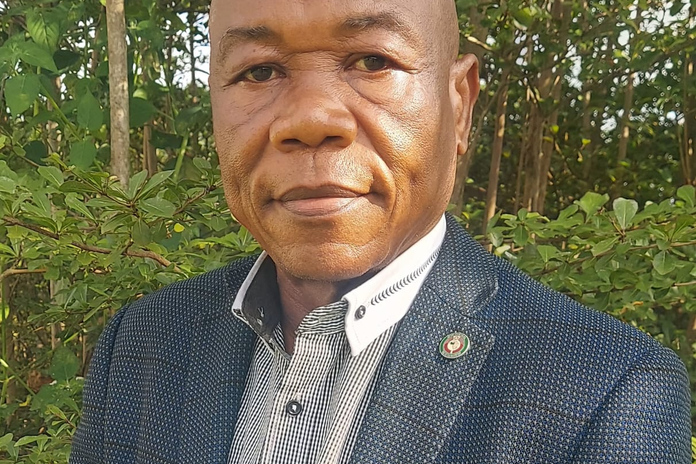
By Dr. Clarence R. Pearson, Sr., contributing writer
The issue is not whether Liberians at home understand daily hardship better than those abroad. Of course they do. The issue is whether physical distance cancels national belonging. It does not.
Liberia’s diaspora is not a distant audience watching the country from comfort. It is one of the country’s largest informal welfare systems. World Bank data show personal remittances to Liberia at about 21.3 percent of GDP in 2024, confirming that money sent from abroad is not marginal to the economy; it is central to survival. Reports also place Liberia’s 2025 national budget around US$880 million, while annual remittances are commonly estimated in the hundreds of millions, and in some estimates near or above that budgetary scale.
That means the diaspora may not “live here” in the physical sense, but its money lives here every day. It lives in school fees paid from Minnesota, hospital bills settled from Philadelphia, rent covered from London, and food bought in Monrovia because a brother or sister abroad sent US$100 through Western Union or mobile transfer. To dismiss such citizens as outsiders is to misunderstand the modern Liberian family.
The deeper contradiction is political. Diaspora Liberians are expected to finance Liberia, campaign for candidates, fund community projects and defend national causes abroad. Yet many remain excluded from meaningful electoral participation because Liberia still lacks out-of-country voting. Diaspora organizations, including ALCOD and ULAA, have recently petitioned lawmakers for overseas voting rights, arguing that Liberians abroad should not have to return physically to Liberia simply to exercise citizenship.
The current arrangement creates a democracy tax. A Liberian living in the United States may need to travel once to register, again to vote in the first round, and possibly a third time for a runoff. Current round-trip fares from the United States to Monrovia commonly range around US$1,100 to US$1,800 depending on route and timing. Three trips could therefore cost US$3,300 to US$5,400 in airfare alone. Add local transportation, lodging, food, time away from work, and family obligations, and the real cost could easily approach US$5,000 to US$8,000. That is not voting access. That is wealth-filtered citizenship.
Liberia has already taken important steps toward reconnecting with its global citizens. The 2022 dual citizenship reform allowed natural-born Liberians to retain citizenship after acquiring another nationality, and later legislative efforts sought to remove additional restrictions on dual citizens’ public participation. But citizenship without voting access remains incomplete. A passport is not enough if the ballot remains geographically locked.
This is why the President’s reported statement matters. It touches a wound larger than one speech. It reflects the long-running tension between “home-based” Liberians and diaspora Liberians: one side sometimes feels abandoned or lectured by people who left; the other feels exploited for money but silenced when it asks for accountability. Wise leadership should heal that divide, not deepen it.
A better national posture would recognize diaspora Liberians as a strategic extension of the republic. Liberia should move toward embassy-based voter registration, overseas voting in major diaspora centers, a formal Diaspora Commission, transparent diaspora bonds for infrastructure, and structured skills-transfer programs that bring doctors, engineers, educators and investors into national development without treating them as political intruders.
The truth is simple: Liberia is no longer only territorial. It is transnational. Its economy, families, politics and future stretch across
borders. The Liberian who lives in Paynesville and the Liberian who lives in Providence, Staten Island or London are not enemies in a competition for legitimacy. They are different parts of the same wounded but resilient national body.
So yes, some critics “don’t live here.” But their sacrifices do. Their remittances do. Their families do. Their citizenship does.
A president does not have to agree with every diaspora critic. But he should never speak as though distance diminishes belonging. Liberia needs all its people — those who stayed, those who left, and those still trying to come home.
Support Independent Journalism
Your support helps FrontPage Africa continue delivering independent, credible, and impactful journalism. Every contribution strengthens our ability to investigate, inform, and hold power accountable while keeping quality journalism accessible to our readers.
Support our journalism or subscribe to receive the latest FrontPage Africa stories and updates.