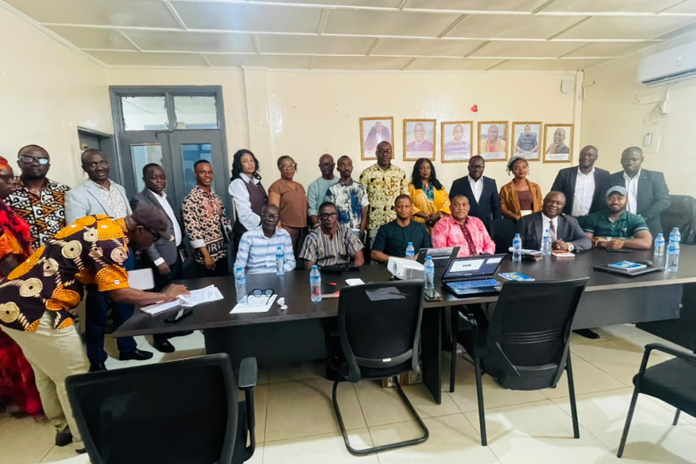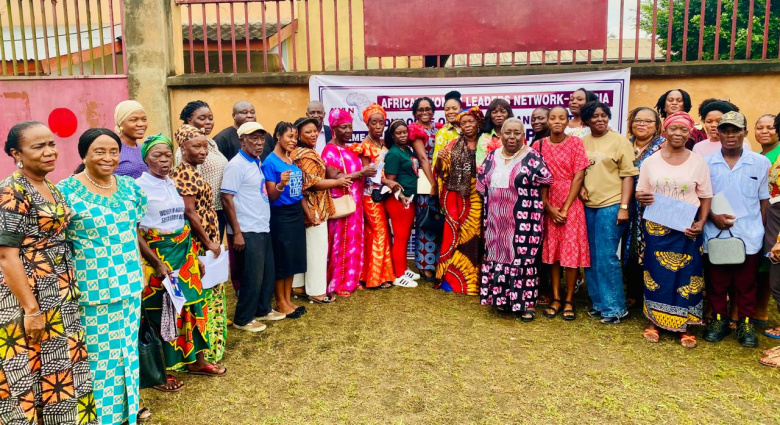
CAREYSBURG — The African Women Leaders Network (AWLN) Liberia Chapter convened a landmark dialogue on Wednesday at Arjay Farms in Number 7, Kingsville, bringing together rural and urban women leaders, government officials past and present, legal experts, civil society organizations, traditional leaders, and stakeholders under the theme: “Women’s Land Rights: From Policy to Practice.”
By Patience M. Jones
The forum centered on advancing women’s rights to access, own, and manage land across Liberia, strengthening the implementation of progressive laws such as the Land Rights Act of 2018, the Decedents Estate Law, and the Criminal Conveyance Law.
A total of 40 stakeholders were expected in attendance, including widows, women farmers, legal practitioners, media representatives, and policymakers—collectively working to elevate the voices of women who remain disproportionately affected by customary land practices.
Empowering Voices from Communities
A major highlight of the dialogue was firsthand testimonies from women representing both rural and urban settings.
Madam Kebeh Monger, a women’s advocate and farmer, shared how programs targeting rural women are helping reshape lives:
“The program is very good because we are learning so many things our people in rural communities need to know especially about their rights. Every community has its own culture, and awareness must reach them all.”
She underscored a common issue in customary landholding: “When you’re farming on your husband’s family land, that land is not his, and not for your children but people do not recognize that.”
Monger called for increased agricultural support including farm tools, market access, and value addition: “We make cassava but no buyers the cassava spoils. There’s no value on our produce.”
She shared her commitment to support women farmers in Lofa County through a community farming initiative, inspired by her visit to Ethiopia: “This is how we empower people by helping them learn, farm, and grow. I am here to be empowered so I can give back to my community and country.”
Another participant, Madam Mary Lartey, a traditional leader and women’s advocate, emphasized the shifting community perception of women’s land ownership: “Today our eyes are opening. We are able to own land from our fathers’ and our husbands’ property. I am one of the administrators of my father’s land, among 38 children, because my family supported my education.”

She appealed for more outreach: “Let government and organizations reach rural women through town hall meetings and village campaigns. Many still need to learn about their rights.”
Government Reinforces Commitment
Representing the Minister of Gender, Children and Social Protection, Atty. Laura Golakeh, Deputy Minister for Gender, delivered the keynote remarks, acknowledging progress while noting ongoing challenges: “We rest on the shoulders of strong women who paved the way. The Land Rights Act recognizes women’s rights to land ownership, inheritance, and participation in governance but implementation must continue at the community level.”
She highlighted government strategies such as:
Integrating land rights into the National Gender Policy Supporting village savings clubs for women farmers, Providing farming tools and training, Working with farmer-based organizations predominantly led by women, Expanding economic empowerment through the World Bank–funded Liberia Women’s Empowerment Project, active in six counties
“Policies cannot remain on shelves. We must turn them into action so that every woman benefits whether in offices or in remote communities.”
She reaffirmed Government’s shared responsibility:
“When a woman has secure rights to land, she thrives, her family thrives, and the nation prospers.”
AWLN Stands with Women
Delivering the welcome address, Madam Josephine Francis, Chair of AWLN’s Pillar on Agriculture, Natural Resources and Blue Economy, emphasized that land security is central to women’s economic and social empowerment:
“Some may wonder, why women and land? Because it is our right. Land ownership gives women control over agriculture and livelihoods. This dialogue ensures no woman is left behind.”
Since its launch on 18 December 2019, AWLN-Liberia has implemented programs advancing:
Women’s leadership and political participation
Peace and security initiatives
Legal reforms
Mentorship for young women leaders
The Chapter reaffirmed its mandate to amplify women’s voices and ensure rights guaranteed by national law translate into meaningful change.
Path Forward
The dialogue concluded with a consensus to:
Strengthen awareness campaigns nationwide
Scale local women’s representation in land governance structures
Ensure enforcement of laws promoting equity in land access
Advocate for agricultural and market opportunities for women farmers
Stakeholders expressed a unified call: Women must not only have the right to own land, but also the means to benefit from it.
Support Independent Journalism
Your support helps FrontPage Africa continue delivering independent, credible, and impactful journalism. Every contribution strengthens our ability to investigate, inform, and hold power accountable while keeping quality journalism accessible to our readers.
Support our journalism or subscribe to receive the latest FrontPage Africa stories and updates.