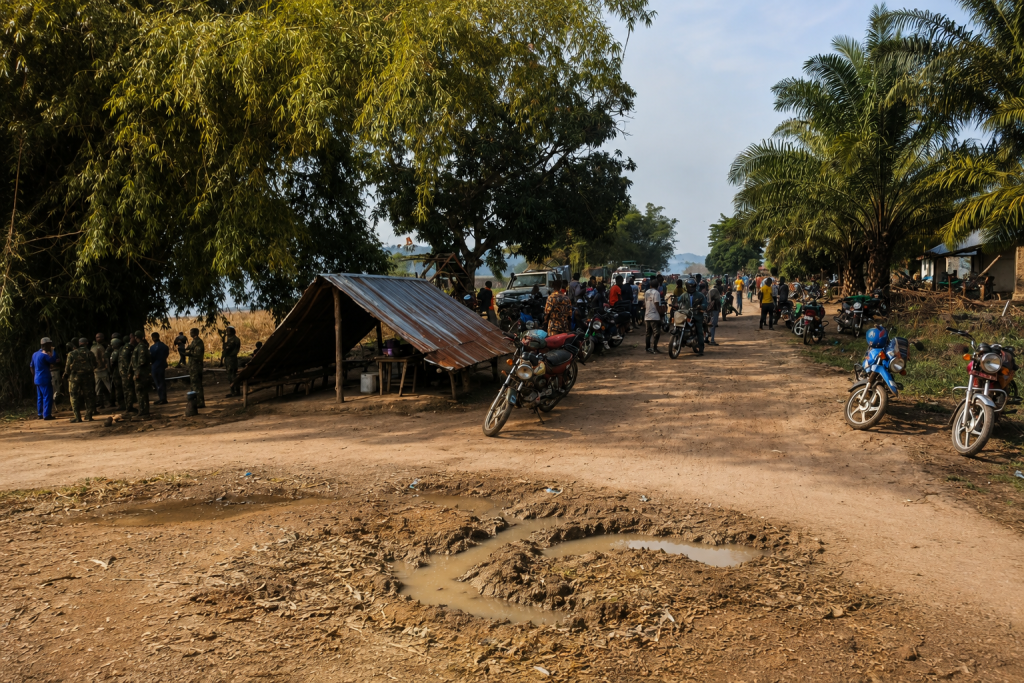
Foya District, Lofa County — Liberian and Guinean security forces stationed at the volatile Sorlumba border crossing held a peaceful dialogue Monday morning, easing fresh tension that flared a day earlier when Guinean soldiers ordered Liberia Immigration Service (LIS) officers to abandon their post.
By James Kollie
Local authorities from Foya District rushed to the border this morning after receiving reports that Guinean troops had demanded on Sunday that LIS personnel vacate their position. The Liberian officers refused to move, and the Guinean soldiers ultimately withdrew back to their own side.
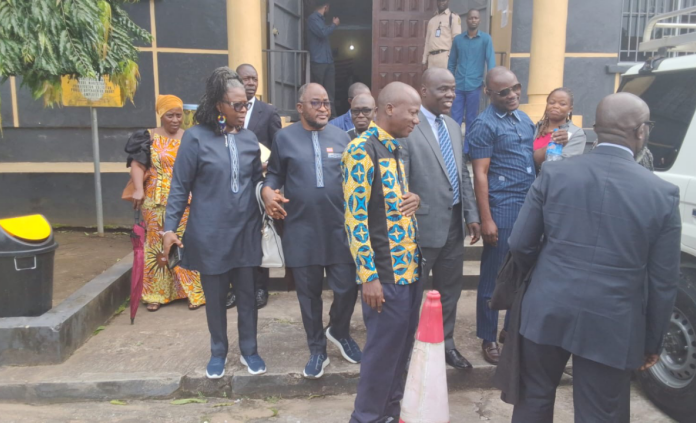
Seeking to defuse the standoff before it could escalate, Foya officials traveled to Sorlumba to meet with both sides. Sorlumba Township Commissioner Hon. Harris Domah said the engagement produced a peaceful dialogue in which LIS officers and Guinean soldiers agreed to preserve calm and continue coexisting peacefully at the crossing.
During the meeting, it emerged that Guinea’s military had quietly rotated its command at Sorlumba, swapping out the previous unit for a new team of soldiers. Liberian officials used the encounter to brief the incoming Guinean commander on the border post’s long history of peaceful cooperation between security forces from both nations.
Following the talks, Guinean soldiers returned to their position and LIS officers remained at their assigned post. Authorities describe the border as calm for now, with both sides committing to avoid actions that could reignite tension.
A Border on Edge Since March
Monday’s brief standoff is the latest flashpoint in a border crisis that has simmered in Lofa County since early this year. Tensions first erupted on March 2, when armed Guinean soldiers confronted workers from BK Enterprise, a contractor hired to pave the Foya–Vahun road, at the Sorlumba crossing. Soldiers reportedly seized construction equipment and ordered the removal of a Liberian flag that had flown over the riverbank for decades.
The dispute escalated dramatically over the following days. Around March 9–10, Guinean troops allegedly pushed further into territory Liberians say lies roughly eight kilometers inside their border, tore down the Liberian flag and raised Guinea’s colors in its place — a move many Liberians called a direct violation of national sovereignty. Witnesses reported Guinean reinforcements arriving by helicopter and troops ordering Liberian security officers off their posts. In the ensuing unrest, a Liberian resident, Edward T. Lebbie, was struck by gunfire near the Makona River, the waterway long recognized as the natural boundary between the two countries. Local youths later erected a new Liberian flag at the site and briefly took control of the crossing, vowing to defend their homeland, before Liberia National Police officers deployed to restore order.
The unrest forced school closures in Foya District and sent thousands of residents fleeing deeper into Liberian territory. A subsequent fact-finding mission by Liberia’s rights commission found that at least 26 towns and villages were affected, with displaced families facing loss of shelter and food insecurity.
Diplomacy has run alongside the unrest. On March 17, Guinean President Mamadi Doumbouya hosted Liberian President Joseph Nyuma Boakai and Sierra Leonean President Julius Maada Bio in Conakry for an emergency summit, with Côte d’Ivoire attending as a witness. The three governments agreed to resolve border incidents through dialogue and announced joint technical commissions to tackle border delimitation and management — an arrangement regional analysts say reflects deeper, longstanding weaknesses in how Mano River Union states demarcate and jointly monitor their shared frontiers.
Monday’s peaceful exchange at Sorlumba — capped by the introduction of a new Guinean commander — suggests both sides are still working to hold that fragile truce, even as the underlying territorial dispute remains unresolved.
This is a developing story. FrontPageAfrica will provide updates as more information becomes available.
Support Independent Journalism
Your support helps FrontPage Africa continue delivering independent, credible, and impactful journalism. Every contribution strengthens our ability to investigate, inform, and hold power accountable while keeping quality journalism accessible to our readers.
Support our journalism or subscribe to receive the latest FrontPage Africa stories and updates.