MONROVIA — Nearly two decades after Liberia’s civil war ended, two circuit court judges have issued a sobering warning that the country must not allow its justice system to relapse into the corruption, political interference, inequality and institutional weaknesses that contributed to its violent past.
By Willie N. Tokpah
Their warnings come at a critical moment, as several politically sensitive and high-profile criminal proceedings involving former senior government officials, legislators and other influential personalities continue to test the independence, credibility and impartiality of Liberia’s courts.
From the economic sabotage proceedings involving former Finance Minister Samuel D. Tweah and the prosecution of former Foreign Affairs Minister Dee-Maxwell Saah Kemayah to the Capitol Building arson case involving former House Speaker J. Fonati Koffa and the criminal charges against former Vice President Jewel Howard Taylor, the Judiciary faces renewed scrutiny over its handling of constitutional rights, due process and equal protection under the law.
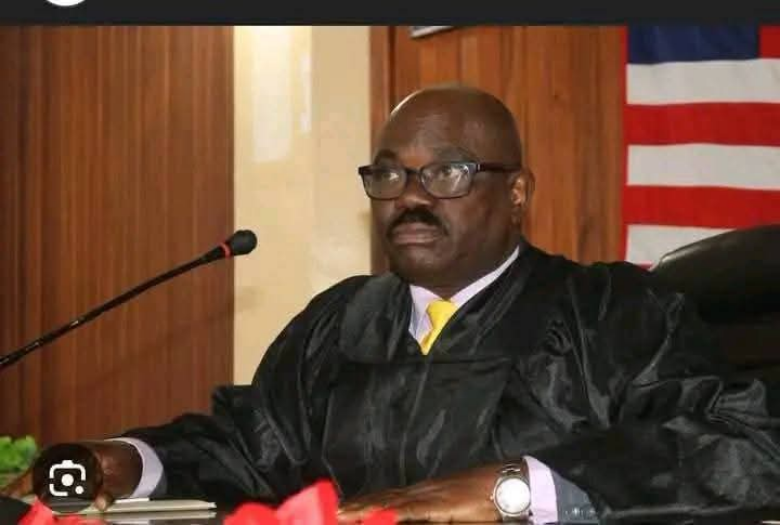
Against this backdrop, Resident Circuit Judge of Criminal Court ‘A,’ Roosevelt Z. Willie, and his counterpart in Grand Kru County, Judge Peter W. Gbeneweleh, have separately challenged judicial officers, lawyers, law enforcement authorities and citizens to protect the integrity of the justice system.
Although delivered at separate judicial openings, their messages converge on one fundamental principle: sustainable peace, democracy and national development cannot exist where justice is influenced by political power, wealth, personal relationships or institutional interests.
A Painful History Liberia Cannot Afford to Repeat
Delivering his charge for the November Term of Court A.D. 2026 at the 13th Judicial Circuit Court, Judge Willie questioned whether Liberia has genuinely learned from the weaknesses of its justice system before the country’s 14-year civil conflict.
Speaking under the theme, “Has the Liberian Justice System Learned from Its Past History, Prior to the Civil War?”, the judge revisited an April 2006 International Crisis Group report that identified corruption, institutional weaknesses and unequal access to justice within the Judiciary, Police and correctional system as contributing factors to Liberia’s instability.
The report highlighted several challenges, including the Judiciary’s financial dependence on the Legislature, inadequate court facilities, the appointment of unqualified judicial personnel, poor remuneration and a system in which financial resources and political influence could determine the treatment citizens received.
Corruption within the Police and prison systems, overcrowded detention facilities and violations of the rights of inmates and pretrial detainees further weakened public confidence in state institutions.
Judge Willie acknowledged that Liberia has introduced several reforms since the end of the war, including the Judiciary Financial Autonomy Act, the establishment of the Judicial Institute in 2008, the Magistrate Sitting Program and the Public Defense Program.
These interventions were intended to strengthen judicial administration, improve professional competence and expand access to legal representation.
However, he questioned whether the reforms have sufficiently transformed the administration of justice to prevent a return to the conditions that once undermined public confidence in government institutions.
“Any country that does not learn from its past is doomed to fail and cannot develop,” Judge Willie cautioned.
He stressed that political affiliation, religious beliefs, financial standing and social status must never determine how individuals are treated before the courts.
Grand Kru Judge Warns Against Commercialization of Justice
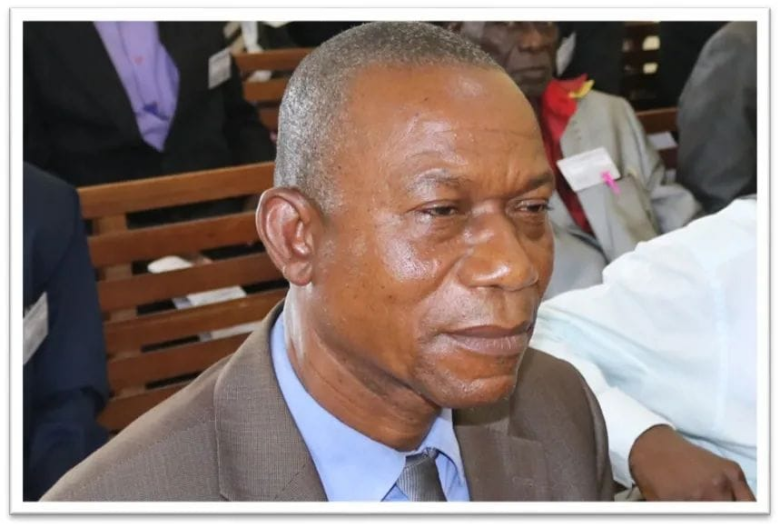
The concerns raised by Judge Willie were reinforced in Grand Kru County, where Resident Circuit Judge Peter W. Gbeneweleh of the 12th Judicial Circuit declared the November Term of Court open on Monday, November 9, 2026.
Speaking under the theme, “Transparent Justice Is Key to Sustainable Peace and National Development in Liberia,” Judge Gbeneweleh warned that lasting peace and economic development would remain difficult to achieve without an independent, transparent and impartial Judiciary.
He cautioned against judicial interference and the commercialization of justice, emphasizing that court decisions must be based on evidence and applicable laws rather than political considerations, personal relationships or financial inducements.
According to the judge, when citizens lose confidence in the courts, the consequences extend beyond the courtroom. People who believe that justice is inaccessible or selectively administered may resort to mob violence, revenge and other forms of self-help, threatening the peace Liberia has struggled to maintain.
He also linked judicial transparency to economic development, arguing that investors are more likely to operate in an environment where contractual obligations are respected, property rights are protected and disputes are resolved through impartial legal processes.
His appeal to judges, lawyers, prospective jurors and citizens underscored the responsibility of everyone involved in the administration of justice to protect the credibility of the courts.
High-Profile Trials Test Judicial Credibility
The judges’ warnings come as several high-profile criminal proceedings continue to attract national attention.
In the US$6.2 million economic sabotage case involving former Finance Minister Samuel D. Tweah and other former government officials, a jury initially acquitted Tweah and former Financial Intelligence Agency Comptroller D. Moses P. Cooper on May 8, 2026.
However, allegations of jury misconduct subsequently prompted a judicial investigation. In July, Criminal Court ‘C’ set aside the initial acquittal and ordered a new trial after finding that misconduct had compromised the integrity of the proceedings.
The decision generated considerable public debate, with Tweah rejecting the reopening of the case.
The controversy has drawn attention to the integrity of jury administration, the protection of verdicts and the legal procedures available when allegations arise that a trial has been compromised.
Another closely watched case involves former Foreign Minister Dee-Maxwell Saah Kemayah and several former officials accused in connection with the alleged diversion of Saudi-donated rice intended for disaster victims and vulnerable communities.
The jury returned a mixed verdict, convicting some defendants, acquitting others and failing to reach a verdict on certain charges against Kemayah.
The defendants subsequently challenged aspects of the verdict and sought a new trial. As of November 6, Criminal Court ‘C’ was scheduled to hear arguments on the request.
The proceedings have raised questions about accountability for public resources, the burden of proof and the distinction between political responsibility and criminal liability.
For the public, the central concern remains whether resources entrusted to government officials can be protected through credible investigations and fair trials, regardless of the positions occupied by those accused.
Capitol Arson Case Raises Due Process Questions
The prosecution involving former House Speaker J. Fonati Koffa and several co-defendants over the December 2024 Capitol Building fire has also become a major test of the country’s criminal justice system.
The proceedings have been characterized by legal disputes involving jury administration, the conduct of the trial and the appropriate application of extraordinary legal remedies.
In August 2026, the Supreme Court rejected the defendants’ petition for a writ of prohibition challenging Criminal Court ‘A’ Judge Roosevelt Willie’s decision to disband the jury and declare a mistrial.
The Supreme Court held that certiorari, rather than prohibition, was the appropriate legal remedy for challenging the interlocutory ruling.
The decision cleared the way for proceedings in the lower court to resume. However, it did not determine the guilt or innocence of Koffa and his co-defendants, who remain entitled to the presumption of innocence and a fair trial.
The case highlights the importance of ensuring that politically sensitive prosecutions comply with criminal procedures, constitutional safeguards and the rights of all parties.
It also reinforces the principle that judicial authority must be exercised within the law and remain subject to appropriate appellate review.
Howard Taylor Prosecution Puts Constitutional Safeguards in Focus
The criminal proceedings involving former Vice President Jewel Howard Taylor have added another dimension to the national debate over judicial independence and constitutional protections.
Howard Taylor faces multiple allegations connected to an alleged transnational narcotics network. She has challenged aspects of the government’s case, including the application of Liberia’s 2023 Controlled Drugs and Substances Act to alleged conduct said to have begun before the legislation was enacted.
On September 24, 2026, Criminal Court ‘C’ denied her motion for bail, finding that the government’s allegations included purported continuing conduct extending into August 2026.
The ruling did not establish her guilt. She retains the right to challenge the prosecution’s evidence during trial.
The case raises important constitutional questions concerning the presumption of innocence, the prohibition against ex post facto prosecution, the right to bail where applicable and the government’s obligation to prove criminal allegations in accordance with the law.
These safeguards are not privileges reserved for former presidents, vice presidents, ministers or legislators. They are constitutional protections that apply to every person who comes before the courts.
Ordinary Liberians Remain at the Center of the Justice Debate
Beyond the politically prominent defendants, perhaps the most important measure of the justice system’s credibility is how it treats ordinary citizens.
That includes individuals who cannot afford private lawyers, families whose properties have allegedly been unlawfully taken, accused persons held in prolonged pretrial detention, victims awaiting justice and poor litigants seeking to enforce legitimate claims.
Judge Willie’s concerns about unequal access to justice and Judge Gbeneweleh’s warning against the commercialization of justice speak directly to these everyday challenges.
A judicial system that can prosecute influential officials but cannot provide timely and affordable justice to ordinary citizens has not fully achieved the transformation expected of it.
Likewise, a system that protects the rights of influential defendants but denies similar protections to poor accused persons cannot credibly claim to uphold equality before the law.
The principle must apply in both directions. No individual should enjoy immunity from lawful accountability because of political influence, and no individual should suffer injustice because of poverty, political opposition or lack of connections.
The same standards of evidence, fairness, judicial independence and constitutional protection must apply to everyone.
The Challenge Is Institutional, Not Rhetorical
Liberia’s post-war judicial reform agenda has produced laws, programs and institutions. However, the concerns raised by the two judges suggest that the next phase of reform must focus on measurable improvements in the delivery of justice.
Financial autonomy must translate into better court facilities, adequate resources and improved working conditions for judicial personnel. Judicial training must strengthen professional competence, integrity and accountability, while public defense services must become more accessible and effective.
Correctional facilities must also respect the dignity and constitutional rights of detainees, particularly those awaiting trial.
Equally important, judges must be protected from political pressure, lawyers must uphold professional ethics, police officers must conduct investigations within the law, and jurors must discharge their responsibilities without external influence or financial inducement.
Ultimately, Liberia’s post-war democratic promise will not be measured by the number of laws enacted or judicial terms declared open. It will be measured by whether justice is administered consistently, transparently and without fear or favor.
For a country whose history demonstrates the devastating consequences of institutional failure, the warnings from Judges Willie and Gbeneweleh should not be dismissed as ceremonial remarks.
They serve as a reminder that peace is sustained not merely by the absence of guns but by public confidence in institutions, equal protection under the law and the assurance that grievances can be resolved through credible judicial processes.
Liberia has another opportunity to demonstrate that its painful history has taught it valuable lessons. The challenge is to translate those lessons into meaningful institutional practice before public confidence in the justice system is further eroded.
Support Independent Journalism
Your support helps FrontPage Africa continue delivering independent, credible, and impactful journalism. Every contribution strengthens our ability to investigate, inform, and hold power accountable while keeping quality journalism accessible to our readers.
Support our journalism or subscribe to receive the latest FrontPage Africa stories and updates.