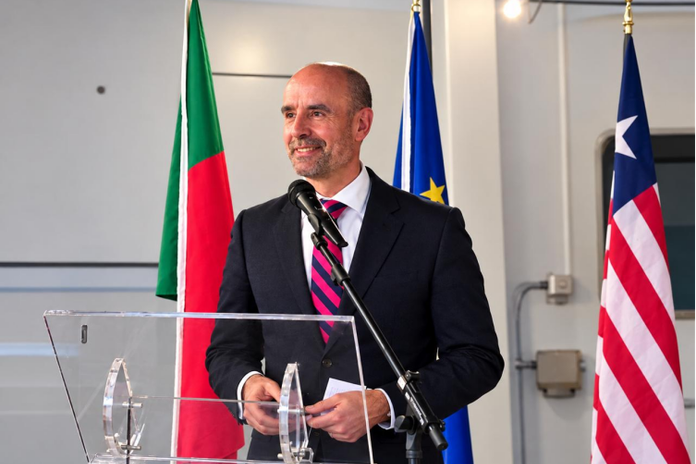
Senator Amara Konneh’s latest intervention raises an important question that Liberia can no longer afford to avoid: Can the government effectively fight transnational drug trafficking while simultaneously confronting allegations of corruption within the very institutions responsible for fighting it?
By E. W. Cooper, contributing writer
I believe the answer must be yes—but only if the government is prepared to apply the same standard of accountability to everyone.
This is not about protecting the opposition, defending the government, or creating political scapegoats. It is about protecting Liberia’s national security.
The reported US$317 million cocaine seizure is not an ordinary criminal matter. It involves alleged transnational criminal networks, international partners, substantial financial resources, and allegations involving individuals within Liberia’s security architecture. That requires an investigation that is professional, evidence-driven, and insulated from conflicts of interest.
I therefore agree with Senator Konneh on one fundamental principle: there must be no sacred cows.
But accountability must be based on evidence.
If an officer is accused of accepting money, investigate the financial trail.
If an officer claims he was instructed to escort a shipment, examine the communications records.
If someone is alleged to have facilitated communication between detained suspects and an international network, examine the phones, financial transactions, surveillance footage, and other available evidence.
If an official is accused of interfering with an investigation, determine exactly what action was taken, when it occurred, and whether it violated the law.
And if allegations are made against the Inspector General or any other senior official, those allegations should receive the same objective scrutiny.
Recusal Is About Integrity
This is where my position remains consistent.
When serious allegations begin pointing toward an official who has a significant role in overseeing an investigation, recusal can be an act of institutional integrity rather than an admission of guilt.
The objective is not to remove someone because they have been accused. The objective is to ensure that the person being questioned is not simultaneously in a position to influence the investigation into those questions.
If the official is innocent, an independent process can establish that.
If the allegations are unsupported, the official’s credibility can be restored.
And if evidence establishes wrongdoing, the law should apply.
That is precisely why an impartial process matters.
International Assistance Should Strengthen, Not Replace Liberia
There is another important point.
International involvement in a case of this magnitude should not be interpreted as evidence that Liberians are incapable of investigating their own country. Liberia has capable law-enforcement and security professionals.
International partners can provide specialized expertise, intelligence, forensic capabilities, financial investigations, and transnational investigative connections that are particularly valuable in organized-crime cases.
But Liberian institutions must remain part of the process.
The objective should be partnership—not institutional surrender.
The President’s Test
President Boakai now faces an important test of leadership.
The public does not simply need arrests. It needs to see a process that is credible.
The President must demonstrate that accountability is not determined by rank, political affiliation, personal relationships, or institutional loyalty.
If someone is innocent, clear them.
If someone violated administrative rules, discipline them.
If someone committed a crime, prosecute them.
And if the evidence leads to someone at the highest level of government or security institutions, follow the evidence there as well.
That is what the rule of law means.
The government should not fear the truth. The truth, properly established through evidence and due process, ultimately protects legitimate institutions.
The greatest danger would be for Liberia to investigate this matter selectively—protecting some, sacrificing others, and allowing public pressure rather than evidence to determine the outcome.
This investigation should not be about Cocaingate as a political slogan.
It should be about establishing exactly who knew what, who did what, who benefited, who facilitated the operation, who attempted to obstruct the investigation, and whether anyone within Liberia’s security apparatus compromised the Republic for personal gain.
Follow the evidence.
No sacred cows. No scapegoats. No selective justice.
Just truth, accountability, due process, and the rule of law.E. W. Cooper is a Law enforcement supervisor, Homeland Security & Emergency Management professional, and a Criminal Justice scholar.
Support Independent Journalism
Your support helps FrontPage Africa continue delivering independent, credible, and impactful journalism. Every contribution strengthens our ability to investigate, inform, and hold power accountable while keeping quality journalism accessible to our readers.
Support our journalism or subscribe to receive the latest FrontPage Africa stories and updates.