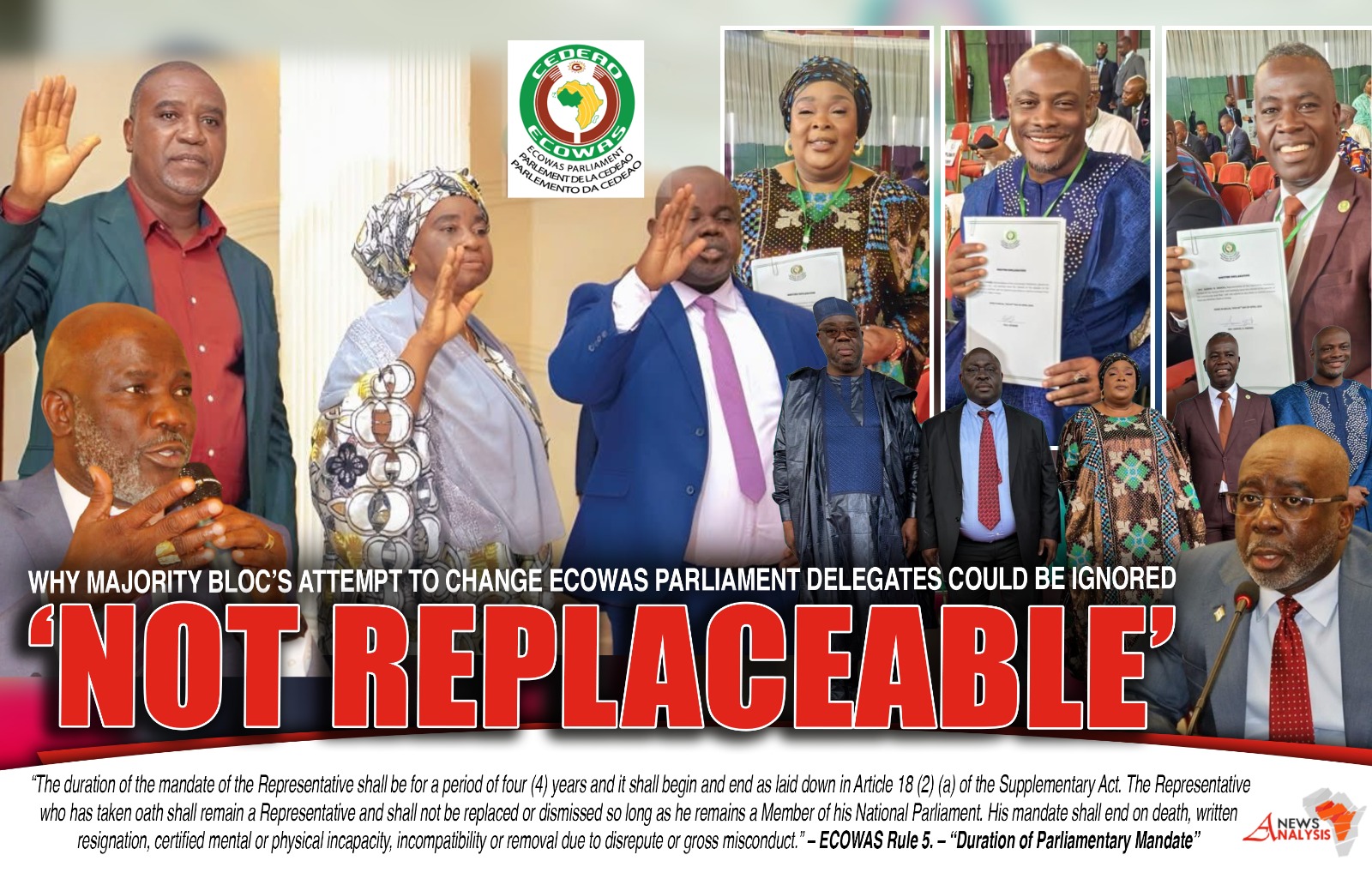
Capitol Hill, Monrovia – The legitimacy of the Majority Bloc-led House of Representatives is under intense scrutiny following the recent election of a new batch of delegates to the ECOWAS Parliament. The newly elected delegates include Reps. Augustine B. Chiewolo (District #5, Lofa County), Samson Q. Wiah (District #2, Sinoe County), and Rep. Moima Briggs-Mensah (District #5, Bong), who is currently serving as part of the ECOWAS delegation appointed by the embattled Speaker Jonathan Fonati Koffa. Among those originally appointed by Koffa was Rep. Taa Wongbe (District #9, Nimba), Samuel Enders (District #6, Montserrdo County).
By Gerald C. Koinyeneh, [email protected]
This fresh electoral exercise is part of the Majority Bloc’s broader effort to overturn all appointments made by Speaker Koffa. The bloc accused the Speaker of bypassing the House rule that mandates election over appointment—a process they contend was marred by political maneuvering and a lack of transparency.
According to Majority Bloc representatives, the elections held during the 11th Day Sitting of the 1st Quarter of the 2nd Session adhered strictly to ECOWAS requirements for political balance and gender representation. The move was triggered on February 13 by a joint communication from Reps. James Kolleh (District #2, Bong County) and Johnson Williams (District #3, River Gee County), calling for the immediate withdrawal of Liberia’s current representatives to pave the way for the new elections. Notably, while the previous delegation included a female member, the only woman in the new delegation is Rep. Mensah—the very lawmaker who already served in the earlier ECOWAS team.
Controversy Over the Replacement Process
Even before Tuesday’s election, several current and past lawmakers expressed resistance to the replacement process, arguing that the existing representatives are protected under ECOWAS Rule 5. This rule stipulates that a Representative’s four-year mandate begins and ends as specified in Article 18(2)(a) of the Supplementary Act, and that once sworn in, a Representative cannot be replaced or dismissed as long as they remain a member of their National Parliament.
“It is not possible to replace your representatives once they have taken their oath. Except they are no longer member of the body that sent them,” said a lawmaker citing not to be named.
In a letter dated February 7, 2024, a copy of which is held by FPA, Speaker Cllr. J. Fonati Koffa submitted the names of five legislators—including Reps. Taa Wongbe, Moima Briggs-Mensah and Samuel Enders, as well as Senators Edwin Melvin Snowe and J. Alex Tyler—as Liberia’s representatives to the ECOWAS Parliament. This letter cited Article 28.C of the ECOWAS Supplementary Act, which mandates that member states submit their representatives.
The duration of the mandate of the Representative shall be for a period of four (4) years and it shall begin and end as laid down in Article 18 (2) (a) of the Supplementary Act. The Representative who has taken oath shall remain a Representative and shall not be replaced or dismissed so long as he remains a Member of his National Parliament. His mandate shall end on death, written resignation, certified mental or physical incapacity, incompatibility or removal due to disrepute or gross misconduct.
ECOWAS Rule 5. – “Duration of Parliamentary Mandate“
The ECOWAS rules are designed to protect the regional parliamentary body’s independence from undue political pressure and intimidation. Representatives must take an affirmation oath during the inaugural session, declaring that they will serve the community’s interests without succumbing to pressure from any member state or group. These rules also clearly define the terms of office and the conditions under which a Representative’s seat becomes vacant—such as death, written resignation, incapacity, incompatibility, or removal due to disrepute or gross misconduct.
Engaging in Double standard?
Critics now accuse the Majority Bloc of engaging in a double standard by attempting to replace active representatives, thereby potentially violating ECOWAS procedures. It is worth recalling that the ECOWAS Parliament previously intervened in Liberia’s internal House leadership impasse at the request of Nigeria’s President Bola Tinubu, Chairman of ECOWAS.
While the minority bloc accepted ECOWAS’ recommendations, the Majority Bloc rejected them. Instead, they convened a separate session under Deputy Speaker Thomas Fallah’s gavel, launched and later elected Rep. Richard Koon (UP, District 11, Montserrado County) as their new speaker. In a series of dramatic moves, they also reconfigured House committees, authorized the Central Bank and commercial banks to change signatories on House accounts, and intercepted the draft national budget forwarded by the President. They also suspended several of their colleagues loyal to Koffa.
As the public in Liberia and the subregion eagerly awaits the ECOWAS Parliament’s decision on whether to accept the new delegates, this controversy represents a major legitimacy test for the Majority Bloc-led House of Representatives under the gavel of Rep. Richard Koon.
Support Independent Journalism
Your support helps FrontPage Africa continue delivering independent, credible, and impactful journalism. Every contribution strengthens our ability to investigate, inform, and hold power accountable while keeping quality journalism accessible to our readers.
Support our journalism or subscribe to receive the latest FrontPage Africa stories and updates.