MONROVIA, Liberia — The United Nations has challenged the Liberian government to move beyond policy commitments and ensure the effective implementation of its Third National Action Plan (NAP III) on Women, Peace and Security, warning that the success of the initiative will depend on whether it translates into meaningful improvements in the lives of women and girls across the country.
By Patience M. Jones,[email protected]
Christian Mukosa, Country Representative of the Office of the United Nations High Commissioner for Human Rights (OHCHR), delivering remarks on behalf of UN Resident Coordinator Christine Umutoni, said Liberia’s progress in advancing women’s participation in peace and security must be matched by sustained government leadership, adequate resources and meaningful involvement of grassroots communities.
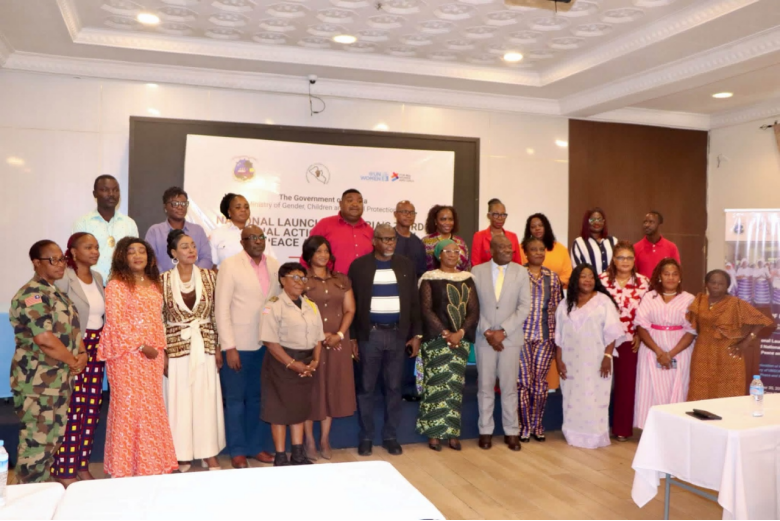
Mukosa spoke during the national launch of Liberia’s Third National Action Plan on Women, Peace and Security, covering the period 2026–2031, held in Monrovia to commemorate the 26th anniversary of United Nations Security Council Resolution 1325.
He described the launch as an important milestone in Liberia’s commitment to advancing women’s participation in peacebuilding, conflict prevention and national development, while emphasizing that the document must become more than another government policy.
“The NAP is not only a document that we are having here, but the NAP is a live document which changes lives of people at grassroots levels,” Mukosa stressed.
He commended the Ministry of Gender, Children and Social Protection, other government institutions, civil society organizations, women’s groups and young people for their contributions to developing the national action plan.
He also acknowledged the support of Ireland and Sweden, noting that their contributions were important not only in developing the plan but also in supporting its implementation.
According to Mukosa, Liberia occupies a special place in the global Women, Peace and Security agenda because of its history and contributions to women’s involvement in peacebuilding.
He recalled discussions with former President Ellen Johnson Sirleaf, who reflected on Liberia’s contributions to the agenda during her administration.
Mukosa also referenced President Joseph Nyuma Boakai’s reaffirmation of Liberia’s commitment to Women, Peace and Security during the 81st Session of the United Nations General Assembly.
He said Liberia’s position as a non-permanent member of the United Nations Security Council further provides an opportunity for the country to demonstrate leadership in advancing women’s rights and participation in peace and security at both regional and international levels.
However, he cautioned that implementing the third action plan would require coordinated efforts beyond the Ministry of Gender.
He emphasized that local women’s organizations and civil society groups must remain central to the process because of their ability to reach communities that government institutions may not easily access.
“Most importantly, we will make sure that the promise of women, peace and security is increasingly reflected in the everyday experiences of women, girls, and communities throughout Liberia,” he said.
Mukosa further assured the government of continued United Nations support through UN Women and other UN agencies, stressing the importance of national ownership, shared responsibility and collective action in achieving the objectives of the plan.
Meanwhile, Maima Sirleaf Karneh, representing the Working Group on Women, Peace and Security, called on the Liberian government to demonstrate stronger political commitment by providing adequate funding for the implementation of the third National Action Plan.
Karneh acknowledged the contributions Liberian women made to peacebuilding even before the adoption of Resolution 1325, noting that women have played significant roles in promoting peace and security in the country.
However, she said financing remains one of the biggest obstacles to implementing the Women, Peace and Security agenda.
She referenced challenges identified during a recent annual meeting of the Working Group on Peace and Security in West Africa and the Sahel in Abidjan, Côte d’Ivoire, including inadequate financing, weak collaboration and insufficient documentation.
According to her, although Liberia has developed successive national action plans, the absence of adequate financial support threatens their effective implementation.
She called on the government, particularly the Ministry of Finance and Development Planning, to ensure that the third action plan receives the necessary budgetary allocation.
Karneh warned against repeating the challenges experienced under previous national action plans, where commitments were made but financing remained inadequate.
She also emphasized the need to take the action plan beyond national institutions and make it understandable to women at the community level.
She said women in rural communities must understand how the plan relates to their everyday experiences, including access to justice, protection of women’s rights, early warning systems, community development and sustainable livelihoods.
“We are holding the government to task for political commitment, more women mediators and more funding to the National Action Plan,” she declared.
For her part, Meg Beare, Deputy Head of Mission of Ireland to Liberia, reaffirmed her country’s commitment to supporting Liberia’s Women, Peace and Security agenda.
Beare described the launch as a defining moment for Liberia, particularly as the country continues to advance its international leadership on women’s participation in peace and security.
She said the strength of the third action plan lies in the inclusive process through which it was developed, particularly the involvement of grassroots women who have played important roles in preventing violence, mediating disputes and maintaining peace within their communities.
Ireland, she noted, participated in the National Action Plan steering committee and supported UN Women in conducting county consultations with women in Peace Huts during the development of the document.
She stressed that women closest to community-level challenges must be involved in shaping solutions that affect their lives.
However, Beare said the next major test would be financing and implementation.
She called on the Liberian government to integrate the action plan into the national budget and county development priorities to ensure that resources reach the communities the initiative is intended to serve.
Ireland, she added, would continue working with the Liberian government, UN Women and civil society organizations to support the implementation process.
Meanwhile, Information, Culture and Tourism Minister Jerolinmek Matthew Piah urged Liberian journalists to give sustained attention to women’s contributions to peacebuilding and national security.
Piah, who said he was part of the coordination team that developed and launched Liberia’s first National Action Plan in March 2009, described the third plan as an opportunity to address persistent barriers to women’s participation in decision-making processes.
He said the success of the initiative should not be measured by its adoption but by its implementation and the positive changes it brings to women and girls.
The minister called on media institutions to move beyond occasional recognition of women and ensure that the achievements of women peacebuilders receive consistent and responsible coverage.
He also encouraged journalists to provide platforms for rural women, young women, grassroots peace advocates and community leaders to share their experiences and recommendations.
Piah warned against harmful stereotypes that portray leadership and security as responsibilities belonging exclusively to men.
He said women’s contributions to Liberia’s peace process are not merely part of the country’s history but remain essential to its present and future development.
As Liberia launches its third National Action Plan on Women, Peace and Security, the concerns raised by the speakers point to a common challenge: translating policy commitments into practical action.
With financing, political commitment, grassroots participation and institutional accountability identified as critical priorities, the implementation of the 2026–2031 plan will be a major test of the government’s determination to ensure that women are not only recognized as contributors to peace but are actively involved in shaping and sustaining it.
Support Independent Journalism
Your support helps FrontPage Africa continue delivering independent, credible, and impactful journalism. Every contribution strengthens our ability to investigate, inform, and hold power accountable while keeping quality journalism accessible to our readers.
Support our journalism or subscribe to receive the latest FrontPage Africa stories and updates.