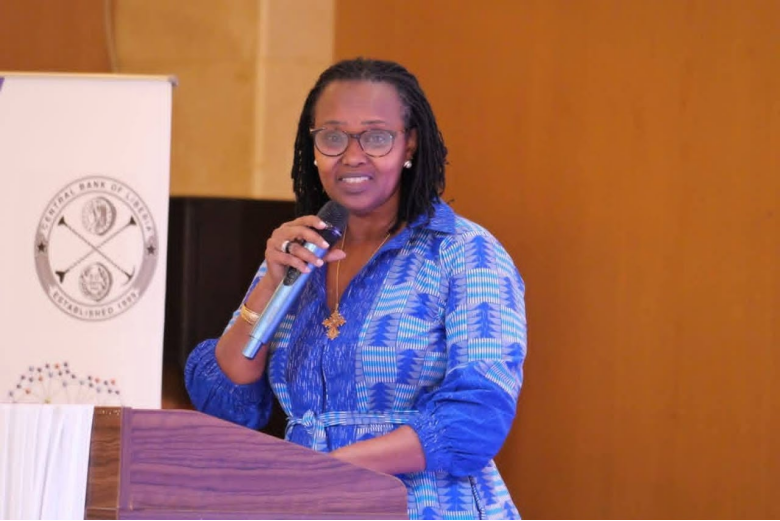
MONROVIA — The United Nations Resident Coordinator in Liberia, Christine N. Umutoni, has called on Liberia to accelerate the implementation of its national development agenda, strengthen accountability and transition from dependence on traditional development assistance toward sustainable financing and investment.
By Patience M. Jones
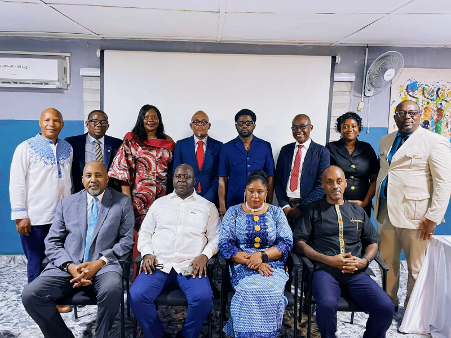
Umutoni made the call Tuesday, Augustus 11 during the ARREST Agenda for Inclusive Development (AAID) National Steering Committee Meeting, chaired by President Joseph Nyuma Boakai Sr., where government officials, development partners, civil society, the private sector and other stakeholders reviewed progress on Liberia’s national development priorities.
Addressing the gathering, Umutoni, who also serves as Deputy Chair of the AAID National Steering Committee, commended President Boakai and his administration for advancing the ARREST Agenda and maintaining an inclusive partnership structure around Liberia’s development ambitions.
She described partnership, inclusion and collective responsibility as among Liberia’s greatest strengths, while stressing that the country must now move beyond planning toward measurable results.
“If the first Steering Committee was about launching the national plan, today’s meeting is about implementation and results,” Umutoni said.
According to her, the annual National Steering Committee provides an important platform for a whole-of-government performance review, collective accountability and course correction.
She said Liberia is already recording encouraging signs, including improvements in development planning and delivery, continued efforts toward decentralization and growing initiatives to mobilize domestic resources in support of national priorities.
However, Umutoni warned that despite the progress, many Liberians continue to face limited economic opportunities, inadequate services and livelihood challenges.
“The focus must now be on transformation at scale,” she emphasized.
A major part of Umutoni’s address focused on the changing global development financing environment, which she said requires Liberia to rethink how it funds its development ambitions.
She noted that official development assistance is declining, while traditional donors are recalibrating their priorities and development partnerships are becoming increasingly focused on investment, strategic engagement and measurable results.
“Countries are competing not only for dwindling aid, but for investment. Liberia must adapt,” she said.
She called for a shift from simply funding development to financing development, with greater emphasis on domestic resource mobilization, climate finance, private investment, innovative financing mechanisms and stronger partnerships.
According to Umutoni, Liberia must also move away from fragmented, small-scale projects toward transformational investments capable of producing results at national scale.
“The question can no longer be only, ‘Who will fund the development programs?’ It must increasingly be: ‘How do we structure these development programs so that different sources of capital can finance them?’” she stated.
She highlighted the proposed Integrated National Financing Framework and Development Cooperation Policy as critical instruments that could help Liberia establish a new architecture for development partnerships.
She said the framework could bring government, development partners, international financial institutions, investors, foundations, the private sector and the Liberian diaspora together around nationally defined priorities.
Umutoni further urged Liberia and its development partners to identify a limited number of nationally owned flagship investments capable of changing the country’s development trajectory.
She identified human capital, economic transformation, food systems, digital transformation and climate resilience as areas with the potential to attract large-scale financing and partnerships.
“The transition is from funding to financing,” she said, while also calling for another major shift—from small projects to flagships.
She argued that Liberia possesses significant assets that can strengthen its investment proposition, including its youthful population, natural resources, strategic location, peacebuilding achievements, democratic resilience and growing international profile.
“Liberia should be open for business, and the world should know it,” Umutoni declared.
‘From Peace to Prosperity’
The UN Resident Coordinator also highlighted Liberia’s progress in peacebuilding and democratic consolidation, saying the country’s experience offers an opportunity to tell a different African story.
She pointed to Liberia’s membership of the United Nations Security Council as an opportunity to showcase the country’s progress, attract new partnerships and strengthen its position as an investment destination.
She stressed that Liberia’s investments in reconciliation, accountability, women’s leadership, inclusion, governance and social cohesion are fundamental to the country’s long-term development.
“These investments in governance, peace and social cohesion are not separate from the development agenda. They are foundational to achieving it,” she said.
Umutoni concluded her remarks with three priorities: accelerating delivery so that every county and community can experience tangible progress; strengthening Liberia’s transition from funding to financing through the Integrated National Financing Framework and Development Cooperation Policy; and strengthening accountability and partnerships through the AAID coordination structure.
She also called for the date of the 2026 Government-Development Partners Retreat to be fixed.
Umutoni said the United Nations and its partners must also adapt to the changing development environment by focusing not only on the resources they directly provide, but on their ability to convene partners, provide technical expertise, reduce investment risks and mobilize financing beyond their own resources.
“Liberia’s future will not be determined by the amount of aid it receives. It will be determined by the institutions it builds, the people it empowers, the investment it attracts, and the opportunities it creates,” she said.
She ended with a powerful message on Liberia’s next phase of national development:
“Liberia’s journey in peacebuilding has already shown the world what this country can achieve. The next journey must be from peace to prosperity.”
The UN Resident Coordinator reaffirmed the United Nations’ commitment to supporting Liberia’s development journey and building stronger partnerships around the country’s national priorities.
Support Independent Journalism
Your support helps FrontPage Africa continue delivering independent, credible, and impactful journalism. Every contribution strengthens our ability to investigate, inform, and hold power accountable while keeping quality journalism accessible to our readers.
Support our journalism or subscribe to receive the latest FrontPage Africa stories and updates.