MONROVIA — Three video recordings depicting the distribution of Saudi-donated rice were presented by the defense Monday as its first witness continued testifying in the closely watched trial involving former government officials and other defendants accused of the alleged mismanagement of the humanitarian donation.
By: Willie N. Tokpah
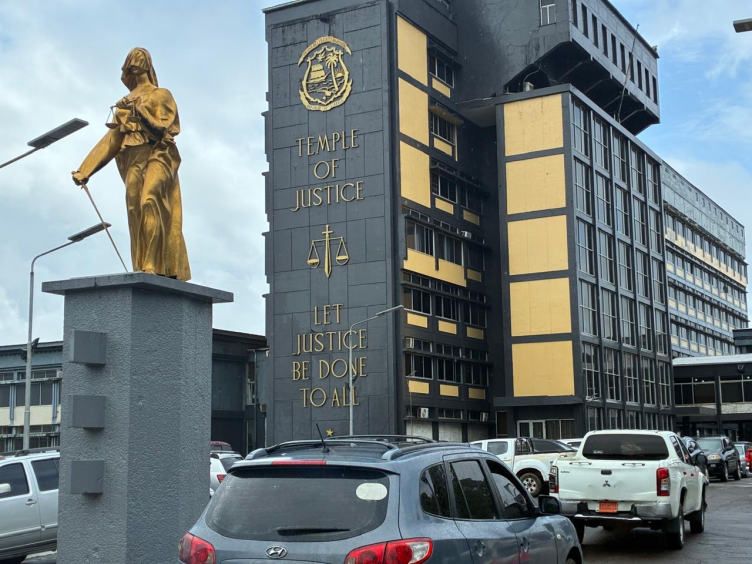
Archievo Doe, a former National Disaster Management Agency (NDMA) communications official, presented the footage before Criminal Court “C” as part of the defense’s effort to challenge the prosecution’s account of how the rice was distributed.
Doe testified that one video was recorded in 2023, during the tenure of former NDMA Executive Director Henry O. Williams, while the other two were recorded in 2024, after Williams had left the position.
The defense is seeking to use the footage, alongside media reports, community witnesses and distribution records, to challenge aspects of the Asset Recovery and Property Retrieval Taskforce’s investigation.
However, the recordings’ dates, locations and the identities of those involved remain important considerations in determining whether the distributions shown relate to the specific transactions at issue in the case.
The footage alone does not establish who authorized each distribution, the quantities involved or whether the transactions complied with established procedures.
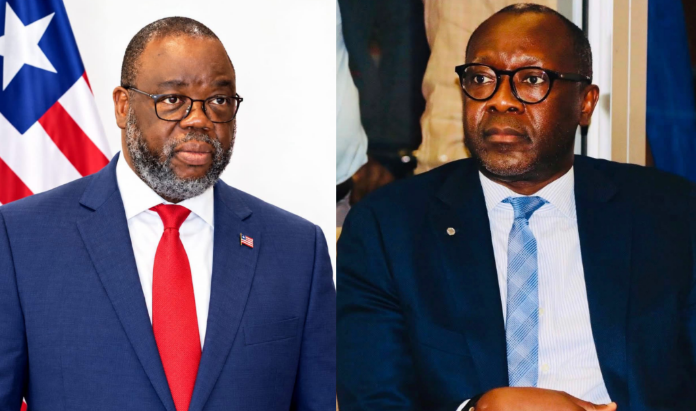
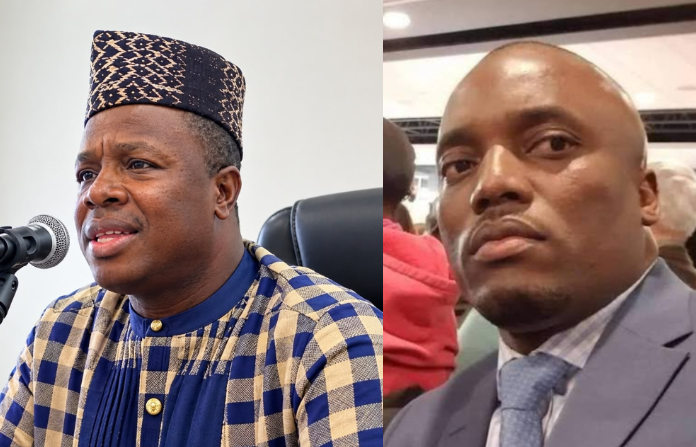
The defendants, including former Foreign Affairs Minister Dee-Maxwell Saah Kemayah, have pleaded not guilty and remain presumed innocent unless proven guilty.
Doe Cites Media Reports, Community Beneficiaries
Doe also referenced media coverage that he said documented the distribution of the Saudi-donated rice.
He specifically mentioned Joseph Daniel, a former mainstream journalist now associated with the Asset Recovery and Property Retrieval Taskforce, who Doe said had previously reported on the distribution.
He also cited State Radio as another source of coverage.
Doe further told the court that the mother of the late Angel Togbah could testify that she and others received portions of the rice.
The defense maintains that such accounts could help establish that the distribution exercise was conducted openly and involved identifiable beneficiaries.
150 Bags Delivered to Caldwell Family
Testifying about the Caldwell distribution, Doe said the project’s concept note provided for two bags of rice per disaster-affected family.
However, he told the court that the Togbah family received 150 bags.
Doe testified that he signed the waybill associated with the movement of the consignment from the General Services Agency warehouse.
According to him, the rice was loaded onto an NDMA truck operated under the supervision of the Armed Forces of Liberia, with an AFL driver transporting it to Caldwell.
Doe said Williams and a team that included him followed the truck in another vehicle.
His testimony sought to place the delivery within an NDMA disaster-response operation, although the legality and significance of the transaction remain for the court to determine.
50 Bags Delivered to Flood-Affected School
Doe also testified that on October 2, 2023, Williams instructed him to deliver 50 bags of rice to Faith Caring Daycare and Elementary School in Chicken Soup Factory because the executive director was occupied with other responsibilities.
He said the school had been affected by flooding that disrupted academic activities.
Doe testified that information collected in the community identified 157 affected persons or infrastructure-related cases, including 46 infrastructure cases.
He said the rice was delivered in the presence of Staff Sergeant Zubah Blama, members of the Togbah family and community residents.
According to Doe, the consignment was transported in an NDMA Toyota Land Cruiser double-cabin pickup bearing license plate RL4704.
Explaining his broader role in the project, Doe said his responsibilities extended beyond the two distributions under scrutiny.
“My role in the Saudi rice project was not only about leading the team to deliver the 50 bags of rice to the Faith Caring Daycare Elementary School, but the Division of Communication I headed covered all the activities of the Saudi rice project,” he testified.
He added that either he or a member of his communications team was present at distribution sites.
Doe Challenges ARREPT Investigation
Doe also challenged the manner in which investigators handled his case, testifying that the two waybills associated with the Caldwell and Chicken Soup Factory distributions were not presented to him during questioning.
He said ARREPT sent him questions concerning his alleged involvement, but he considered some insufficiently specific. He testified that he requested clarification and eventually responded to approximately 18 questions.
Doe said he heard nothing further from investigators until June 27, when he was served with an indictment.
He maintained that he first saw the two waybills after his indictment, when his lawyer-wife showed them to him.
“At no time were the two willbills from Caldwell and Chicken Soup Factory presented to me,” Doe told the court.
He said he would have explained his role and the instructions he received from Williams had the documents been presented during the investigation.
Disputes Prosecution Witness’s Community Account
Doe also disputed testimony from Isaac K. Weede, General Chairman of Lakpazee Community, who previously told the court that he knew of no Saudi rice distribution in the community.
Doe referenced the death of a handicapped resident identified as Tamba and his wife in a fire incident in Lakpazee, challenging Weede’s account of events in the community.
He also cited the deaths of five children in Five-Forty Community, saying they occurred around the period of the rice distribution.
The competing accounts raise questions about the extent of individual witnesses’ knowledge of distributions across communities during the broader relief operation.
Judge Fines Defense Lawyer US$200
Monday’s proceedings also featured a tense exchange between Trial Judge Ousman Feika and defense lawyer Cllr. Jimmy Saah Bombo.
Judge Feika fined Bombo US$200 after the lawyer attempted to object to a question posed by the judge. The court ordered the fine paid within 24 hours and warned that failure to comply could result in imprisonment.
Two additional attempts by the defense to object to questions from the judge were rejected, prompting further disagreement.
The prosecution rested its case after 31 days of jury sitting, and the defense has now begun presenting its evidence.
The indictment reportedly alleges that 25,054 of the 29,412 bags of donated rice were unlawfully handled, diverted or misapplied.
As the defense continues its presentation, the jury will have to weigh the competing testimony, documentary records and video evidence to determine whether the prosecution has established the charges against each defendant beyond a reasonable doubt.
Support Independent Journalism
Your support helps FrontPage Africa continue delivering independent, credible, and impactful journalism. Every contribution strengthens our ability to investigate, inform, and hold power accountable while keeping quality journalism accessible to our readers.
Support our journalism or subscribe to receive the latest FrontPage Africa stories and updates.