Summary:
- A decade after Liberia was declared Ebola-free, survivors and families still carry emotional, economic, and social scars, from loss, disrupted education, and unmet support.
- Grandparents are raising orphaned children, while survivors and health workers say the trauma and health effects have not fully disappeared.
- Public health experts say Liberia must support survivors, protect frontline workers and apply the lessons of 2014 as Ebola-related threats continue.
By Nukanah Kollie with New Narratives
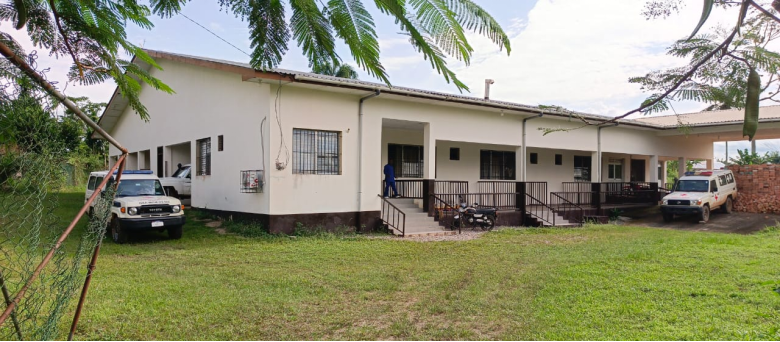
SUAKOKO, Bong County — All was calm at Phebe Hospital on a recent afternoon. White buildings sat behind freshly cut grass. Ambulances stood nearby. The former Ebola Treatment Unit looked like an ordinary hospital ward.
More than a decade ago, it was part of an hourly battle between life and death. Klebu Pewu was a nurse here. As family and workmates got sick and died around her she tried to keep going. But the virus finally caught her. She was lucky. More than half of the healthcare workers infected died.
Ten years on, she says she avoids talking about it: “Too much sorrow and pain to me.”
Pewu’s grief is not unique, and it is not over. Families across the country still carry the financial, physical, and emotional costs of what remains to this day, the world’s worst Ebola outbreak. Orphaned children have struggle to stay in school. Survivors report lingering health problems, while others say promised support never came. Experts say their unfinished recovery raises questions about how Liberia cared for people who survived its worst health crisis and whether the country fully applied the lessons of 2014.
Bong County was hard hit by the devastating outbreak that is thought to have started in April 2014 when a small child contracted it from a bat killed for bush meat in neighboring Guinea. It quickly engulfed the region paralyzing Guinea, Sierra Leone and Liberia for more than a year and spreading to Mali, Nigeria, Senegal, Spain and the United States. By the end there were 18,603 confirmed cases and 6,915 dead.
At the peak, Liberia recorded 300 to 400 new cases a week and drew an overwhelming international response for an uncontrolled outbreak that caused alarm throughout the world. The United States deployed nearly 3,000 troops to help build treatment units, train health workers and expand laboratory testing. Eventually 10,675 cases were reported in Liberia with nearly 5,000 dead, the highest toll for any country. In Bong County, researchers recorded 607 suspected, probable, or confirmed cases with a 53.5 percent death rate.
Healthcare workers took the brunt of it. Nationally, 378 health workers contracted Ebola, and 192 died, a fatality rate above 50 percent, according to a study. Liberia already had one of the world’s lowest doctor-to-patient ratios, so every loss further strained the health system.
A health care worker and a family devastated by Ebola live with lingering fear and trauma
Pewu’s family was among the hardest hit in the Bong village of Sinyea Town. Their experience tells the cruel nature of the disease that passes from family member to family member as they try to care for loved ones, and then, even as they bury them. Ebola entered the family early in the outbreak in June 2014 through her sister-in-law, who contracted it while caring for a sick relative at Phebe Hospital. At this stage few in the country understood the scale of what the country was facing.
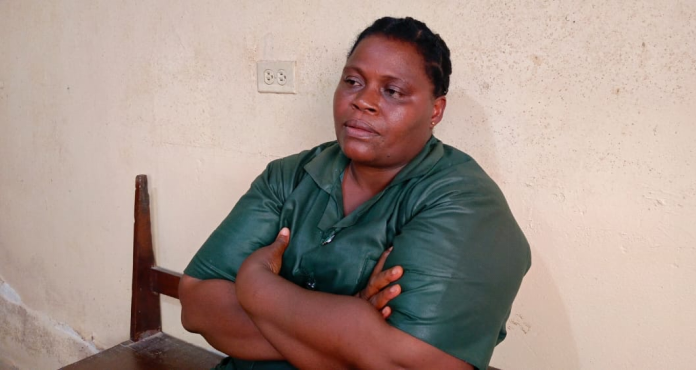
After returning home, her sister-in-law’s husband, Pewu’s brother Matthew, and their 25 years old son Abraham, also became infected. The sister-in-law soon died. About a week later her son followed. This early in the outbreak the danger from dead bodies was not well established. There was no burial team. Pewu’s brother helped bury the bodies. About a week after the burial, he began showing symptoms.
Bong County had no treatment unit. It did not open until mid-September. Health workers disinfected the family home and brought him back inside to wait. He died the next day.
Pewu was a nurse at Phebe Hospital where staff worked mostly without appropriate protective equipment. As colleagues fell sick and died, she became frightened.
“I was very angry when I go to work. I was just crying,” she recalls.
She tried to protect herself with a sweater, double dresses and socks. But as more health workers died, she decided to quit.
But it was too late. Pewu came down with severe body pain. Fearing for herself and her two children, ages 11 and 3, she refused to go to a treatment facility after hearing stories of people dying there. She stayed away from others and her household next door, for 21 days, enduring body pain, red eyes, vomiting and diarrhea, and trying to keep herself hydrated. By the time health workers came to check on her, she says, she had recovered.
Pewu still keeps an old phone loaded with recordings from that period. She has never listened to them. “I kept that phone because I knew one day we had to share this story with the children,” she says. “They must know exactly what we went through.”
Health care workers and burial teams suffered stigma and isolation
As the virus spread, relatives were barred from touching the dead because handling infected bodies could spread the virus. Burial teams took over; leaving families unable to perform funeral rites. Bodies were burned instead of buried to ensure the virus was killed.
It was a difficult time. Many families resisted. It was not until religious leaders, especially imams, came forward to tell families that God would forgive them for not observing religious practices, and to allow the bodies to be burned, that communities accepted the directive.
Ambulances arriving to collect sick health workers only deepened the fear. In some communities, the sight of hospital vehicles came to mean the hospitals themselves were spreading the virus, not fighting it. Health workers who served at the Bong County Ebola Treatment Unit say that suspicion isolated many of the people working the front line of the response, at the moment they were needed most.
Comfort Harris Kollie, 66, was a scrub nurse at Phebe Hospital during the outbreak. She returned to work in September 2014 and continued working as Ebola spread through the hospital and surrounding communities.
She believes she contracted the virus on the Phebe Hospital bus, recalling that she had sat where an infected passenger had previously sat. The bus driver later became infected and died.
Like other health workers at the time, Kollie says she went to work without adequate protective equipment, relying instead on sweaters and extra layers of her own clothing. She watched colleagues from different wards fall sick and die, and the losses made the danger feel increasingly real each time she returned to the hospital.
She was eventually infected herself and spent about 10 days at an Ebola treatment unit in Bong before recovering. Surviving brought its own fear that she might have carried the virus home. She stayed away from her family for three months after returning home.
She returned to work at Phebe Hospital and continued caring for patients until she retired in 2017. But her experience did not end with her recovery. Ten years on, she still lives with the physical effects. Her eyesight and balance have never recovered fully.
Survivors and families face ongoing health problems and other hardships
In her 50s, Pauline Gbeeyan sits with a pink headscarf wrapped tightly around her head, tears welling in her eyes when she recalled her battle with Ebola.
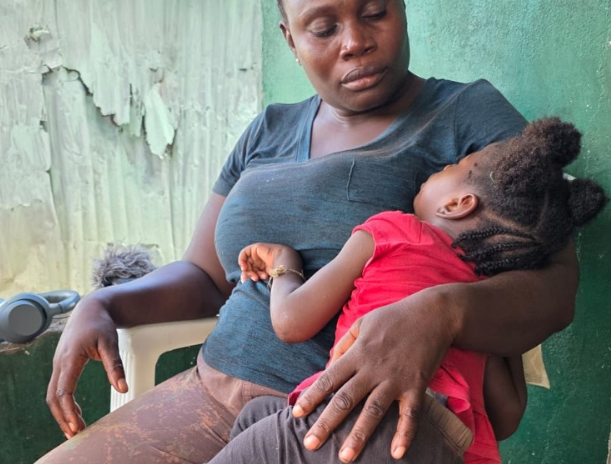
Gbeeyan’s daughter, Kou, worked at Phebe Hospital where she contracted the disease and died after being taken to an Ebola treatment facility in July 2014. Kou had been the family’s breadwinner and left behind two children who now depend on their grandmother.
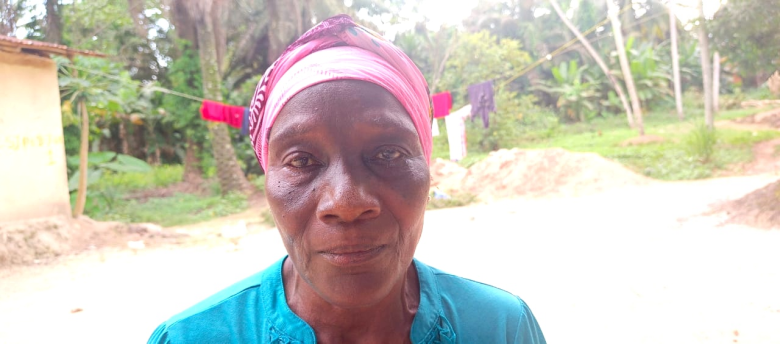
Gbeeyan has spent the years since fighting for their education. One granddaughter completed 12th grade but they have not been able to afford to pay for the other. Churches and a Liberian community group in Minnesota provide occasional food and cash, but Gbeeyan says the help is never steady.
“I’m still fighting for them,” she says.
She is asking government for scholarships so children who lost parents to Ebola can continue through college.
Many impacted by the outbreak continue to deal with the aftermath. Dr. Mosoka P. Fallah, a founding member of Liberia’s National Public Health Institute and a key figure in the 2014 response, is now working on Ebola vaccine research in Central Africa says most survivors may be doing well, but a smaller group still struggles and needs continued support such as vocational training to help rebuild livelihoods when a breadwinner dies.“They lost everything,” he says. “They put their broken pieces together. They try to rebuild their lives.”
Experts warn Liberia is not prepared for another outbreak especially with aid cuts
Dr. Fallah also warns that Liberia’s weak response last time has not been fixed in the years since. Laboratory capacity was limited, and treatment units were slow to open. He says one of the deepest lessons was that outbreaks are won or lost at community level. Government leadership, a free press, international partners, and a response decentralized to the counties all mattered.
Dr. Fallah is now working on the outbreak in the Democratic Republic of the Congo which has now claimed the second highest number of victims after the 2014 West Africa outbreak. Global health experts blame major cuts to the World Health Organization and the United States Center for Disease Control for the inability to bring the outbreak under control. Dr. Fallah warns Liberia and the region cannot afford to lower their guard as Ebola-related threats continue to emerge.
Joseph S. Wiah, the National Public Health Institute of Liberia’s communication officer, contacted via WhatsApp, said the institute holds no records on Ebola survivor support, assistance, or programs for survivors and orphaned children and does not consider it their responsibility. Augustus Sayweh Walker, director of communications at the health ministry, referred all questions to the National Public Health Institute.
Ebolas’s survivors now say they share a hope that lessons will be learned so that the country does not go through the unnecessary trauma and loss of the last outbreak. But as time goes on and memories fade, the lack of knowledge and preparation does not give them confidence.
This story is a collaboration with New Narratives as part of the “Investigating Liberia” Reporting Project. Funding was provided by the Swedish International Development Cooperation Agency. The donor had no say in the story’s content.
Support Independent Journalism
Your support helps FrontPage Africa continue delivering independent, credible, and impactful journalism. Every contribution strengthens our ability to investigate, inform, and hold power accountable while keeping quality journalism accessible to our readers.
Support our journalism or subscribe to receive the latest FrontPage Africa stories and updates.