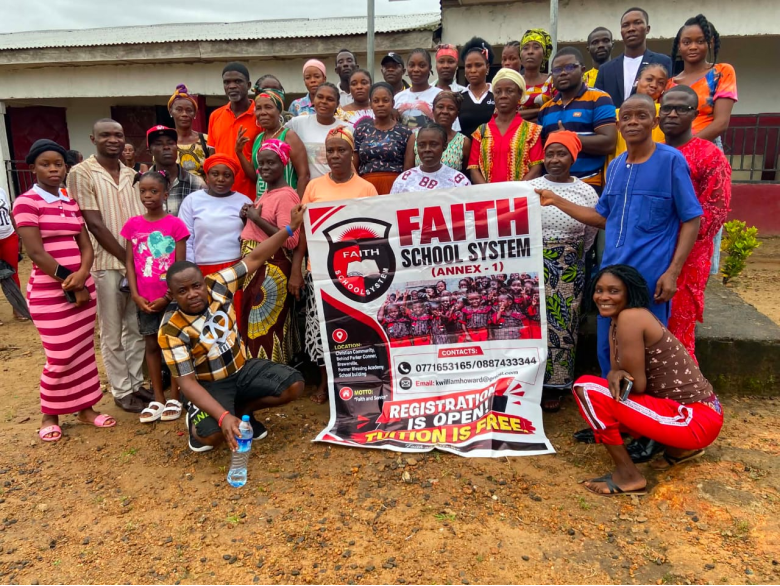
BREWERVILLE, Montserrado County — The opening of Faith School System’s Anlex 1 in Brewerville has been warmly welcomed by residents, who say the institution’s free-tuition education empowerment program could bring new hope to families struggling to afford the rising costs of sending their children to school.
Located in the Christian Community, behind Parker Conner in Brewerville, Anlex 1 officially opened over the weekend, creating a new educational opportunity for children and families in surrounding communities.
For many residents, the opening represents more than the arrival of another school. It represents an effort to reconnect children with education, strengthen family and community support systems, and provide a safer and more structured environment for children who might otherwise remain out of school because of economic hardship.
Education as a Governance and Security Intervention
The relevance of the initiative goes beyond education alone. Providing tuition-free education to out-of-school children can also contribute to local governance and community security by strengthening access to basic services, improving community participation, protecting vulnerable children,
and reducing some of the economic pressures that can contribute to children’s vulnerability.
Liberia’s education and child-protection priorities recognize the importance of bringing services closer to children and communities. Recent national and development-partner efforts have emphasized getting out-of-school children back into classrooms, strengthening community engagement, improving accountability, and building stronger systems to protect children.
In this context, Faith School System’s initiative can be viewed through several important governance and security components:
1. Access to basic services and inclusive governance.
Education is one of the essential services through which children and families experience institutions and community development. Expanding access to education for children who have been excluded because of poverty can support a more inclusive community in which vulnerable households are not left behind.
2. Child protection and safeguarding.
Keeping children connected to school can create an organized environment in which teachers, parents, administrators, and community leaders can identify protection concerns and respond to them. UNICEF has identified violence, exploitation, child labour, child marriage, and other forms of vulnerability as important child-protection concerns in Liberia.
3. Community security and vulnerability reduction.
For children who are not attending school, the absence of a structured educational environment can leave them exposed to different forms of vulnerability. A school does not eliminate those risks, but regular attendance, adult supervision, safeguarding procedures, and stronger links between families and community institutions can provide additional protective structures.
4. Household economic resilience.
Removing tuition costs can reduce some of the financial pressure on economically disadvantaged families. When families spend less on education-related expenses, they may have greater ability to meet other household needs. This makes education relevant not only to social development but also to household economic stability.
5. Community participation and accountability.
The involvement of the Parent-Teacher Association, parents, teachers, administrators, and community leaders provides a mechanism through which community members can participate in discussions about children’s education and welfare. Liberia’s Ministry of Education has also emphasized accountability, stakeholder engagement, transparency, and mechanisms for addressing concerns within the education system.
6. Social inclusion and equal opportunity.
The initiative gives particular attention to children who have been excluded from school because of economic circumstances. Inclusive access to education can help reduce disparities between children from households with different economic circumstances.
7.Youth development and long-term community stability.
Education provides children with knowledge, skills, social development, and opportunities to prepare for adulthood. UNICEF and the Government of Liberia have identified education, youth development, and stronger systems for children as important priorities.
A New Opportunity for Families
Robert Chea, who was elected Chairperson of the Parent-Teacher Association (PTA), said the establishment of the school represents an important opportunity for children and families in the community, particularly in relation to child protection and vulnerability.
Chea said that without additional educational opportunities in the community, many children could remain out of school and face increased exposure to neglect, exploitation, child labour, and other vulnerabilities.
He explained that bringing education closer to families can strengthen community-based protection while the free-tuition initiative provides financial relief to parents.
“With transportation, school fees, learning materials, and other education-related expenses placing pressure on household incomes, having a school closer to home could provide some relief for struggling families,” Chea said.
He expressed appreciation to the founder of Faith School System, William Howard, saying the initiative gives parents an opportunity to educate their children without carrying some of the financial burdens that have prevented many children from attending school in communities around Brewerville.
For parents and guardians, the benefits could go beyond free tuition. Children attending school closer to home may also mean less money spent on daily transportation and fewer challenges associated with sending children to distant schools.
Governance Through Community Participation
The PTA is also expected to play an important role in strengthening communication between the school and the community.
Effective community participation can help parents raise concerns, monitor children’s welfare, support attendance, and work with administrators to address challenges.
This type of participation is particularly important because good governance is not only about government institutions. It also involves transparency, accountability, participation, responsiveness, inclusion, and cooperation between institutions and the communities they serve.
Liberia’s Ministry of Education has specifically highlighted good governance, accountability, integrity, stakeholder engagement, and stronger service-delivery oversight as important elements of education-sector improvement.
Residents Call for Quality and Commitment
Grace Smith, a resident who spoke during the opening ceremony, said having a school within the community could ease some of the challenges families face while allowing children to learn closer to their homes.
However, Smith emphasized that access to education must be accompanied by quality.
She called on the school administration to remain committed to providing quality education while maintaining a safe, welcoming, and supportive environment where children can learn, grow, develop their potential, and become meaningful contributors to society.
Smith also encouraged administrators to maintain close communication with parents, teachers, and community members so that the school can continue responding to the needs of its students.
Community Cooperation Will Be Essential
David Sugbehe, a longtime resident of the community where the school is located, encouraged parents to take an active role in their children’s education.
Sugbehe urged parents to maintain regular communication with teachers and school administrators and encouraged the PTA to serve as an important bridge between families and the school.
He said cooperation among parents, teachers, administrators, and community members would be essential to identifying challenges early and finding practical solutions that help keep children in school.
Education, he noted, is not the responsibility of the school alone. It requires the collective commitment of families and the wider community.
Education and Community Security
The security relevance of the initiative is particularly important when considering the situation of vulnerable children. A child who is consistently attending school is connected to teachers, peers, parents, and other community structures. These relationships can create opportunities for early identification of problems affecting children and for referrals or intervention when protection concerns arise.
This does not mean that schooling alone prevents crime, violence, abuse, or other forms of insecurity. Rather, education can serve as one component of a broader community protection system involving parents, schools, community leaders, government institutions, law-enforcement and child-protection actors, and civil-society organizations.
UNICEF has emphasized that protecting children in Liberia requires cooperation among government and society and stronger community-based protection and response systems.
A Vision That No Child Should Be Left Behind
For Faith School System founder and Chief Executive Officer William Howard, the establishment of Anlex 1 in Brewerville is part of a larger vision to reach children who are not attending school because of economic barriers.
Howard said the institution was created to help children from economically disadvantaged backgrounds gain access to education and give families an opportunity to see their children pursue their dreams despite financial challenges.
His vision is simple but powerful: no child should be denied an education simply because their family cannot afford it or because the child faces other barriers, including disability.
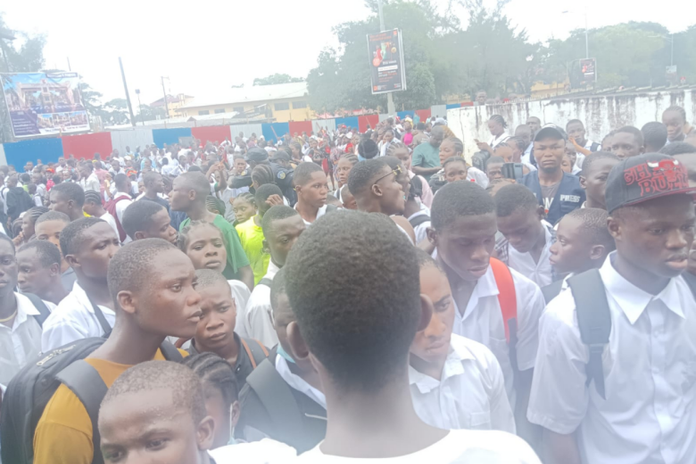
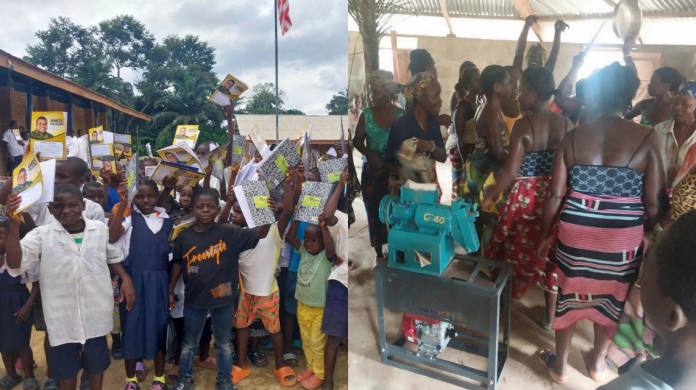
Through its free-tuition education empowerment program, Faith School System says it is currently serving more than 450 children, the majority of whom are children who were previously out of school or had dropped out because of different circumstances.
From Education to Community Development
The establishment of Anlex 1 therefore presents an opportunity to look at education not only as classroom instruction but as part of a broader community-development framework.
When children gain access to education, families can gain greater economic relief. When parents participate in school activities, community engagement can become stronger. When schools maintain effective safeguarding and communication systems, vulnerable children can have additional layers of protection.
And when communities work with educational institutions to identify problems, monitor children’s welfare, and demand quality services, education can contribute to stronger local accountability.
For Brewerville residents, the hope is that Anlex 1 will become more than a place where children attend classes. It can become a place where education, child protection, community participation, household empowerment, accountability, and social inclusion come together to give vulnerable children a better opportunity for the future.
The broader challenge, however, will be sustaining quality, safeguarding children, maintaining transparent administration, supporting teachers, engaging parents, and ensuring that children who enter the program remain connected to education.
For families who have struggled to keep their children in school, the opening of Faith School System’s Anlex 1 represents a new beginning—and for the wider community, an opportunity to demonstrate how education can contribute to both human development and stronger, safer community.
Support Independent Journalism
Your support helps FrontPage Africa continue delivering independent, credible, and impactful journalism. Every contribution strengthens our ability to investigate, inform, and hold power accountable while keeping quality journalism accessible to our readers.
Support our journalism or subscribe to receive the latest FrontPage Africa stories and updates.