The MPC Retains Prudent Monetary Stance While Introducing Targeted Actions to Address Structural Vulnerabilities
MONROVIA– The Central Bank of Liberia (CBL), has maintained a cautious monetary policy stance while adopting new measures aimed at strengthening the financial system, saying the economy is showing signs of stronger growth, lower inflation and improved stability despite mounting global uncertainties.
Jaheim T. Tumu– [email protected]
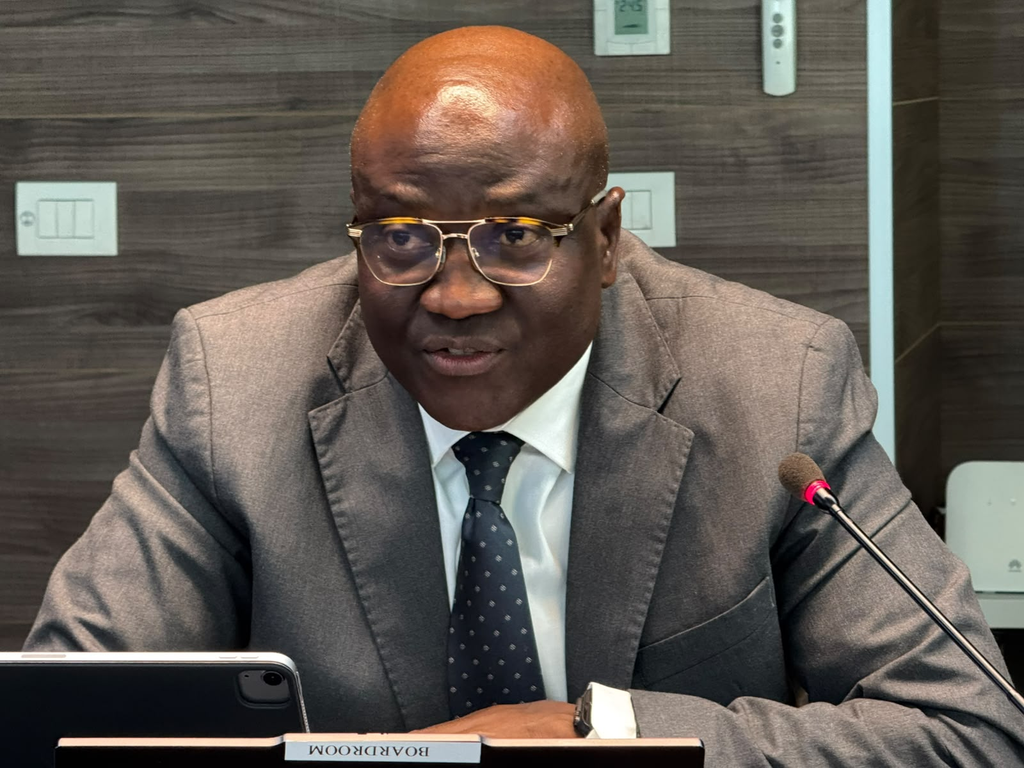
Speaking after the Monetary Policy Committee (MPC)’s 28 meeting, CBL Executive Governor and Committee Chairman Henry F. Saamoi said policymakers reviewed both international and domestic economic developments before deciding to keep the benchmark monetary policy rate at 16%.
The committee said maintaining the current interest rate would help preserve macroeconomic stability while allowing recent economic improvements to continue. The Committee believe inflation is under control, the foreign exchange market has become more stable and the banking sector remains resilient.
“The Committee resolved to maintain the monetary policy rate at 16%, thereby preserving the current prudent and appropriately restrictive monetary policy stance,” Saamoi said.
The central bank explained that the decision is part of a broad strategy to protect gains already achieved in the economy. Policymakers said a stable policy environment remains necessary to support investor confidence and protect households from inflationary shocks.
“This decision is intended to sustain recent gains in macroeconomic stability, preserve exchange rate stability, anchor inflation expectations, strengthen confidence in the financial system, and support sustainable economic growth,” he said.
While domestic economic indicators are improving, the committee noted that risks from the global economy remain significant. According to policymakers, geopolitical tensions, rising energy prices, commodity market volatility and tighter financial conditions continue to create uncertainty for developing economies, including Liberia.
The committee said many countries in Africa remain exposed to disruptions caused by changes in global commodity prices and borrowing costs, factors that could affect growth and inflation prospects.
“Rising geopolitical tensions, increased uncertainty surrounding the global outlook, and heightened risks associated with energy prices, inflation, trade flows, and financial market stability” continue to weigh on the global economic outlook, Saamoi said.
Despite those concerns, the committee said Liberia’s economy continues to perform strongly. Growth is projected to reach 5.5% in 2026, compared with 5.1% in 2025, supported by increased activity in mining, manufacturing and services.
According to the central bank, the stronger growth reflects expanding economic activity across several sectors and growing domestic demand.
“Real GDP growth is projected at 5.5% in 2026 compared with 5.1% in 2025, reflecting improved performance across key sectors of the economy,” Saamoi said.
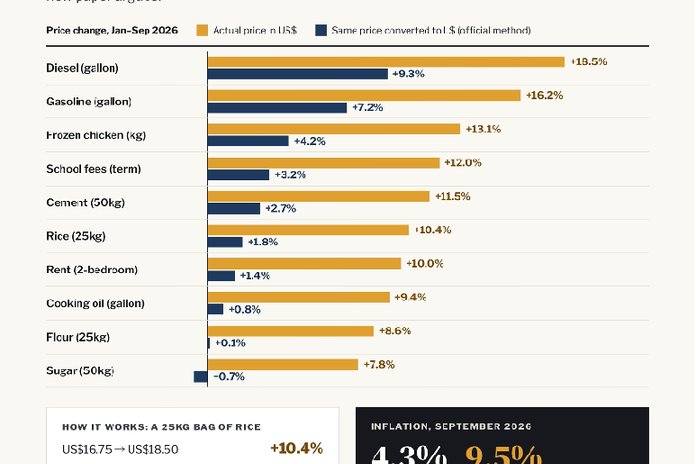
The committee also highlighted progress in reducing inflation, one of the central bank’s key objectives. Officials said exchange-rate stability and prudent monetary management have helped ease price pressures across the economy.
Inflation declined to an estimated 4.5% during the third quarter from 5.4% in the previous quarter and is expected to remain stable during the remainder of the year.
“The Committee welcomed this continued moderation in inflation as evidence that recent policy measures are contributing to greater price stability and helping preserve the purchasing power of Liberian households and businesses,” he said.
The central bank further reported that Liberia’s banking sector remains healthy and well-positioned to withstand economic shocks. Strong capital levels and adequate liquidity continue to support confidence in the financial system.
According to the committee, the banking sector’s capital adequacy ratio stood at 38.64%, far above the regulatory requirement of 10%, while the liquidity ratio reached 58.71%, significantly exceeding the statutory minimum of 15%.
“These indicators underscore the strength, resilience, and soundness of Liberia’s banking system,” Saamoi said..
However, policymakers stressed that challenges remain, particularly the high level of non-performing loans. The committee warned that bad loans continue to limit the ability of banks to extend credit to productive sectors and could pose risks to financial stability if left unresolved.
The ratio of non-performing loans stood at 13.38%, above the prudential benchmark of 10%.
“Elevated NPLs continue to represent a significant medium-term risk to financial stability and constrain the capacity of financial institutions to expand credit to productive sectors of the economy,” he said.
To address longer-term vulnerabilities within the financial system, the committee announced targeted policy measures aimed at strengthening monetary policy transmission and reducing risks linked to Liberia’s heavy dependence on foreign currency transactions.
As part of that effort, policymakers voted to increase the reserve requirement ratio on United States dollar deposits by two percentage points, from 10% to 12%, while keeping the reserve requirement on Liberian dollar deposits unchanged at 25%.
The committee said the move is intended to improve liquidity management, strengthen the financial sector and gradually reduce vulnerabilities associated with financial dollarization.
“The increase in reserve requirement for United States dollar deposits and adjustment of the interest rate corridor are intended to strengthen monetary policy transmission, enhance liquidity management, strengthen financial sector resilience, and support the gradual reduction of structural vulnerabilities associated with Liberia’s high level of financial dollarization,” Saamoi said.
The committee also noted that Liberia’s external position remains relatively stable despite a wider trade deficit. Strong reserve levels and remittance inflows continue to provide a buffer against external shocks and imported inflation.
Gross international reserves remained at 3.3 months of prospective import cover, above the ECOWAS benchmark of three months, according to the committee.
The central bank said it remains optimistic about Liberia’s near-term outlook, citing strengthening economic activity, stable inflation and confidence in the financial sector. Nevertheless, policymakers emphasized that they remain prepared to respond should domestic or international conditions deteriorate.
“The Monetary Policy Committee remains vigilant and stands ready to take additional policy measures when necessary to safeguard price stability and financial stability,” Saamoi said.
Support Independent Journalism
Your support helps FrontPage Africa continue delivering independent, credible, and impactful journalism. Every contribution strengthens our ability to investigate, inform, and hold power accountable while keeping quality journalism accessible to our readers.
Support our journalism or subscribe to receive the latest FrontPage Africa stories and updates.