MONROVIA Liberia’s National Elections Commission (NEC) and the Legislature have placed transparency, accountability and public trust at the center of preparations for the country’s 2029 Presidential and Legislative Elections, warning that credible elections must be built long before voters head to the polls.
By Augustus D.R Bortue-augustusd.rbortuefrontpageafricaonline.com
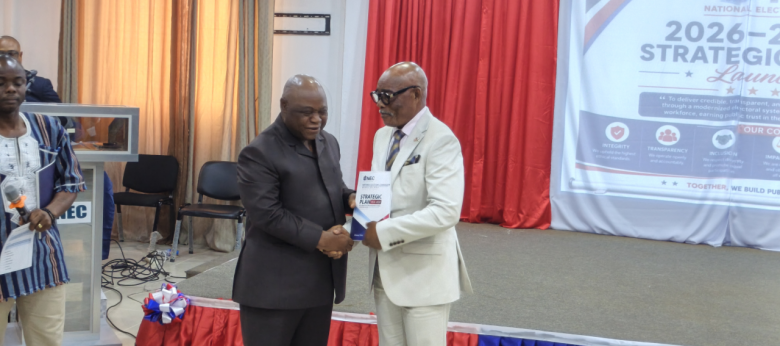
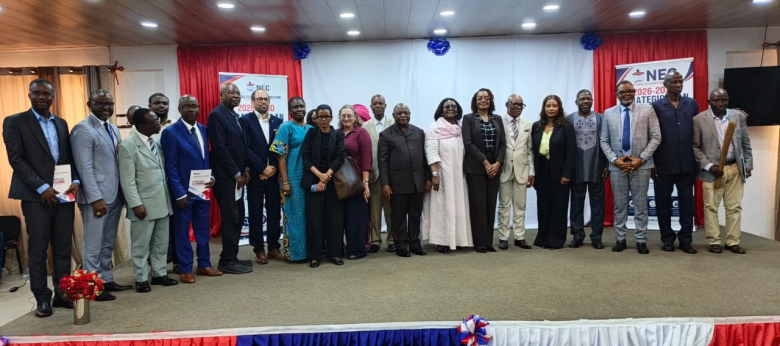
The call came Wednesday, September 2 during the formal launch of the NEC’s Strategic Plan 2026–2030, where NEC Chairperson Jonathan K. Weedor and Chairman of the House Committee on Elections and Inauguration, Prof. Thomas Romeo Quioh, stressed the need for an electoral system that is open, inclusive, independently credible and trusted by Liberians.
Launching the five-year strategic roadmap, Weedor said the NEC is determined to ensure that Liberia’s electoral future is defined by integrity rather than uncertainty, with every vote serving as a true reflection of the will of the people.
“We are not merely unveiling a document; we are launching a bold new chapter in Liberia’s democratic evolution,” Weedor stated.
He described the plan as a commitment to strengthening Liberia’s democratic institutions and ensuring that electoral processes remain transparent, credible and worthy of public confidence.
The NEC’s new strategic direction comes against the backdrop of a rapidly changing electoral environment, including the growing influence of digital technology, shifting demographics and increasing demands for transparency in election management.
The NEC Chairman acknowledged that the Commission’s previous strategic cycle achieved important milestones but also exposed weaknesses in technological infrastructure, financial sustainability and institutional capacity.
The new plan, he said, is designed to address those challenges through six strategic pillars covering legal and policy reform, governance and financial sustainability, institutional capacity, technology and digital transformation, stakeholder engagement and inclusion as well as electoral operations.
Transparency as a Measure of Performance
With more than US$75 million expected to be required for implementation over five years, Weedor pointed out that the NEC recognizes the level of accountability that must accompany such an investment.
He disclosed that the Commission will establish a Strategic Plan Steering Committee, Pillar Leads and Technical Working Groups, alongside quarterly reviews, annual performance reporting and a risk-mitigation framework.
The objective, he said, is to ensure that the plan does not become another document on a shelf but a measurable roadmap for delivering credible, transparent and inclusive elections.
“We intend to manage this Plan with the discipline and transparency it demands,” Weedor intimated.
He called on the government, political parties, civil society, the media, development partners and citizens to regard electoral integrity as a shared national responsibility.
Legislature Warns Against Waiting Until 2029
Prof. Thomas Romeo Quioh, meanwhile, said the credibility of Liberia’s democracy cannot be separated from the credibility of its electoral system.
Speaking on behalf of the House of Representatives, Prof. Quioh welcomed the NEC’s strategic plan but urged the Commission to ensure that its commitments translate into measurable action.
He emphasized that legislative oversight of the NEC must promote accountability without undermining the constitutional independence of the electoral body.
“Transparency about achievements, challenges and areas requiring additional support will strengthen public confidence,” Prof. Quioh stated.
He further warned that Liberia cannot afford to wait until 2029 before beginning serious preparations for the next elections.
“The 2029 Presidential and Legislative Elections cannot begin in 2029,” he declared.
He said voter registration, electoral boundaries, civic and voter education, election technology, security, recruitment and training of electoral personnel, logistics, dispute resolution and accessibility must all be addressed well ahead of the election year.
Technology and Trust
Prof. Quioh also cautioned as the NEC moves toward greater use of technology in electoral administration.
While technology can improve efficiency and accessibility, he said it must not become a source of doubt among voters.
He called for electoral technologies to be secure, transparent, independently verifiable and understandable to ordinary Liberians.
At the heart of every technological innovation, he said, must be one question: “Does it strengthen the credibility and confidence of the Liberian voter?”
The two officials also underscored the importance of ensuring that women, young people, persons with disabilities and rural communities are fully included in the electoral process.
Prof. Quioh reminded political parties and other stakeholders that the responsibility for credible elections extends beyond the NEC.
He called on political parties to respect electoral rules, candidates to promote peaceful competition, the media to provide factual information, civil society to strengthen civic education and accountability and security institutions to remain professional and impartial.
As Liberia begins preparations for the 2029 Elections, the NEC’s Strategic Plan 2026–2030 is being presented as a roadmap toward a modern, professional, independent and inclusive electoral institution.
But beyond the plans, officials say the ultimate test will be whether Liberians can approach the ballot box with confidence that their votes will be counted fairly and that electoral rules will be applied transparently and impartially.
Support Independent Journalism
Your support helps FrontPage Africa continue delivering independent, credible, and impactful journalism. Every contribution strengthens our ability to investigate, inform, and hold power accountable while keeping quality journalism accessible to our readers.
Support our journalism or subscribe to receive the latest FrontPage Africa stories and updates.