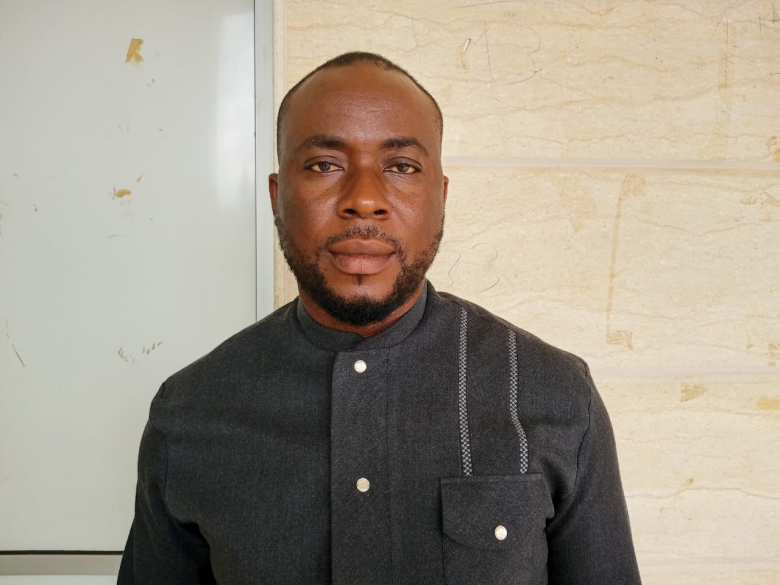
GANTA, Nimba County — Lofa County University President Dr. Isaac P. Podah has said the institution’s rapid growth is expanding access to higher education in rural Liberia but placing increasing pressure on its finances, workforce, transportation and infrastructure.
By Franklin Doloquee
According to Dr. Podah, enrollment has risen from between 500 and 600 students when he assumed leadership about two years ago to approximately 3,000 students across the university’s two campuses.
He said the expansion represents important progress, but warned that the institution needs stronger financial support to sustain its operations and retain qualified lecturers.
Dr. Podah spoke to reporters in Ganta during a two-day workshop for public higher education institutions organized by the National Commission on Higher Education (NCHE), with support from the United Nations Development Programme (UNDP).
Held under the theme: “Strengthening Higher Education Governance and Quality Assurance Through Leadership Collaboration and Institutional Standardization,” the workshop brought institutional leaders together to discuss governance, educational standards and the development of public universities.
“I think things are going well. I’m extremely impressed about the activities here,” Dr. Podah said, describing the exchange as valuable to efforts to strengthen higher education in underserved areas.
For Lofa County university (LCU,) he explained, the challenge is not simply to increase enrollment, but to ensure that the institution has the personnel, facilities and operational support needed to serve its growing student population.
Enrollment Growth Expands Access
Dr. Podah identified the university’s annex in Fessibu Town, Zorzor District as a major part of its expansion.
The annex was established to bring higher education closer to young people in lower Lofa County, particularly those in Zorzor, Salayea and surrounding communities who face financial and transportation barriers to studying in Voinjama.
By extending its presence beyond its main campus, the university is seeking to reduce the distance prospective students must travel to pursue a degree.
University officials anticipate strong demand from communities served by the annex. However, operating in two locations also brings additional responsibilities. The administration must coordinate academic activities, support staff and maintain services across both campuses while working within its available resources.
Dr. Podah said the distance between Voinjama and Fessibu makes the two-campuses arrangement necessary, even as it creates logistical challenges for the institution.
Funding Fails to Keep Pace
Despite the increase in enrollment, Dr. Podah said financial support has not kept pace with the university’s expanding responsibilities. He identified budget constraints as Lofa County university (LCU’s ) most pressing challenge and said at least L$4 million would help the institution manage its operations.
The funding pressure affects several connected areas, including staff compensation, transportation and infrastructure. As the student population grows, the university faces the task of expanding access without weakening the academic and administrative services on which students depend.
Dr. Podah said the administration continues to engage national authorities over the institution’s needs, including through discussions with the Ministry of Finance and lawmakers during budget hearings.
Transportation Difficulties Hamper Operations
Transportation remains another major concern, particularly for travel between Voinjama and Fessibu and for official engagements in Monrovia.
Dr. Podah said the university has a limited number of vehicles. According to him, the vice president does not have an official vehicle, while the vehicle assigned to the president has deteriorated.
The shortage complicates efforts to coordinate activities across the two campuses. It also affects administrators who must travel to central government offices, including the Civil Service Agency and the Ministry of Finance and Development Planning to address personnel and financial matters.
“Our human resources, finance and computer staff all have to come [to Monrovia], even me. I have to be all around the place,” he said. “So it’s a serious problem.”
His account highlights the competing demands on the university’s transportation resources: supporting campus operations within Lofa County while also maintaining the administrative engagement required in the capital.
Low Salaries Drive Lecturers Away
Dr. Podah also warned that low salaries are undermining the university’s ability to retain qualified instructors. He said more than three lecturers have already left, including some who moved to Cuttington University and other institutions. Others, he added, have indicated that they may resign unless their compensation improves.
“We lost some to Cuttington University, we lost some to [other universities], and some are still asking that they want to leave,” he said. “They have genuine concerns.”
The departures add to the institution’s staffing pressures at a time when enrollment is rising. Retaining experienced lecturers is therefore central to the administration’s effort to sustain academic services across both campuses.
Dr. Podah said university officials are appealing to affected instructors to remain while the administration pursues additional government support. LCU is seeking what he described as a salary “top-up” to address disparities in compensation within the public higher education sector.
He said the university intends to continue raising the matter with the Ministry of Finance and Development Planning and lawmakers.
University Clarifies Registration Requirements
Addressing concerns about student payments, Dr. Podah denied that the university had threatened to dismiss students who had not met their financial obligations. Instead, he said students with outstanding obligations would be unable to access their grade sheets or complete registration until those matters were resolved.
He distinguished those administrative restrictions from dismissal, explaining that the university’s position concerned access to academic records and registration services rather than the removal of students from the institution.
Dr. Podah said scholarship providers had responded positively and that the situation was improving. However, he did not provide a figure for the number of students whose obligations had been settled or the number still affected.
Decentralization Remains a Priority
Despite the financial and logistical difficulties, Dr. Podah defended the decision to operate in both Voinjama and Fessibu.
He said the university must respond to the needs of communities across Lofa County, including young people in Zorzor and Salayea who may otherwise struggle to access higher education.
The expansion, he indicated, is intended to make university education more accessible beyond the institution’s main location. Sustaining that access, however, will require resources to support both campuses rather than enrollment growth alone.
Dr. Podah said local leaders, including officials from Lofa County, are supporting the institution. He also downplayed concerns about political representation, arguing that attention should remain on the university’s development rather than the number of officials from any particular area.
“They are supporting the college. They are doing their best,” he said.
Appeal for Sustained Government Support
Dr. Podah said LCU is working through the association of university presidents to present its challenges to national authorities and advocate for greater support.
He expressed cautious optimism about the institution’s direction, but emphasized that continued government assistance will be essential to retain lecturers, improve transportation, strengthen infrastructure and sustain services for its growing student population.
For Lofa County University (LCU), the immediate task is to match its expansion with the resources needed to support it. The increase in enrollment reflects growing demand for higher education in Lofa County; the university’s ability to meet that demand will depend on how effectively its funding, staffing and operational challenges are addressed.
Meanwhile, the President of the Lofa County University urged the Government of Liberia to increase teachers’ salaries at the institution.
He is also seeking an additional US$650,000 to support infrastructure development at the university. Dr. Podah said the salary increase is necessary because several lecturers have upgraded their qualifications, including earning master’s degrees, but continue to receive salaries that do not match their qualifications.
He warned that low pay is causing the university to lose qualified lecturers to other institutions. He further appealed for increased budgetary support to improve campus infrastructure, hire additional lecturers and sustain the university’s growing operations.
Support Independent Journalism
Your support helps FrontPage Africa continue delivering independent, credible, and impactful journalism. Every contribution strengthens our ability to investigate, inform, and hold power accountable while keeping quality journalism accessible to our readers.
Support our journalism or subscribe to receive the latest FrontPage Africa stories and updates.