Ganta, Nimba County — The Liberia Agricultural Commodities Regulatory Authority (LACRA) has begun a six-day intensive training workshop for 25 field workers in Ganta, Nimba County.
By D. Franklin Doloquee
The exercise aims to strengthen the participants’ capacity in quality control, cocoa grading and the overall enhancement of agricultural commodity standards across Liberia.
The training, which brings together field technicians, quality control officers and cooperative support staff, is part of LACRA’s broader initiative to boost productivity and ensure Liberia’s agricultural exports meet international market standards.
It also seeks to equip participants with the technical skills needed to work closely with farmers and cooperatives in improving post-harvest handling and processing of cocoa and other commodities.
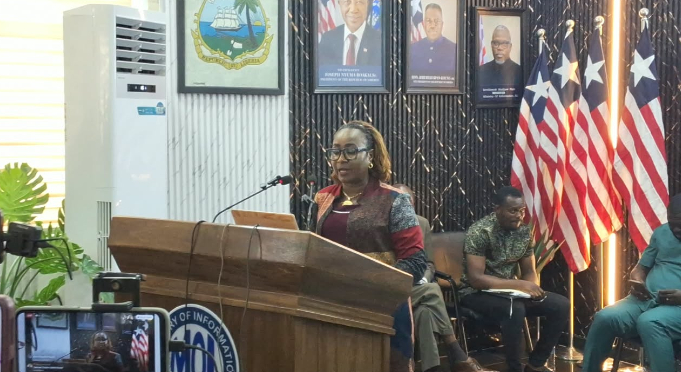
According to Godia Alpha Kortu Gongolee, Deputy Director General at LACRA, the workshop will help trainees better understand field monitoring, grading systems, and proper documentation of farm activities.
He said upon completion, participants are expected to return to their respective regions to train farmers particularly cooperative members on quality improvement techniques.
This cascading model is designed to ensure that knowledge gained during the workshop reaches the grassroots level, promoting consistency and excellence in agricultural production.
Speaking to reporters during the opening session in Ganta, Deputy Director General Gongolee explained that the Authority’s mission is to elevate the quality of Liberia’s cocoa production from Grade Two to Grade One status a level that meets some of the highest standards globally.
The Deputy Director General noted that Liberia possesses both the climatic conditions and natural potential to produce premium quality cocoa comparable to leading producers in the region.
“We are working to ensure that Liberian cocoa meets international benchmarks,” the staff member said. “With the right training and commitment from field officers and farmers, we can transform the sector into one of the nation’s strongest export industries.”
LACRA’s efforts are aligned with the government’s vision to diversify the economy through agricultural development and value addition.
By strengthening capacity at the field level, the Authority hopes to increase both the quantity and quality of Liberia’s agricultural exports while empowering rural communities with better market opportunities.
Participants expressed gratitude for the training, describing it as timely and impactful. They emphasized that the skills and knowledge acquired will enable them to play a more professional role in improving production standards in their areas.
As the six-day training continues in Ganta, expectations remain high that the initiative will serve as a turning point for Liberia’s cocoa industry and enhance the reputation of the nation’s agricultural commodities on the global stage.
The LACRA Field Workers are currently undergoing a specialized training program through a partnership with the United Nations Industrial Development Organization (UNIDO) as part of the Growth 2 project. This training is focused on enhancing skills related to cocoa production, aiming to equip field workers with the technical knowledge needed to effectively support and boost Liberia’s cocoa sector.
The training is designed to prepare these workers not only to improve their own competencies but also to serve as trainers capable of passing on their knowledge to others in the field.
The Chief Technical Advisor of UNIDO’s Division responsible for Small and Medium-sized Enterprise (SME) competitiveness, quality, and job creation, particularly within the SME Development and Job Creation Unit Dr. Charles Kwame Sackey has pledged to continue supporting LACRA’s operations in cocoa production.
Dr. Sackey emphasized the importance of focus and dedication among the participants during the training, highlighting that their role will be pivotal as Liberia prepares to transition from Growth two to Growth one, marking significant progress in the project’s lifecycle.
This partnership underlines a strong commitment to strengthening the cocoa value chain in Liberia, contributing to economic diversification, rural poverty alleviation, and sustainable development.
The Growth 2 project, funded by the Embassy of Sweden and implemented by UNIDO in close collaboration with Liberia’s Ministry of Agriculture, targets improving productivity and growth in key agricultural value chains such as cocoa, horticulture, and cassava.
The project has achieved impressive results, including increased sales for farmers’ markets, boosted production and sales for cooperatives, and growth in organic cocoa exports. Notably, women constitute 45% of the trainees, gaining new skills in agribusiness and cooperative management, which further supports inclusive economic development.
As Liberia advances towards graduating to the next phase of Growth 1, this comprehensive training initiative prepares field workers to be catalysts for transformation in the cocoa industry, ensuring they can train others and sustain the momentum of growth and quality enhancement in Liberia’s cocoa production landscape.
The Director General of LACRA, Dan T. Saryee, has outlined ambitious plans to elevate Liberia’s cocoa production to meet international standards.
His vision focuses on strengthening institutional capacity and enhancing the quality of cocoa, a vital agricultural export for the country.

He emphasized that ongoing training programs for LACRA members including cooperatives and various agricultural institutions are critical components to achieving the government’s broader objectives in the agriculture sector.
These trainings not only build technical expertise but also empower the workforce, especially field workers, who play essential roles in professional quality control and agricultural best practices.
LACRA Director General Saryee Under his leadership, LACRA aims to support the transition of Liberia’s cocoa from “Grand Two” to “Grand One” status, the highest international quality grade. This shift represents a significant upgrade that will increase the competitiveness of Liberian cocoa in the global market and attract greater investment and partnerships.
Director General Saryee, together with his deputies and the entire LACRA team, is committed to implementing rigorous quality control measures and adopting global standards across cocoa, coffee, and other key crop productions.
Their collective efforts seek to boost productivity, raise export quality, and ultimately improve the livelihoods of farmers and stakeholders within Liberia’s agricultural value chains.
By aligning local production with international benchmarks, LACRA hopes to open new opportunities for Liberian agriculture on the world stage while supporting sustainable growth and economic development across rural communities.
Support Independent Journalism
Your support helps FrontPage Africa continue delivering independent, credible, and impactful journalism. Every contribution strengthens our ability to investigate, inform, and hold power accountable while keeping quality journalism accessible to our readers.
Support our journalism or subscribe to receive the latest FrontPage Africa stories and updates.