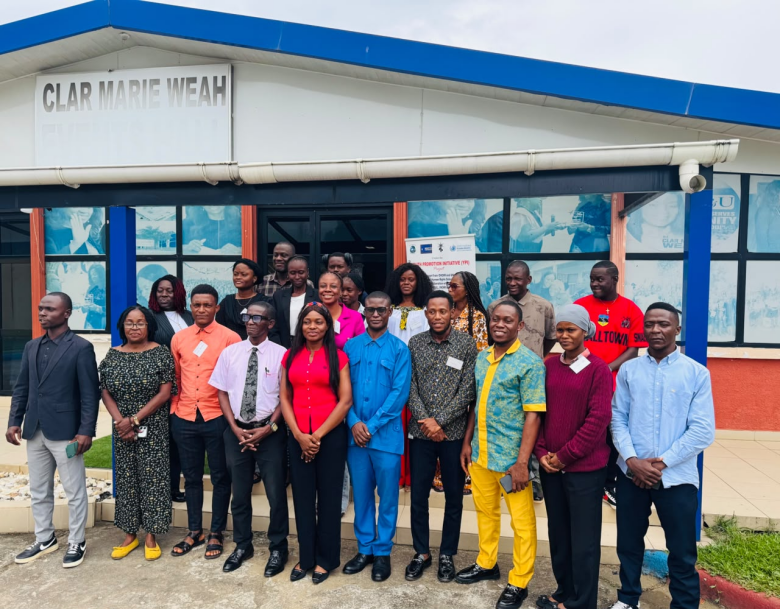
Monrovia – Journalists from across Liberia on Thursday, July 23 gathered in a one -day capacity-building training aimed at strengthening ethical and rights-based reporting on human rights issues across the country.
By Patience M. Jones,[email protected]
The training, organized by UN Office of Human Rights under the Youth Promotion Initiative (YPI) Project, with support from the United Nations Office of the High Commissioner for Human Rights (OHCHR) and UN Women, is being conducted in collaboration with the Press Union of Liberia (PUL), the Independent National Commission on Human Rights (INCHR), and the Ministry of Justice.
Held at the Clara Weah Hall in Sinkor, Monrovia, the training brings together journalists and media practitioners to deepen their understanding of human rights principles and improve their ability to report accurately, ethically, and responsibly on issues affecting vulnerable populations.
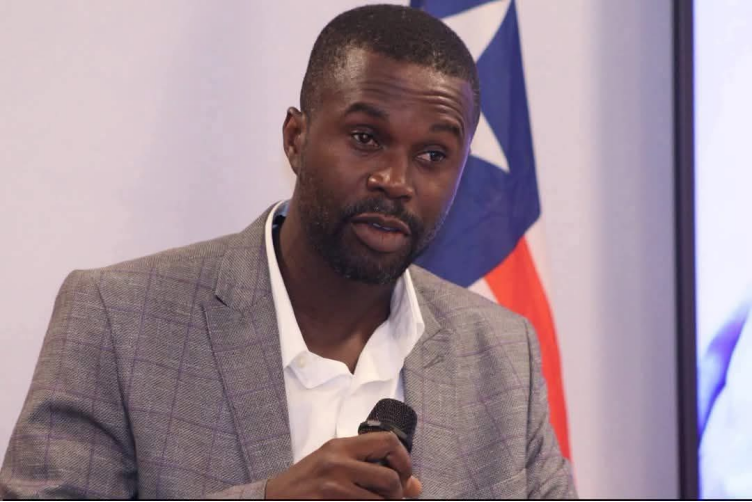
Delivering a special statement at the opening of the training, Press Union of Liberia President Julius Kanubah described the initiative as timely and essential, emphasizing that journalism and human rights are inseparable pillars of every democratic society.
He noted that human rights are universal entitlements and that the media’s right to report on them is equally recognized around the world.
Kanubah explained that while the Press Union of Liberia serves as the umbrella organization for journalists and media institutions, it is also fundamentally a human rights institution dedicated to defending freedom of speech, freedom of expression, and press freedom.
According to him, these freedoms are the foundation upon which other fundamental rights including the rights to life, education, healthcare, property, voting, movement, and participation in governance are protected.
“As we begin this capacity-building exercise, I call on all Liberians whether in government, the private sector, or civil society to uphold, protect, and defend the rights of journalists and the media,” Kanubah urged.
He stressed that safeguarding freedom of expression is critical not only to Liberia’s democratic progress but also to its economic development.
Kanubah further challenged journalists to remain committed to reporting on human rights issues, particularly those affecting young people, women, persons with disabilities, and other historically marginalized communities.
He encouraged the media to amplify the voices of these groups while ensuring that reporting remains grounded in the core principles of ethical journalism—fairness, accuracy, impartiality, responsibility, and respect for human dignity.
“What we do today as journalists will shape Liberia’s tomorrow,” he said.
The PUL President emphasized that meaningful human rights reporting requires journalists to possess a deep understanding of human rights concepts, how rights violations manifest, and how such stories can be reported with integrity and sensitivity.
He described the training as an opportunity for participants to learn from one another, exchange perspectives, and strengthen professional reporting standards for the benefit of Liberia.
Kanubah thanked the United Nations Office of the High Commissioner for Human Rights and its partners for organizing the training and commended journalists who sacrificed their time to participate.
He concluded by encouraging participants to apply the knowledge acquired during the sessions to produce more impactful human rights stories that advance justice, accountability, and inclusion.
He also urged journalists to use both traditional and social media responsibly by applying critical thinking before publishing or sharing information.
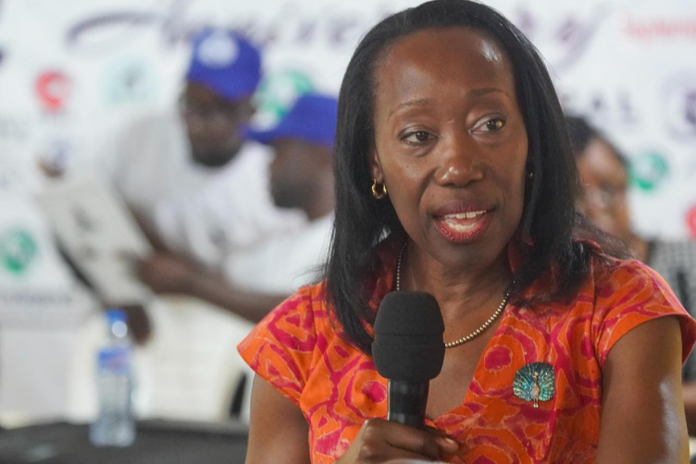
Earlier, Lector Williams, Human Rights Officer at the United Nations Office of the High Commissioner for Human Rights (OHCHR), welcomed participants and underscored the importance of the training in strengthening media engagement on human rights.
She explained that the workshop forms part of a broader series of engagements between the UN Human Rights Office and the media, but is specifically designed to build journalists’ capacity to report, monitor, and advocate for human rights through a rights-based lens.
“The intent of this training is to enhance the capacity of journalists to report, monitor, and advocate using a human rights lens,” Williams said.
She encouraged participants to actively engage throughout the sessions by asking questions, sharing experiences, and contributing to discussions.
Describing the training as an open learning platform, Williams urged journalists to maximize the opportunity to strengthen their knowledge and improve the quality of human rights reporting in Liberia.
The organizers believe that empowering journalists with stronger knowledge of human rights standards and ethical reporting practices will contribute to greater public awareness, accountability, and the protection of fundamental rights across Liberia.
Support Independent Journalism
Your support helps FrontPage Africa continue delivering independent, credible, and impactful journalism. Every contribution strengthens our ability to investigate, inform, and hold power accountable while keeping quality journalism accessible to our readers.
Support our journalism or subscribe to receive the latest FrontPage Africa stories and updates.