
Liberia has taken a significant step toward strengthening public health protection and improving food system governance with the official launch of the National Food Safety Assessment Report, a landmark study aimed at identifying food safety risks and strengthening regulatory coordination across the country.
By Francis G. Boayue
The launch ceremony was held Tuesday at a local resort in Mamba Point, Monrovia, with funding provided by the European Union through the Global Gateway Initiative, in partnership with the Government of Liberia, and implemented by the United Nations Industrial Development Organization (UNIDO).
The primary purpose of the launch was to present and validate the findings of the national food safety assessment with key stakeholders, share consolidated results from consumers, producers, and marketplace actors, and translate the evidence generated into actionable priorities for strengthening Liberia’s food safety system.
The assessment examined awareness levels, hygiene practices, food handling behaviors, and safety risks across the food value chain to ensure stakeholders clearly understand the realities shaping food safety in Liberia.
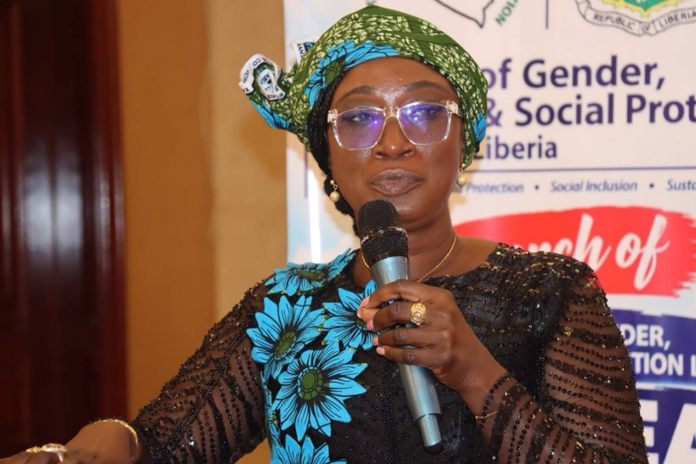
Speaking at the event, Director General of the Food Authority of Liberia (FAL), Precelia Cherue-Guanue, emphasized that food safety is central to public health and national development, warning that unsafe food affects consumers, farmers, businesses, and the broader economy.
“Food safety is very important to the health of our people and the growth of our country. Unsafe food affects consumers, farmers, businesses and the country as a whole,” Cherue-Guanue said.
She noted that the National Food Safety Assessment provided clear evidence on food safety practices at the consumer, producer, and market levels, adding that the findings will guide future decisions and policy actions.
Cherue-Guanue also highlighted the establishment of the Liberian Food Safety Coordination Committee as a major milestone toward improved coordination among institutions involved in food safety.
“The establishment of the Liberian Food Safety Coordination Committee is a major step toward better coordination among government institutions and partners working on food safety,” she said.
As Secretary and Chair of the committee, Cherue-Guanue reaffirmed the Food Authority of Liberia’s commitment to working closely with stakeholders to ensure effective coordination, information sharing, and joint action.
She expressed appreciation for the Liberian Food Safety Initiative’s readiness to provide technical and coordination support during the committee’s startup phase, stressing that the support will help move Liberia from assessment to action.
“As we review and discuss the findings today, I encourage all stakeholders to take ownership of the results and work together to turn the recommendations into practical actions that will improve food safety across the country,” she urged.
The program was officially launched on behalf of the Minister of State for Presidential Affairs, Hon. Samuel A. Stevquaoh, by Madam Oral Richards, Ambassador-at-Large in the Office of the President and Special Envoy of the President. Richards said the minister had intended to attend but was prevented by urgent national matters.
“Up until last night, he was determined to be here. That’s how important he takes your work,” Richards said, adding that food safety remains a priority for the administration.
Describing the assessment as unprecedented in Liberia, Richards said many citizens continue unsafe food practices due to lack of awareness and guidance.
“As far as I know, this is the first time in our country that this has been done, and it’s so important. So many of our people linger in ignorance and live from day to day doing the same things the same way because nobody has shown them a better way,” he said.
She stressed that the real challenge now lies in implementing the findings, warning that many national reports often end up shelved without action.
“The challenge now is the implementation. That’s always the challenge. We look forward to supporting you in the implementation because too many times these reports linger in offices,” Richards said, urging swift action.
He assured participants of full support from the Ministry of State and encouraged persistence in engaging government institutions. “If you call and don’t get a response, please call me, because then you will get a response,” he said.
Representing the President of the University of Liberia, Dr. Layli Maparyan, Dr. Sonnie Rose Kesselly emphasized the university’s role in advancing food safety through research, teaching, and public engagement. She described food safety as a cornerstone of public health, economic stability, and global sustainability.
“Foodborne illness remains a major global concern, causing human suffering, death, and economic loss. Food safety assessments serve as the foundation for preventing contamination, identifying risk, and protecting consumers,” Kesselly said.
She noted that the University of Liberia is committed to collaborative research with government agencies, expanding academic and training programs in food safety, strengthening public outreach, and pursuing international partnerships to support foodborne disease prevention and sustainable food systems.
“Food safety is not only a scientific imperative, but also a moral one. It is everybody’s business,” she said.
On behalf of Liberia Standards Authority Director General Stephen Y. Mambu, K. Emmanuel Myers described the National Food Safety Assessment Report as a critical milestone for the country.
“Food safety is not just a regulatory requirement; it is a fundamental public health imperative and a key driver for economic growth,” Myers said, noting that improving food safety standards will enhance the competitiveness of Liberian products in regional and international markets.
He pledged the Liberia Standards Authority’s commitment to working with government agencies, the private sector, civil society, and development partners to translate the report’s findings into concrete actions.
The Ministry of Agriculture also welcomed the assessment. Speaking on behalf of Deputy Minister for Technical Services Solomon Hedd-Williams, Assistant Director of the Plant and Animal Quarantine Division Jeremiah M. Swinteh said food safety is a pillar the ministry strongly supports.
“Food safety is not just important for human consumption, but it is an economic strength that a nation can depend on,” Swinteh said, adding that the ministry is prepared to collaborate fully in implementing the assessment’s recommendations.
Providing an overview of the report, UNIDO Chief Technical Advisor Isaac Donkor explained that the assessment was designed to address long-standing coordination and evidence gaps in Liberia’s food safety system. He said the study may represent the first consolidated national evidence base to support reform of the country’s food control governance.
“This food safety assessment is aimed at building a coordinated, evidence-driven national food safety agenda,” Donkor said.
He clarified that the assessment was not an institutional audit, inspection, or enforcement exercise, but a farm-to-fork evaluation of awareness and practices among consumers, producers, and marketplace actors. The study surveyed 1,050 consumers, 150 producers, and 300 market actors across nine counties using a mixed quantitative and qualitative approach.
“If the food is not safe, we forget about standards. And if standards are not met, market access becomes impossible,” Donkor said, warning that non-tariff barriers linked to food safety standards continue to limit trade opportunities for developing countries.
Participants at the launch agreed that the National Food Safety Assessment Report marks a turning point for Liberia’s food safety agenda, but stressed that its success will depend on coordinated, timely, and sustained implementation to protect public health, strengthen food systems, and support economic growth.
Support Independent Journalism
Your support helps FrontPage Africa continue delivering independent, credible, and impactful journalism. Every contribution strengthens our ability to investigate, inform, and hold power accountable while keeping quality journalism accessible to our readers.
Support our journalism or subscribe to receive the latest FrontPage Africa stories and updates.