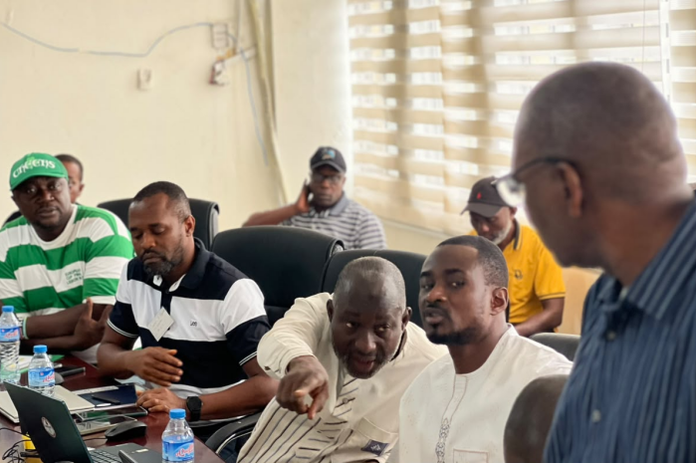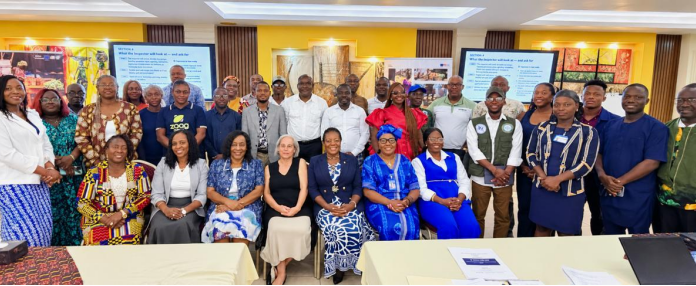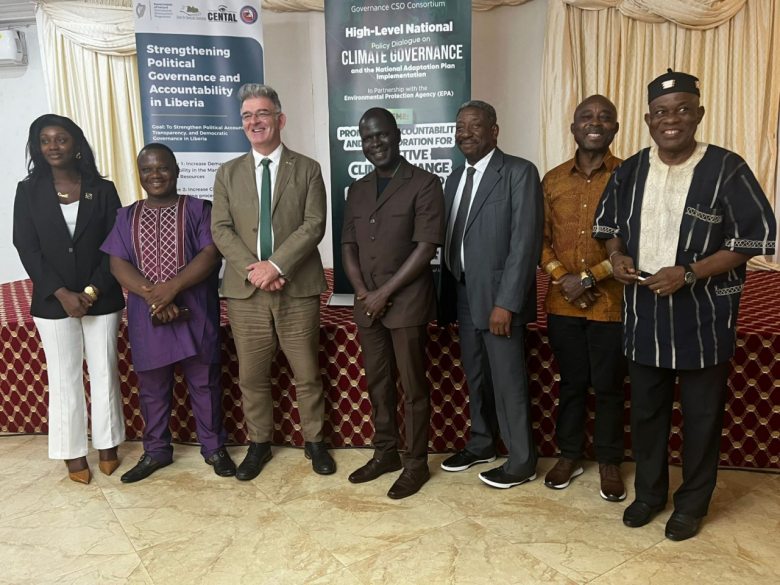
Monrovia– The Center for Democratic Governance (CDG), through the Governance Civil Society Organizations (CSOs) Consortium, in collaboration with the Environmental Protection Agency (EPA) of Liberia, on Wednesday convened a high-level national policy dialogue on Climate Governance and the implementation of Liberia’s National Adaptation Plan (NAP) at the Sinkor Palace Hotel in Congo Town, outside Monrovia.
By Patience M. Jones,[email protected]
Held under the theme:, “Promoting Accountability and Collaboration for Effective Climate Change Adaptation and Resilience in Liberia,” the dialogue brought together senior government officials, civil society actors, members of the diplomatic corps and other stakeholders to deliberate on practical ways to strengthen climate governance, accountability, and coordinated action across Liberia.
The event forms part of the “Strengthening Political Governance and Accountability in Liberia” project, which seeks to promote transparency, citizen participation, and improved governance across key sectors, including climate resilience and environmental sustainability.
Liberia’s National Adaptation Plan (NAP) serves as the country’s long-term strategy for responding to the growing impacts of climate change in a structured and sustainable manner. However, the Governance CSOs Consortium noted that despite ongoing interventions, critical gaps remain in fostering inclusive dialogue, strengthening accountability, and enhancing knowledge-sharing among government institutions, civil society organizations, and local communities.
According to the Consortium, addressing these gaps is essential to advancing Pillar Five (Environmental Sustainability) of the ARREST Agenda for Inclusive Development (AAID), which prioritizes responsible natural resource management, biodiversity conservation, and climate resilience, while aligning with Liberia’s Nationally Determined Contributions (NDCs).
Platform for Accountability and Action
The dialogue was organized to provide a strategic platform for stakeholders to share challenges, exchange best practices, strengthen accountability, and identify collaborative actions aimed at improving climate adaptation and governance nationwide.
Speaking at the event, Executive Director of the Center for Democratic Governance, Cllr. George D. W. Sagbeh, emphasized that the Strengthening Political Governance and Accountability in Liberia project is designed to empower citizens, amplify their voices, and improve accountability in local governance through civic engagement, anti-corruption initiatives, equitable revenue sharing, and climate-related interventions.
Key Objectives of the Dialogue
The policy dialogue focused on several core objectives, including: Strengthening the EPA’s accountability in overseeing the implementation of the National Adaptation Plan; Enhancing the engagement of local forest management structures with relevant government institutions; Promoting transparency and equitable benefit-sharing in climate adaptation and natural resource management; Raising awareness about climate change impacts and adaptation strategies at both national and local levels; and Fostering stronger coordination among government, civil society, academia, the private sector, and communities.
Speaker Koon Calls for Climate Finance Tracking and Inclusive NAP Implementation
Delivering the keynote address, Richard Nagbe Koon, Speaker of the House of Representatives, underscored the importance of robust climate finance tracking, stronger CSO oversight, and a gender-transformative approach in implementing Liberia’s National Adaptation Plan.
The Speaker stressed that climate resilience must be fully integrated into Liberia’s national development agenda, noting that the NAP provides a strategic framework to guide the country’s response to climate change by embedding climate considerations into planning across critical sectors such as agriculture, fisheries, energy, infrastructure and local governance.
Also in attendance were Dr. Emmanuel K. Urey Yarkpawolo, Executive Director of the Environmental Protection Agency of Liberia, Dehpue Y. Zuo, Deputy Minister for Economic Management at the Ministry of Finance and Development Planning, civil society leaders, and members of the diplomatic community.
Communique Highlights Key Commitments
At the close of the dialogue, participants developed and adopted a communiqué outlining priority commitments to strengthen climate governance and improve implementation of the National Adaptation Plan.
The communiqué highlighted the following key outcomes: Strengthened national consensus on climate governance challenges, progress, and needed reforms; Renewed political commitment to financing and implementing the National Adaptation Plan; Agreement to improve institutional coordination and capacity strengthening across relevant sectors; Commitment to transparency and accountability in climate finance management and reporting; Agreement to strengthen community-based and locally led adaptation actions; Commitment to inclusive and evidence-based decision-making that reflects the voices of communities, civil society, women, youth, and other marginalized groups; and Renewed commitment to stronger partnerships between civil society and government in implementing, tracking, and reporting on reforms, as well as addressing existing challenges.
Consortium Reaffirms Commitment to Climate Accountability
The Governance CSOs Consortium comprising the Center for Democratic Governance (CDG), the Center for Transparency and Accountability in Liberia (CENTAL), and NAYMOTE Partners for Democratic Development—is implementing the project with support from the Embassy of Ireland in Liberia.
Through the initiative, the Consortium continues to promote transparency, accountability, democratic governance, and collaborative climate action, with the goal of ensuring that Liberia’s climate adaptation efforts are both inclusive and impactful.
Support Independent Journalism
Your support helps FrontPage Africa continue delivering independent, credible, and impactful journalism. Every contribution strengthens our ability to investigate, inform, and hold power accountable while keeping quality journalism accessible to our readers.
Support our journalism or subscribe to receive the latest FrontPage Africa stories and updates.