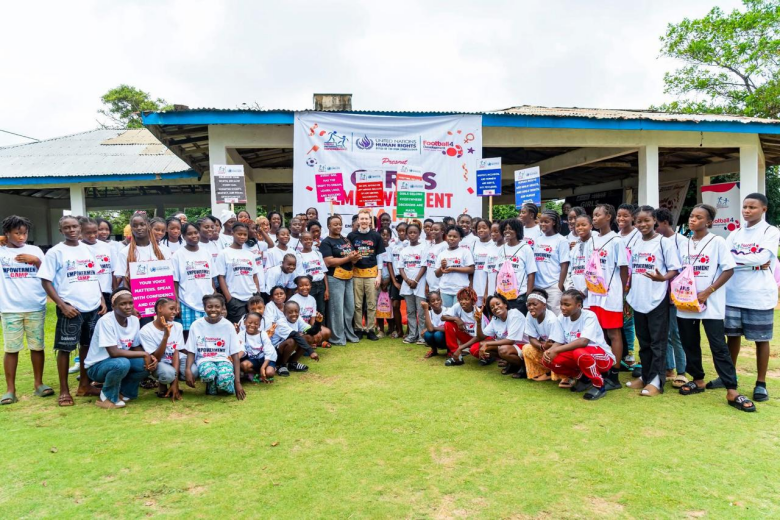
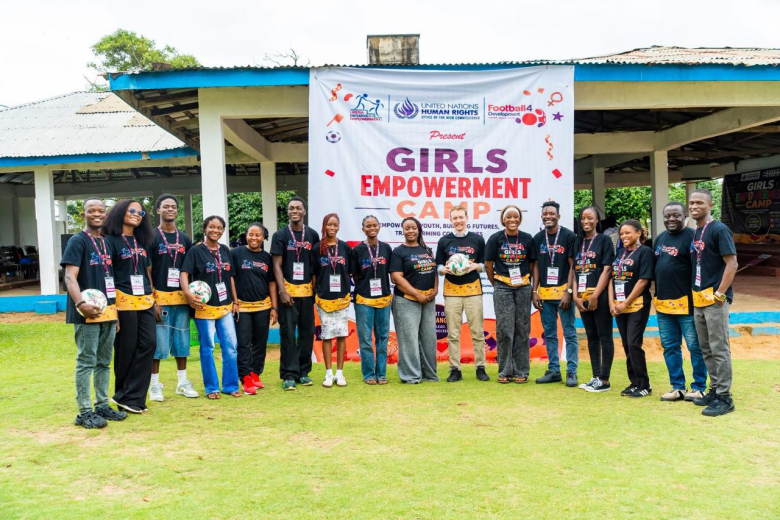
Monrovia – For three days, young girls between the ages of 10 and 18 gathered at the Baptist Youth Camp along the Robertsfield Highway, kicking footballs, learning menstrual hygiene, discussing human rights, and building vision boards for their futures.
By: Christopher C. Walker | [email protected]
Yet beneath the music, motivational speeches, and tactical drills at the Liberia Initiative for Empowerment (LIFE Inc.) Girls Empowerment Camp 2026 lurked an uncomfortable question: What happens to these girls when the camp ends?
The residential camp, held from August 27–30 under the theme “Be Part of the Change! Learn. Lead. Inspire. Succeed,”was led by LIFE Inc.
Executive Director of LIFE Jodie Reid-Seton, who also serves as Third Vice President of the Liberia Football Association (LFA).
Using football as an entry point, the programe tackled issues far broader than sports,structural gender inequality, lack of educational access, reproductive health taboos, and human rights.
In Liberia, where football reigns as the national passion but investment in women’s sports lags far behind the men’s game, the camp highlighted both micro-level progress and macro-level institutional failure.
Football, But Not Just Football
While Liberia has produced world-class male football talent, the development pipeline for female athletes remains dangerously fragile.
Young female players routinely face early career interruption due to extreme financial hardship, domestic burdens, period poverty, lack of educational sponsorship, and persistent cultural resístanme to women in competitive sports.
Reid-Seton challenged participants to view athletic skill as only one piece of a broader survival strategy.
“Talent alone is not enough on and off the pitch,” Reid-Seton told the youth. “A young girl may have exceptional athletic ability, but without educational, healthcare, safe training environments, and mentorship, her potential disappears long before she reaches adulthood.”
International Support Exposes National Deficit
The event drew high-profile international backing.
British Ambassador to Liberia Paul Richard Simister visited the camp, sharing that his own involvement in football deepened when his daughter began playing.
“My interest in sports motivated me to come here and support these girls,” Ambassador Simister said, urging participants to prioritize their education alongside sports. “Your ambitions must extend far beyond the touchline.”
Similarly, Christian Mukosa, Country Representative of the UN Office of the High Commissioner for Human Rights (OHCHR) in Liberia, joined the girls on the pitch before leading a seminar on fundamental rights and self-advocacy.
While the presence of foreign diplomats and UN agencies elevated the program, it underscored a troubling reality for Liberian policymakers:
Why must basic youth development and safeguarding for Liberian girls depend so heavily on external NGO initiatives and diplomatic goodwill?
Breaking Taboos: Menstrual Health and Rights
The curriculum also addressed physical barriers to female participation in sports.
Joyce Laykah Kilikpo, Executive Director of Public Health Initiative Liberia (PHIL), led a workshop on menstrual hygiene management, puberty, and sexual and reproductive health.
In Liberia, missing school or sports practice due to a lack of sanitary products remains widespread.
Female athletes who lack access to menstrual products or accurate reproductive health knowledge often drop out of sports entirely.
Kilikpo urged participants to reject menstrual stigma, emphasizing that understanding bodily autonomy is essential for building confidence on the field.
The Missing System: A Challenge to Sports Authorities
The camp featured prominent Liberian leaders, including technology expert and LFA Match Commissioner Ivan G. Brown, gender advocate Korto Reeves Williams, and entertainer Diplomatic Gaza (“Com Cruz”).
Yet, the central question remains structural. A young girl may leave the camp inspired to become a professional athlete, engineer, or human rights lawyer but once she returns home, she faces a sports ecosystem lacking Dedicated, safe youth female football academies, Certified female coaches and female-centered safeguarding policies, Regular, well-funded youth leagues and School-based athletic scholarships and medical support.
As LFA 3rd Vice President, Reid-Seton occupies a position to advocate for policy changes within the football governing body.
However, transforming women’s football requires systemic budget allocations from the LFA and the Ministry of Youth and Sports, rather than relying solely on periodic workshops.
Camp 2.0 Approved, But Implementation is the Test
Organizers announced that Girls Empowerment Camp 2.0 has been approved for future rollout.
While the news was met with celebration, experts emphasize that the true test lies in the interim period.
Will these 60 girls receive ongoing mentorship? Will their local schools support their training? Will sports authorities build the infrastructure needed to protect them from exploitation?
The Girls Empowerment Camp 2026 demonstrated that Liberian girls possess the passion, discipline, and talent to excel.
The burden now shifts to Liberia’s governance institutions to build an environment where that potential can survive beyond the final whistle.
Support Independent Journalism
Your support helps FrontPage Africa continue delivering independent, credible, and impactful journalism. Every contribution strengthens our ability to investigate, inform, and hold power accountable while keeping quality journalism accessible to our readers.
Support our journalism or subscribe to receive the latest FrontPage Africa stories and updates.