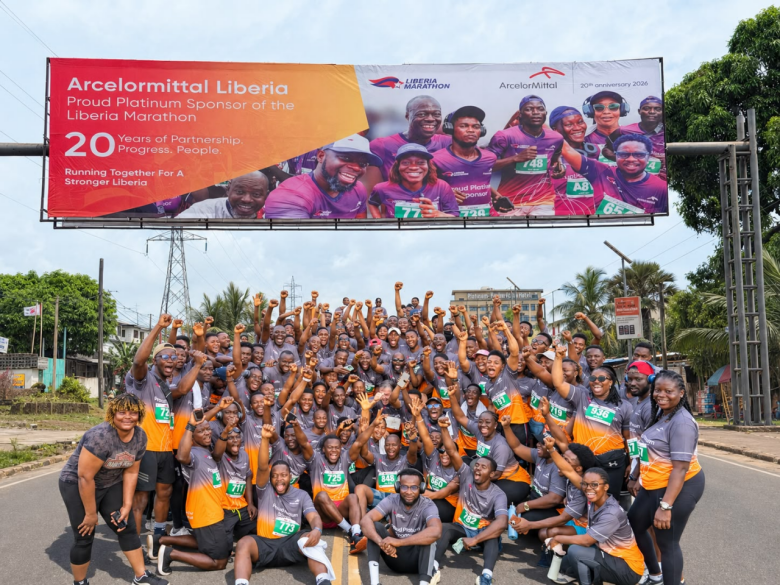
MONROVIA – For more than two decades, the towering machinery of ArcelorMittal Liberia (AML) has dominated the industrial landscape of Liberia’s interior. On a sun-drenched Sunday morning in the capital, however, the company’s presence was measured not in tons of iron ore extracted, but in hundreds of running shoes pounding the asphalt.
Drawing a crowd of more than 300 company employees including veterans marking two decades of service ArcelorMittal’s heavy corporate footprint merged with the annual national marathon organized by the Liberia Marathon Thrust. The steel and mining titan, which has operated in Liberia since 2005 and poured nearly $4 billion into the nation’s economy, used the platform to champion public wellness and cement its long-term social license.
“We’re very proud to be invested,” a company representative said on the sidelines of the event, emphasizing that the corporation views its dual identity as both a global enterprise and a local stakeholder. “We want the people of Liberia to love ArcelorMittal back, where we’re employing thousands of people and still going to continue to employ thousands of people and make life better for communities moving forward.”, the CEO stated at the SKS where the marathon climates with thousands of participants on Sunday.
The event marked the third consecutive year that ArcelorMittal has served as the platinum sponsor for the race, a partnership that organizers say underscores the growing intersection between private-sector concession operations and community social investments in West Africa.
Operating across three primary counties Nimba, Bong, and Grand Bassa the company’s economic reach is vast, anchoring large segments of Liberia’s industrial employment. Yet executives stressed that corporate engagement must extend beyond extractive output into the daily lives of the workforce. Company leadership noted that encouraging employees to stay active directly impacts workplace productivity and overall quality of life.
“If you’re healthy and fit, it also makes you think better, makes you work better, it improves your quality of life, and that’s what we want to promote,” the representative said, highlighting the company’s focus on maintaining a healthy work-life balance for its personnel.
Looking ahead, amidst ongoing discussions regarding national infrastructure and concessions, the company signaled an unwavering timeline for its operations in the region.
“I can see us going into future for the next 30, 40 years, at least being here, sponsoring and being part of many more of these events in future,” leadership remarked, adding, “and we’re proud to be associated with that.”
Beyond the immediate festive atmosphere of the marathon course, the day’s proceedings underscored a broader strategic push by major concessionaires to integrate community-facing initiatives with regional public relations. For corporate stakeholders navigating complex regulatory and social environments across West Africa, visible support for grassroots athletics and health initiatives serves as a vital bridge between executive boardrooms and local communities.
This visibility is particularly critical in a resource-rich nation where the social impact of multinational mining operations remains under constant scrutiny by both policymakers and citizens. By positioning its workforce directly alongside everyday runners in the capital, the company sought to project an image of shared national progress one measured not only in capital expenditure, but in civic partnership.
Support Independent Journalism
Your support helps FrontPage Africa continue delivering independent, credible, and impactful journalism. Every contribution strengthens our ability to investigate, inform, and hold power accountable while keeping quality journalism accessible to our readers.
Support our journalism or subscribe to receive the latest FrontPage Africa stories and updates.