TUMUTU – William Telebo Thompson, a native of District Six, Bong County has urged newly inducted student leaders of Tumutu Vocational Training Institute to place integrity and service above the titles they have just received. He warned that positions are temporary, but the reputation a leader builds can follow them for life.
By Selma Lomax, [email protected]
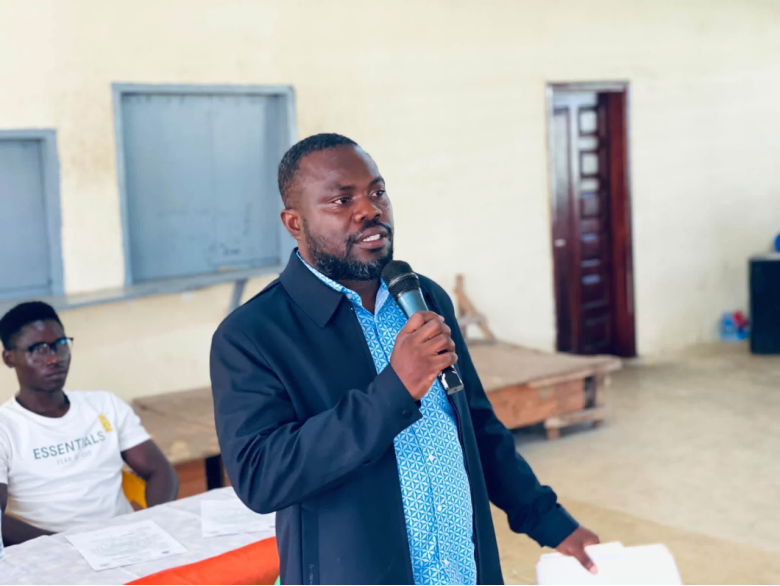
Thompson delivered the keynote address under the theme “Character Before Position.” His audience included the institute’s administration, members of the faculty, invited guests, parents and guardians, outgoing student leaders, the newly inducted leadership and the wider student body.
He opened by calling the occasion more than a point on the academic calendar. It was not simply a ceremony to distribute titles, recognize individuals or celebrate the assumption of new offices, he said. “Today is a moment of responsibility. Today is a moment of reflection. Today is a moment of commitment,” he told the gathering.
After congratulating the incoming officers, Thompson cautioned them against celebrating too quickly. He said society often applauds people for the offices they hold, the vehicles they drive, the clothes they wear and the influence they command, while forgetting to ask a more important question: “What kind of person is occupying that position?”
He pressed the point with a series of questions to the students. What is the value of a leader who has authority but lacks integrity? What is the value of a student leader who demands respect but cannot respect others? What is the value of a president who cannot accept criticism, a secretary who cannot be trusted, or a representative who remembers the people only when elections approach?
“Leadership is much deeper than a title,” Mr. Thompson said. A person can occupy an office without becoming a leader, wear a leadership badge without possessing leadership qualities, and command people without earning their respect. “That is why character must always come before position,” he said.
Speaking directly to the new officers, he stressed that their tenures would end. “Today, you may be a student president. Tomorrow, you will graduate,” he said, noting that the offices of secretary, treasurer, minister and class representative would soon belong to others. The lasting question, he said, is what people will remember about them. He asked whether they would be remembered as accessible, honest, compassionate and committed, or as people who became arrogant the moment they received a title. He also asked whether colleagues would remember that they stood up for them, or that they abandoned them once they gained authority.
Thompson said leadership should not be measured by how many people answer when a leader calls their names. “It is measured by how many people can confidently speak about your integrity when you are not present,” he said. He urged the students never to become so attached to their positions that they forget the people who gave them the opportunity to hold them.
Challenging what he called one of the greatest misconceptions about leadership, he said that becoming a leader does not make a person superior to anyone else. Leadership does not make someone more intelligent than colleagues, make their opinions automatically correct, or give them the right to intimidate, humiliate or disrespect others. If anything, he said, it demands more patience, understanding and accountability, and a greater willingness to listen.
He offered the students two contrasts. A true leader does not ask how many people he can control, but how many he can positively influence. A true leader does not ask what he can gain from a position, but what he can contribute through it. “If the only reason you wanted to become a student leader was to enjoy the privileges associated with the office, then you have misunderstood leadership,” he said. “Leadership is service.”
According to Thompson, service sometimes means sacrificing personal comfort for the collective good, accepting criticism even when it hurts, and standing alone for what is right when everyone else is choosing what is convenient. It also means doing the right thing when nobody is watching, he said, and that, in his words, is “putting character before your position.”
Drawing a distinction between popularity and principle, Mr. Thompson said, “Popularity makes people applaud you. Character makes people trust you.” He added that he would rather be a leader trusted by ten people than one applauded by a thousand but trusted by none.
He then gave the incoming leaders a set of direct charges. They should not compromise their integrity to impress friends, join in wrongdoing simply because the majority supports it, or misuse authority to settle personal scores. They should not turn student leadership into an opportunity for discrimination, favoritism or personal advancement. They should make every reasonable effort to keep their promises, have the courage to acknowledge mistakes, and apologize when they are wrong. They should listen when colleagues disagree with them, and do good without waiting for recognition. “Your integrity is your most valuable leadership currency,” he said. “Once you lose it, no title, position, or public recognition can fully replace it.”
Turning to the national picture, Thompson said Liberia has experienced decades of difficulty and has seen the consequences of poor leadership, corruption, dishonesty, division and the abuse of public trust. But he said he refuses to believe that the country’s history must permanently determine its future, that the next generation must inherit every mistake of the last, or that young Liberians cannot build a different society.
That change, he cautioned, will not come through slogans or through complaints about those who came before. It will come “when we become the change we continuously demand from others.” He tied national ideals to everyday campus behavior: students who condemn corruption should demonstrate honesty in their classrooms, those who demand accountability from political leaders should practice it in student government, and those who want respect from society should respect their fellow students. “If you want responsible national leadership, begin by becoming responsible student leaders,” he said.
Thompson noted that the leadership habits students form at the institute may follow them into their careers, communities and businesses, and eventually into the highest levels of national service. “Do not underestimate the importance of this moment,” he told them.
In a personal challenge to the new officers, he said leadership is not about making people feel small so that one can feel important, but about helping others discover their own importance. He urged them not to become inaccessible or arrogant, and not to let the excitement of office disconnect them from the realities of the students they represent. He asked them to remember the student who cannot afford certain academic materials, the colleague who is struggling academically, those too afraid to speak because they believe their opinions do not matter, and those who lack the confidence or resources to compete for leadership positions.
“A great leader does not build a legacy by making everyone dependent on them,” he said. “A great leader builds a legacy by empowering others to become better than they were before.” He added that the true test of leadership will not be behavior when everyone is celebrating, but “how you behave when nobody is applauding you.”
In his concluding remarks, titled “When the Title Is Gone, Let Your Character Remain,” Thompson asked the leaders to imagine a future in which their tenure has ended, another student holds their office, their badges have been returned, and the applause has stopped. “What will remain?” he asked. Titles will disappear and authority will end, he said, but the memories created, the lives touched and the integrity maintained “will continue to speak for you.” Character, he said, “does not need a microphone to be heard,” a title to be respected, or an office to make an impact.
He also reminded every student in the auditorium, whether inducted or not, that leadership does not begin when someone gives them a title. It begins when they take responsibility for their actions. “You do not have to be a student president to demonstrate honesty,” he said. “You do not have to be a class representative to help someone in need.” Every student, he said, can begin to be an agent of positive change “today, exactly where you are.”
Support Independent Journalism
Your support helps FrontPage Africa continue delivering independent, credible, and impactful journalism. Every contribution strengthens our ability to investigate, inform, and hold power accountable while keeping quality journalism accessible to our readers.
Support our journalism or subscribe to receive the latest FrontPage Africa stories and updates.