Summary
- The African Development Bank has weighed into a simmering debate over Liberia’s carbon trading plans, rejecting a government claim that a carbon trading agreement was a precondition for financial support from the Bank.
- An invitation to a stakeholder meeting last month pressured meeting participants to agree on a policy that day, saying the timing was crucial to secure African Development Bank support for funding.
- Civil society groups say the policy is being rushed without adequately addressing concerns over community land rights, revenue sharing, and consent.
By Nemenlah Cyrus Harmon, climate and environment reporter with New Narratives
On the evening of April 23, a group of ministers and stakeholders – including civil society and community leaders – gathered at a hotel in Monrovia for a stakeholder dinner with the goal of approving Liberia’s draft carbon market policy.
The timing was urgent, they were told. The meeting, convened by the Environmental Protection Agency, the Carbon Markets Authority and the Forestry Development Authority, which lead the National Climate Change Steering Committee, was intended to finalize the policy before its submission to President Joseph Boakai the following day.
But a line buried in the invitation ignited controversy.
“Given the urgency and national importance, particularly as the policy is linked to [African Development Bank] support for Liberia’s 2026 budget, your presence and input are highly valued,” said the invitation, signed by EPA Executive Director Emmanuel Urey Yarkpawolo, and provided to FrontPage Africa/New Narratives by a participant.
The wording appeared to confirm concerns flagged in a recent article in the Financial Times newspaper that the African Development Bank was pressuring Liberia to fast-track a carbon market framework.
Now, in an email to FrontPage Africa/New Narratives, the African Development Bank has rejected the claim by the Liberian government and the Financial Times, saying it approved a financing package for the country on 20 May aimed at strengthening the country’s fiscal sustainability and improving governance in its mining sector, but with no mention of carbon trading.
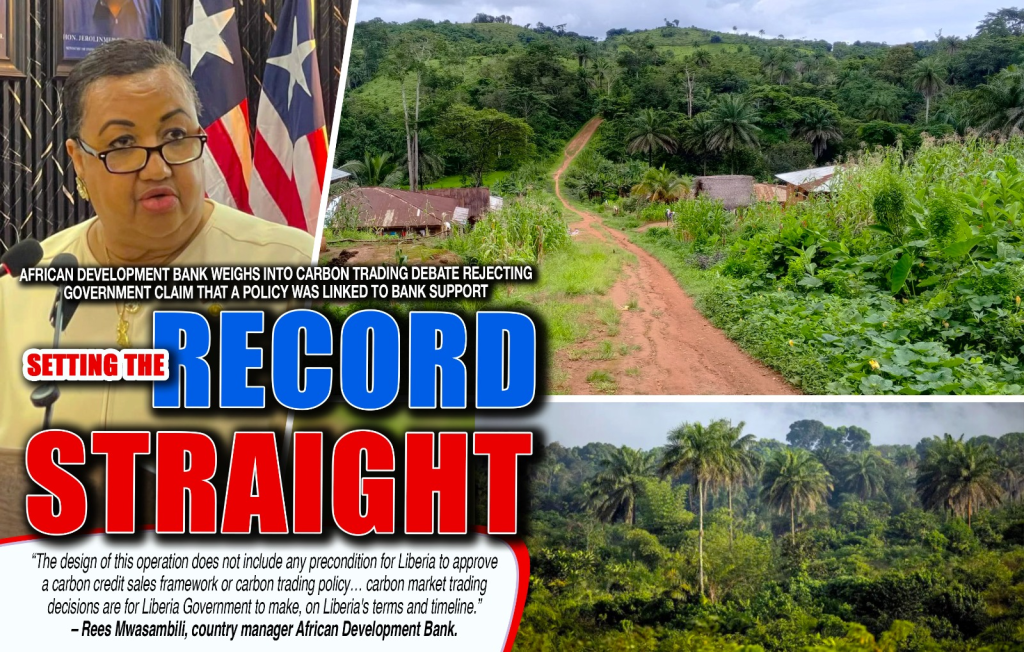
“The design of this operation does not include any precondition for Liberia to approve a carbon credit sales framework or carbon trading policy,” said Rees Mwasambili,
country manager of the Liberia office of the African Development Bank.
Mwasambili said “carbon market trading decisions are for Liberia Government to make, on Liberia’s terms and timeline.”
The Bank country manager also said that it was available to provide technical assistance to all member countries, including Liberia, and stated the Bank’s position that community voices are central to how it designs policies, including on carbon markets, and that its Environmental and Social Safeguards frameworks require Free, Prior and Informed Consent for any projects affecting local communities.
The Bank’s entry into the public conversation adds confusion to a process that stakeholders say has gone on behind closed doors and without enough engagement with them.
Nonetheless, it was welcomed by one of the civil society organizations which, along with community leaders, has been loudly arguing for the government to slow down its entry into the controversial world of carbon trading market.
The Bank’s statement was good news, said Dayugar Johnson of the Civil Society Independent Forest Monitors, who chairs the management team of the NGO Coalition of Liberia, an umbrella group of about 25 organizations working in the natural resources sector.
“Given that the African Development Bank has indicated that it is no longer rushing the process, I believe there is no reason for the government to rush it either,” Johnson said.
The latest development comes amid escalating tensions over who will control — and benefit from — Liberia’s emerging carbon credit economy. Government officials, including Jeanine Cooper, head of the newly created Carbon Trading Authority, argue the policy is necessary to position Liberia for international climate finance and could bring hundreds of millions of dollars in badly needed funding for the country. Civil society organizations warn the process is moving too quickly without resolving key questions around land rights, revenue sharing, and community consent and risks repeating the failures of the timber industry, which left fueled corruption, destroyed forests, and left communities locked out of benefits.
In April, a story with anonymous sources in the Financial Times first suggested that Liberian government entities were informed that portions of future African Development Bank support could depend on the approval of a national carbon sales framework. The FT reported that the Bank acknowledged ongoing discussions with Liberia on climate governance and fiscal support but said no 2026 budget support package had yet been approved.
The Bank said its proposed carbon support facility remains under development and is intended to prioritize “high integrity carbon credit generation.”
Last year, the Bank – which is funded by the 54 African countries and 27 countries outside Africa, including the US, UK, Japan, Germany, France, China, India, South Korea – approved a $US20 million loan facility for Liberia’s private banks and $18.3 million in budget support for the Liberian government. In recent years, it has committed approximately $680 million to Liberia’s transport, agriculture, and financial sectors.
At the time, Liberian officials rejected the FT story’s claim.
“That’s not how these banks operate,” said Cooper in an interview with Frontpage Africa/New Narratives, shortly after the FT story. “They can’t put pressure on us to develop policy.”
In a WhatsApp call from Ghana last month, EPA chief Yarkpawolo said the carbon market policy was not being imposed on Liberia but was instead part of a set of “prior actions” agreed between the government and the Bank.
“Since early 2025, the carbon market policy has been one of the prior actions agreed between the Government of Liberia and the Bank as a prerequisite to some of the financing support.”
He rejected suggestions that the Bank was “forcing” Liberia to adopt the policy.
“It was not the Bank choking Liberia or interfering,” he said. “When a country commits to prior actions, those actions have to be implemented in that light.”
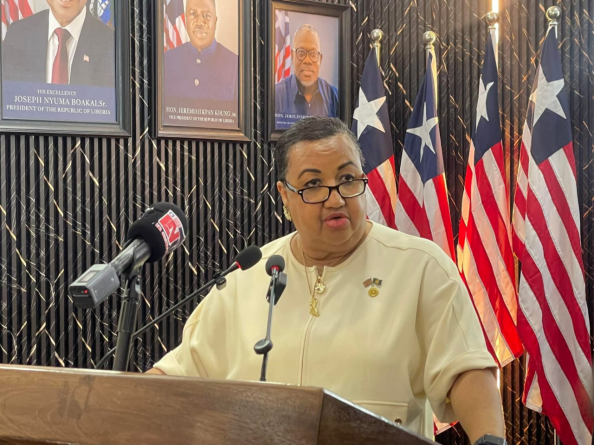
Now the Bank’s rejection of Yarkwapolo’s claims throws suspicion back on the Boakai government.
Civil society groups say consultations so far have not led to a consensus. Johnson said the process is being rushed and they have not been heard in consultations to date.
“By having meetings, it doesn’t mean that you’re actually consulting,” he said. “Especially if you’re not listening to the issues being raised and integrating the feedback into the policy.”
Among the coalition’s concerns are provisions governing community revenue sharing, free prior informed consent, ownership of carbon rights on community land, and safeguards against double-counting carbon credits under international climate agreements.
Carbon Market Authority boss Cooper said the policy allocates 50 percent of revenues to communities and said civil society organizations participated in discussions where the 50 percent revenue-sharing proposal was presented. But Johnson argued that figure applies only after taxes, operational costs, and other deductions are removed.
“What’s left for the community?” he asked. “The community has 100 percent ownership of the land.”
He said communities risk being rushed into binding long-term agreements without fully understanding the implications — a pattern Liberia has experienced before in forestry, mining, and concession agreements.
“When the consultations started, many communities didn’t even know what carbon was,” Johnson said. “When you talk about carbon, they ask: where is it?”
Johnson is calling for a full national validation process involving all stakeholders before the policy is approved by President Joseph Boakai.“There has been practice through which that has happened,” he said. “I don’t know why it’s being shortcut now.”
Johnson warned that flaws in the policy could eventually be embedded into future legislation governing Liberia’s carbon market sector. “We don’t want to have a policy for policy’s sake,” he said.
But Cooper rejected suggestions that the government intends to undermine communities. “Why is the assumption always that the government is going to harm communities?” she asked. “Who put all those laws on the books?”
She argued that Liberia’s Community Rights Act, Land Rights Act, and other legal protections already provide safeguards for local populations and will remain applicable to carbon market projects.
At the same time, Cooper conceded that the Carbon Markets Authority remains under-resourced and may not be able to execute its full agenda. “We have initial resources to establish this office,” she said, “but we don’t yet have the full range of resources we need.”
Despite the controversy, Cooper said the Authority had made significant progress in its first seven months, including developing a national measurement and verification system, coordinating environmental data across government agencies, and preparing Liberia’s first digital carbon registry.
She said it is also exploring renewable energy certificates, plastic credits, biofuel incentives, and waste management financing mechanisms as part of a broader climate finance strategy.
This story was produced in collaboration with New Narratives as part of the Investigating Liberia Project. Funding was provided by the Swedish International Development Cooperation Agency. The funders had no say in the story’s content.
Support Independent Journalism
Your support helps FrontPage Africa continue delivering independent, credible, and impactful journalism. Every contribution strengthens our ability to investigate, inform, and hold power accountable while keeping quality journalism accessible to our readers.
Support our journalism or subscribe to receive the latest FrontPage Africa stories and updates.