
Aristotle:https://www.facebook.com/share/r/1UmX9TnuiE/
Machiavelli:https://www.facebook.com/share/r/1HeoVC1gPt/
Socrates: https://www.facebook.com/share/r/1D5wMfsYEY/
Inspired by President Ronald Reagan — Freedom & Hope:
“Freedom is not simply the right to choose our leaders; it is the opportunity to build a Liberia where every citizen can choose hope over fear, opportunity over despair, and progress over stagnation.”
Inspired by Machiavelli — Leadership & Responsibility:
“A new dawn does not come merely because the night has ended; it comes when leaders possess the courage, wisdom, and discipline to turn freedom into progress and power into service.”
Inspired by Socrates — Wisdom & Citizenship: “A nation awakens when its people begin to question not only who governs them, but whether those who govern are worthy of the trust placed in them. Liberia’s new dawn must therefore begin with wisdom, truth, and responsible citizenship.”
Inspired by Other Philosophical Traditions — Unity & Progress: “The greatness of a few individuals will not determine the destiny of Liberia, but the courage of a united people who understand that freedom without responsible leadership is incomplete, and leadership without service is empty.”
Austin S Fallah: “A new dawn for Liberia begins when freedom becomes more than a promise, when courageous leadership transforms liberty into opportunity, justice into action, and hope into lasting national progress.”
Austin S Fallah: “Liberia’s path to a brighter future rests on two enduring pillars: the freedom of its people and the leadership to protect, strengthen, and transform that freedom into peace, prosperity, and progress for all.”
By: Austin S Fallah – A True Son of the Planet Earth Soil: [email protected]
In the landscape of political discourse, few statements resonate as deeply as those made by former President Ronald Reagan: “Freedom and progress go hand in hand.”
This assertion encapsulates the critical intertwining of liberty, empowerment, and development, especially in contexts where nations are emerging from periods of hardship and instability.
Liberia, a nation long haunted by the specters of civil war, corruption, and economic malaise, stands on the precipice of a new chapter.
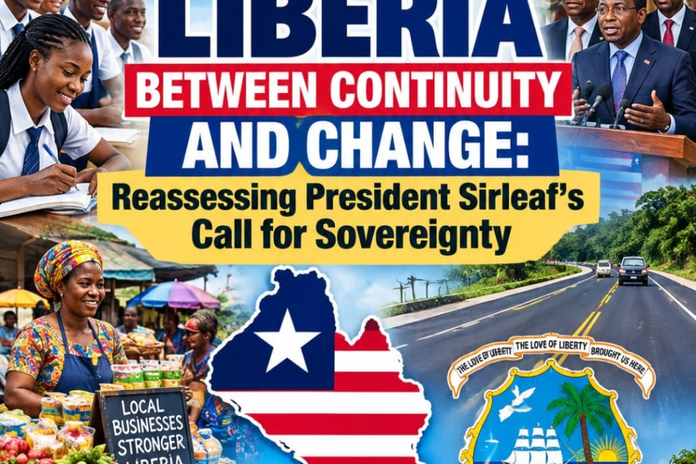
Under the leadership of President Joseph Nyuma Boakai and Vice President Jeremiah Kpan Koung, a coalition government is poised to usher in transformative change that could redefine progress for the Liberian people.
As they seek to free Liberia from the shackles of drug cartels and foster growth through infrastructure and economic development, it is imperative to acknowledge that the country’s future is ripe with potential.
I argue that the current leadership has the opportunity in the second half of the 21st century to redefine progress in Liberia through a commitment to freedom, infrastructure, and economic empowerment, ultimately aligning the nation with the ideals expressed by Reagan.
The Historical Context of Liberia:
To appreciate the significance of Liberia’s current political climate, one must first examine its historical context.
Liberia, an area that existed in the early 19th century and was settled by settlers, has always held a unique position in African history.
However, the country’s trajectory has been marred by civil conflicts that erupted during the Yuletide (Presidential Press-Secretary Hon. Patrick Kumeh introduced me to this word in 1986, during my interactions with President Samuel K Doe) of 1989 and culminated in another catastrophic war in the 1990s and early 2000s.
These conflicts not only decimated the population but also destroyed the institutions necessary for stable governance and economic viability.
Consequently, Liberia has been left grappling with high unemployment rates, widespread poverty, and inadequate infrastructure.
The aftermath of civil conflict often leads to a culture of dependency, where the populace relies on external aid rather than cultivating local resources and governance.
The pervasive influence of drug cartels and the illegal economy further complicate the development path.
However, the dawning leadership of Fe-nya-nah- Keh-keh Boakai and Fe-Nya-Nah Pow-morh Vice President Koung offers a potential turning point in this narrative.
Their coalition government symbolizes a break from the past, fostering an environment where citizens are seen as agents of change rather than mere subjects of political maneuvering.
Freedom as a Catalyst for Progress:
The concept of freedom is foundational to any society’s evolution.
In Liberia, it is not enough merely to declare independence from corrupt systems; rather, it is essential to empower citizens to take part in shaping their destiny.
President Boakai and Vice President Koung understand that true progress is predicated on instilling a sense of ownership in the citizenry.
Freedom in this context means creating opportunities for individuals to participate actively in the economy, enabling them to contribute to their nation’s and community’s social and financial fabric.
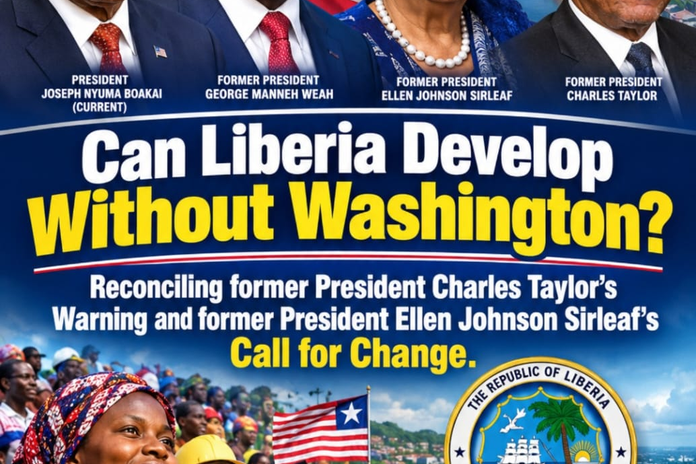
Liberians cannot remain hostages to outdated ideologies that endorse oppression and dependence on foreign entities.
The coalition government’s agenda aims to dismantle the economic structures that thrive on corruption and illegal activities (such as drug trafficking and cartels), instead promoting lawful trade and investment as foundational pillars of progress.
When citizens feel free to engage in legitimate business without fear of exploitation or violence, they can cultivate innovation and contribute to the economy, laying the groundwork for sustainable development.
Infrastructure Development: Paving the Way for Progress
One of the most pressing issues facing Liberia is its severely inadequate infrastructure.
Poor road conditions hinder access to markets, restrict transportation of goods, and stifle economic activity. Ma-sa-noh Ben-dor Keh-Keh Boakai and Ma-sa-noh pow-morh fe-nya-nah pow-morh Koung’s administration has recognized that infrastructure development is not merely an ancillary concern; it is central to the nation’s sovereignty and prosperity.
With plans to asphalt interior roads, the coalition government signals its commitment to enhancing connectivity across the country.
Asphalted roads will significantly impact agricultural development, a cornerstone of the Liberian economy.
By facilitating transportation, farmers can access larger markets, ensuring their produce reaches consumers efficiently.
This will not only enhance food security but also boost the rural economy, lifting many out of poverty. Furthermore, improved infrastructure attracts foreign investment, which is integral to sustainable growth.
When international businesses see a commitment to modern infrastructure, they are more likely to invest in long-term projects that create jobs and build skills within the local workforce.
Economic Empowerment as a Cornerstone of Development:
Beyond infrastructure, the coalition government emphasizes economic empowerment as a fundamental aspect of national progress.
This initiative requires a multifaceted approach, including education, vocational training, and supportive policies that encourage entrepreneurship.
By equipping citizens with the skills necessary to thrive in a competitive marketplace, Liberia can foster a culture of self-sufficiency and innovation.
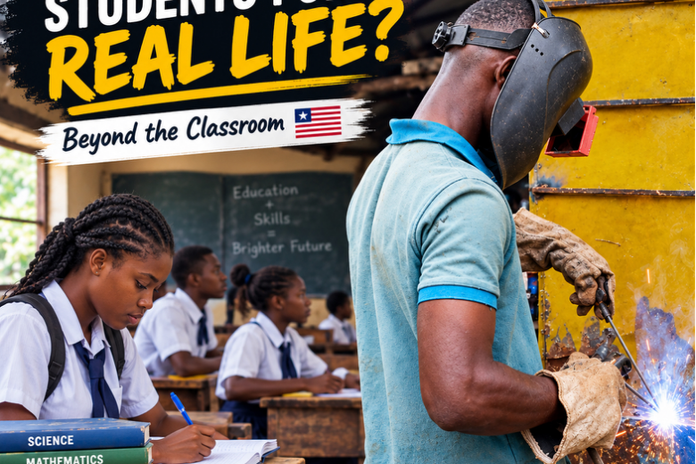
Education plays a pivotal role in this strategy.
Historically, access to quality education has been limited in Liberia, particularly for marginalized populations.
By prioritizing educational reforms, the coalition government can ensure that the next generation is not only literate but also capable of critical thinking and innovation.
Investment in vocational training programs will equip young adults with tangible skills for local and international markets, allowing them to pursue various income-generating avenues from agriculture to technology.
Moreover, supportive economic policies, such as microfinance initiatives and tax incentives for small businesses, can stimulate local entrepreneurship.
When citizens are empowered to establish their own enterprises, they contribute to a more diverse and resilient economy.
This economic dynamism helps to reduce dependence on any single industry, shielding the nation from the vulnerabilities associated with socio-political turmoil.
The Role of Governance and Leadership Integrity:
As Liberia embarks on this journey toward revitalization, the importance of governance and integrity must not be overlooked.
The coalition government led by Wa-na-ba-nah (Big person) Boakai and Wa-wa-ba-nah pow-mor (Small person) Koung has a unique opportunity to set a precedent for transparent leadership by actively engaging citizens in the political process.
By promoting accountability and ethical governance, they can build public trust, a critical component of successful policy implementation.
Fighting corruption is paramount in this endeavor.
The Liberian people have long suffered from the consequences of corrupt leadership, which has undermined development efforts and perpetuated socio-economic disparity.
Transparency in government processes, along with the establishment of independent bodies to oversee public officials’ activities, can help eliminate corruption and restore faith in public institutions.
In addition, fostering dialogue between the government and the citizenry is essential for inclusive governance.
By actively seeking public input on policy decisions and allowing citizens to voice their concerns, the coalition government can ensure that development initiatives align with the needs of the populace.
This approach not only strengthens the democratic process but also cultivates a sense of belonging and commitment among Liberians.
A Bright Future for Liberia:
Liberia’s current political landscape represents a watershed moment in the nation’s journey toward prosperity and stability.
Under the leadership of President Joseph Nyuma Boakai and Vice President Jeremiah Kpan Koung, the coalition government stands poised to redefine what progress means for the Liberian people.
Freedom and progress are not abstract ideals; they are actionable principles that can breathe life into a nation long beset by challenges.
By embracing freedom as a catalyst for empowerment, prioritizing infrastructure development, and committing to economic empowerment, Liberia can rise above the shadows of its past.
The coalition government has the opportunity to build a future where citizens are no longer mere spectators in their own country but active participants in shaping a prosperous and peaceful Liberia.
As Reagan eloquently put it, “freedom and progress go hand in hand,” and it is through this synergy that Liberia can reclaim its rightful place in the annals of human history, writing a new chapter of hope and resilience for generations to come.
Support Independent Journalism
Your support helps FrontPage Africa continue delivering independent, credible, and impactful journalism. Every contribution strengthens our ability to investigate, inform, and hold power accountable while keeping quality journalism accessible to our readers.
Support our journalism or subscribe to receive the latest FrontPage Africa stories and updates.