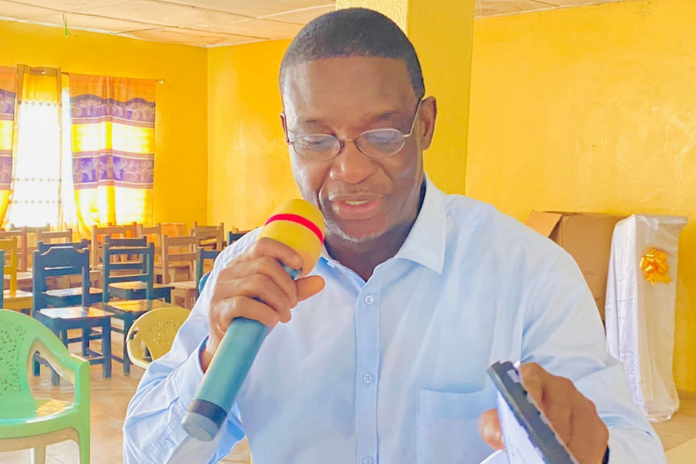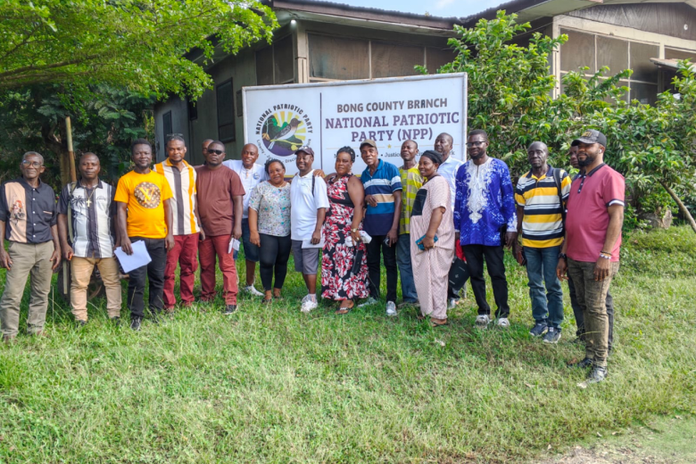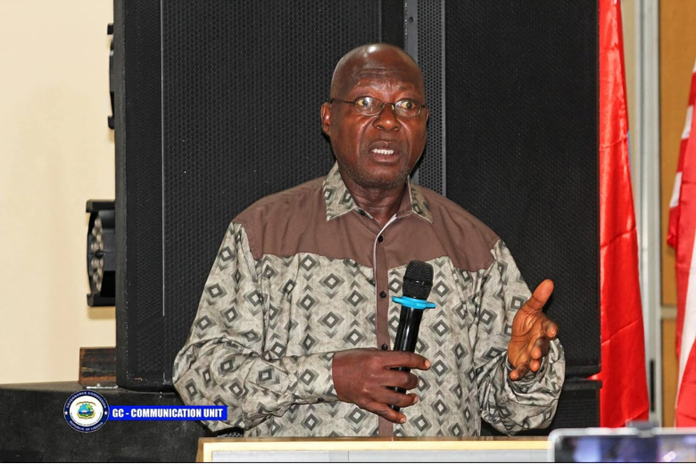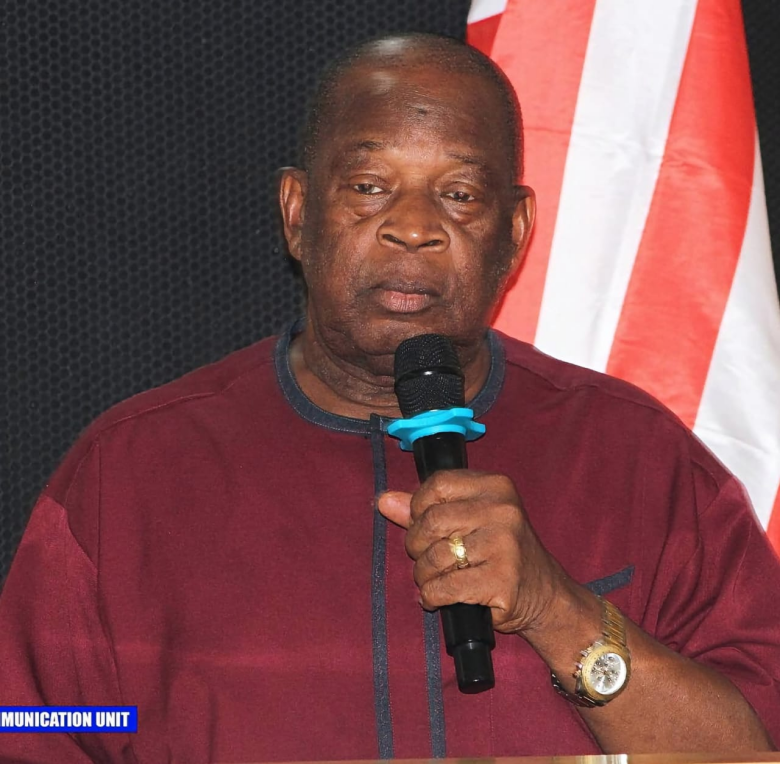
GANTA, Nimba County — A consultant at Liberia’s Ministry of Local Government, Dr. Yarsuo Weh-Dorliae, has called on the country to draft an entirely new constitution rather than continue with piecemeal amendments to the 1986 Constitution.
By Franklin Doloquee
Dr. Weh-Dorliae argued that the current charter entrenches centralized rule, leaves important governance questions unresolved and imposes costly obligations on the state.
He made the call while speaking to FrontPage Africa following three-day National Constitutional Reform Symposium in Ganta City, Nimba County.
The symposium, organized by the Governance Commission and the Law Reform Commission with support from the United Nations Development Programme (UNDP), was held under the theme: “Advancing Constitutional Reform through National Ownership, Inclusion and Democratic Governance.”
A call for a new charter
Dr. Weh-Dorliae said the emerging consensus in Ganta was that Liberia needs a new constitution not merely a series of amendments. He argued that the existing document has contributed to the conditions that fueled Liberia’s civil war because, in his view, it supports a highly centralized system of governance and excludes many Liberians from meaningful participation in public affairs.
“This constitution was crafted under a military government,” he said. “It was not the best constitution in the world. I was there when it was promulgated, and I voted for it. But Liberians voted for it because it was the constitution we had not necessarily the constitution they wanted.”
According to Dr. Weh-Dorliae, Liberians at the time expected that once civilian rule returned, a newly elected government would begin a process to draft a wholly new constitution.
He said that expectation has remained unfulfilled and he expressed hope that the administration of President Joseph Nyuma Boakai and Vice President Jeremiah Koung would create the conditions for that process to finally begin. The 1986 Constitution was adopted during Liberia’s transition from military rule and has remained the country’s supreme law for about four decades.
Earlier reform efforts, including the Constitution Review Committee established in 2012 produced proposals for change, but a comprehensive rewrite has not been completed.
Centralization and local governance
A central theme of Dr. Weh-Dorliae’s argument was decentralization. He said Liberia’s current constitutional framework concentrates too much power at the national level, limiting the ability of local communities to govern themselves and participate in decisions that affect their lives.
He pointed to the establishment of county councils as an important step toward local governance, describing it as the result of years of advocacy and reform.
Liberia’s Local Government Act of 2018 and the operationalization of county councils have created legal pathways for greater citizen participation in local planning, budgeting, and development oversight.
Dr. Weh-Dorliae said the country has moved from earlier decentralization efforts toward a system in which county councils now play a role in local governance.
He contended that constitutional reform should consolidate and strengthen that progress, rather than leave local government dependent on unclear or outdated constitutional provisions.
“Oh yes, I am happy that we are even talking about county councils today,” he said. “We started this struggle 20 years ago. We had a local government act, and now we have county councils in place.”
Cost of the current system
The consultant also criticized provisions of the current Constitution that he said create unnecessary financial burdens.
He cited Article 7, which directs government to manage the economy for the benefit of the people, but said the article does not clearly explain how that objective should be achieved. He similarly questioned the constitutional requirement that chiefs be elected.
According to Dr. Weh-Dorliae, electing one representative in Liberia can require extensive resources, and with more than 5,000 paramount and other chiefs across the country, holding elections for all such positions would be enormously expensive.
“We have more than 5,000 chiefs,” he said. “Do you know what it will cost to elect them? We need a new constitution that can save money and direct resources toward economic development, building our society, and strengthening the capacity of our people to take care of themselves.”
His remarks reflect a broader concern among reform advocates that Liberia’s constitution should clarify the relationship between the central government, local authorities and traditional institutions, while ensuring that public resources are used efficiently.
The symposium’s discussions included decentralization, customary law, democratic governance and constitutional protections for women, young people, persons with disabilities, and Liberians in the diaspora.
Reform recommendations
Participants at the Ganta symposium adopted a Continuity Memorandum on Constitutional Reform on November 6, calling for a comprehensive review and rewriting of the 1986 Constitution.
The memorandum urges the Governance Commission and Law Reform Commission to engage President Boakai and the National Legislature to initiate the appropriate constitutional-review measures.
The stakeholders also called on the Legislature to review Article 91 of the Constitution, which governs constitutional amendments, to determine whether it should be amended to facilitate a broader review and rewriting process.
Under Article 91, constitutional amendments may be proposed either by a two-thirds vote of both houses of the Legislature or through a petition from at least 10,000 citizens that receives the same legislative concurrence.
Any proposed amendment must then be ratified by two-thirds of registered voters in a referendum conducted by the National Elections Commission no sooner than one year after legislative action.
Participants also urged the government to revisit recommendations from the Constitutional Review Committee chaired by former Chief Justice Gloria Musu-Scott, as well as recommendations from a June 2026 public-policy dialogue in Monrovia.
That earlier dialogue brought together the Governance Commission, Law Reform Commission and other stakeholders to examine provisions of the 1986 Constitution that may be outdated, unclear, or in need of reform.
A long-awaited debate
The Ganta meeting has added fresh momentum to a debate that has lingered since Liberia’s return to civilian rule. Advocates of a comprehensive rewrite argue that targeted amendments alone may not address deeper structural issues, including the balance of power between central and local government, the role of traditional authorities, citizen participation, and the protection of marginalized groups.
Critics of a full rewrite, however, may argue that constitutional change is politically sensitive, expensive, and requires broad national consensus. Under the current amendment process, any major revision would require legislative approval and a national referendum, making public education and inclusive consultation essential.
Dr. Weh-Dorliae said he had written extensively over the years about the need for constitutional change and welcomed the fact that the national conversation has now reached the point of discussing county councils and broader constitutional reform.
He said the proposals emerging from Ganta should help set the direction for Liberia’s next constitutional chapter—whether through targeted amendments or a complete rewriting of the nation’s supreme law.
Support Independent Journalism
Your support helps FrontPage Africa continue delivering independent, credible, and impactful journalism. Every contribution strengthens our ability to investigate, inform, and hold power accountable while keeping quality journalism accessible to our readers.
Support our journalism or subscribe to receive the latest FrontPage Africa stories and updates.