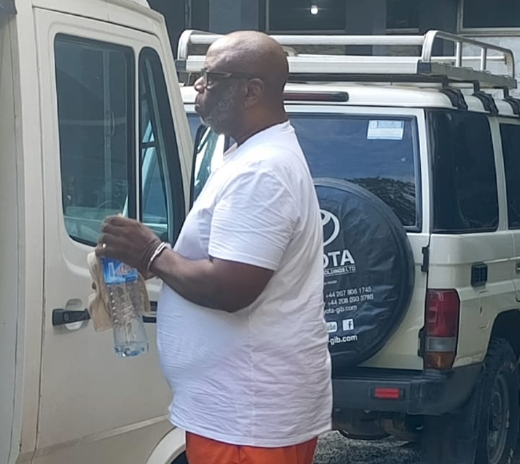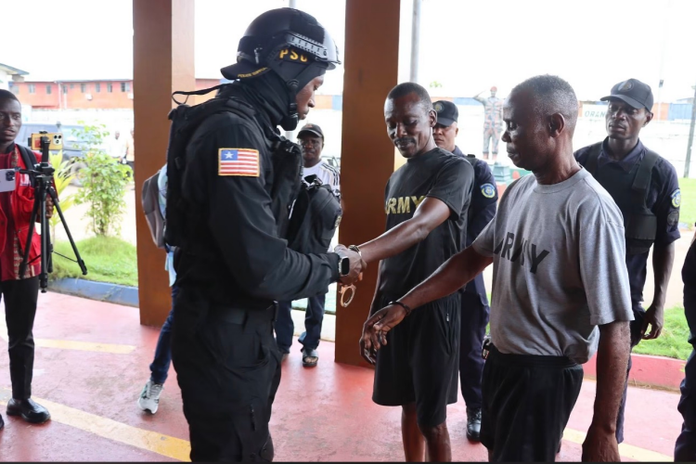
Monrovia-The family of former National Security Agency, NSA, Peter Bon Jallah has appealed to the United States Ambassador to Liberia, seeking international attention to what they described as serious concerns about the fairness of his trial and the handling of evidence that they believe deserved greater judicial scrutiny.
By Willie N. Tokpah
In separate communications dated October 26, Bon Jallah and his wife, Shirley Jallah, called on the U.S. Embassy in Monrovia to take note of the circumstances surrounding his conviction on charges of statutory rape and kidnapping and consider whether appropriate diplomatic or human-rights channels could help bring their concerns to the attention of relevant authorities.
The appeals came three days after Criminal Court ‘E’ at the Temple of Justice found Bon Jallah guilty of statutory rape and kidnapping involving a 16-year-old boy, while acquitting him of gang rape.
The conviction has triggered questions from the defendant’s family, which maintained that important aspects of the defense’s case, including medical findings, forensic evidence, witness testimonies, telephone records and observations relating to the alleged crime scene, were not adequately addressed in the court’s determination.
In an appeal addressed to the U.S. Ambassador, Bon Jallah described the verdict as raising serious questions about the impartial evaluation of evidence and requested that the Embassy consider whether the matter could receive attention through appropriate diplomatic or human-rights mechanisms.
His wife, Shirley Jallah, separately appealed for assistance, questioning the sufficiency of the prosecution’s evidence and whether the defense’s arguments and witnesses received adequate consideration.
Family Turns to Washington for Attention
In his October 26 communication, Bon Jallah specifically requested that the United States Embassy take note of the concerns surrounding his trial and consider whether appropriate channels were available to raise questions about due process and judicial accountability.
He acknowledged that the United States cannot interfere in Liberia’s judicial proceedings but argued that judicial independence should operate alongside transparency, accountability and respect for fundamental rights.
“My intention in raising these concerns is not to undermine the Liberian judicial system but to advocate for fairness, accountability, and public confidence in the administration of justice,” Bon Jallah wrote.
He urged the Embassy to consider directing the concerns to relevant organizations or authorities if direct diplomatic engagement was not possible.
His wife made a similar appeal, saying she was deeply troubled by the circumstances surrounding her husband’s conviction and believed that questions remained about the evidence presented during the trial.
She specifically raised concerns about forensic testing, the handling of evidence and what she described as insufficient consideration of the defense’s arguments.
The family’s appeal effectively seeks to bring the case to the attention of an international diplomatic mission, although the U.S. Embassy has no judicial authority to overturn a Liberian court’s verdict or direct the outcome of an ongoing legal process.
JFK Medical Center Report at the Center of Dispute
One of the principal issues raised by Bon Jallah concerns the medical examination conducted at the John F. Kennedy Medical Center following the alleged incident.
The family argued that the medical report contained findings that deserved closer consideration by the court, particularly regarding the reported absence of certain physical signs associated with the allegations.
Bon Jallah questions whether the court adequately explained how the medical findings were weighed against the complainant’s account and the other evidence presented during the trial.
The defense’s concerns also extended to the forensic evidence and the interpretation of findings presented by the prosecution. According to reporting on the court proceedings, the prosecution presented forensic evidence involving DNA profiles associated with biological material recovered from clothing exhibits.
However, the defense challenged the significance and interpretation of the findings, including their ability to establish when or how the biological material was deposited. The medical and forensic evidence, therefore, became an important part of the competing arguments presented during the trial.
The family maintained that these issues should receive particular attention in any review of the proceedings.
Defense Witnesses and Questions About Their Testimonies
Another important aspect of the family’s appeal concerns the testimonies presented by witnesses called by the defense. According to the court proceedings reported by FrontPage Africa, the prosecution presented 13 regular witnesses and six rebuttal witnesses, while the defense presented eight regular witnesses and three subpoenaed witnesses from the Ministry of Gender, Children and Social Protection, Orange GSM and the John F. Kennedy Medical Center.
The involvement of witnesses from these institutions was significant because their testimonies formed part of the evidentiary record surrounding the medical examination, telephone records and other issues raised during the proceedings.
Bon Jallah’s family believed that the defense presented evidence that challenged important aspects of the prosecution’s allegations and deserved careful consideration.
The family is particularly concerned about whether the court adequately addressed the evidence and explanations offered by the defense witnesses before reaching its conclusions.
The exact substance of each witness’s testimony and how the judge evaluated it will be important in assessing these concerns against the official trial record.
Telephone Records Raise Questions About Defendant’s Whereabouts
Bon Jallah also raised concerns about telephone records that, according to his understanding, did not place him at the alleged crime scene at the relevant time. He believed the records were important to the defense’s effort to establish his whereabouts and should have received detailed consideration in the court’s evaluation of the evidence.
The issue is particularly relevant because telephone records and related technical evidence can assist in examining a person’s movements and communications, although such records do not automatically establish a person’s precise physical location.
The family argues that if the records were properly presented and admitted, their significance should have been clearly addressed in the court’s final reasoning.
Judge’s Visit to Alleged Crime Scene Also Questioned
The family has also questioned the circumstances surrounding a reported visit by the presiding judge to the residence where the alleged incident was said to have occurred.
Bon Jallah maintains that the physical conditions of the residence raised questions about certain descriptions provided during the complainant’s testimony.
He is concerned about whether observations made during the visit were properly documented and considered in the court’s final decision. The family argues that where a judge personally observes the location associated with disputed testimony, any relevant observations must be handled in accordance with applicable evidentiary and judicial procedures.
They are seeking clarification on whether the reported discrepancies were adequately addressed in the proceedings.
Wife Questions Sufficiency of Prosecution’s Case
In her separate appeal, Shirley Jallah questioned whether the prosecution sufficiently established her husband’s guilt beyond a reasonable doubt. She expressed concern that the defense’s arguments and evidence were not given adequate consideration and raised questions about the fairness and impartiality of the proceedings.
She also asked the U.S. Embassy to consider whether any appropriate assistance or guidance could be made available within the limits of its diplomatic mandate.
Her appeal emphasized that the family was not asking the United States to interfere in Liberia’s judicial system but wanted concerns about due process and fundamental human rights to receive appropriate attention.
Embassy Appeal Puts Due Process in Focus
The appeal to the United States Embassy places the case within a broader discussion about judicial accountability, due process, and public confidence in Liberia’s justice system.
Although the U.S. Embassy cannot substitute itself for Liberia’s courts, the family is asking the diplomatic mission to consider whether concerns involving the fairness of the proceedings may appropriately be brought to the attention of relevant human-rights institutions or other competent authorities.
The appeal also raises an important question about the availability of independent legal remedies when defendants believe that material evidence or defense arguments were not adequately considered.
For Bon Jallah and his family, the immediate concern is whether the verdict adequately reflects the totality of the evidence presented during the trial. Their request to the U.S. Ambassador is therefore not simply an appeal for diplomatic sympathy but a call for attention to questions they believe should be examined through established legal and accountability mechanisms.
Support Independent Journalism
Your support helps FrontPage Africa continue delivering independent, credible, and impactful journalism. Every contribution strengthens our ability to investigate, inform, and hold power accountable while keeping quality journalism accessible to our readers.
Support our journalism or subscribe to receive the latest FrontPage Africa stories and updates.