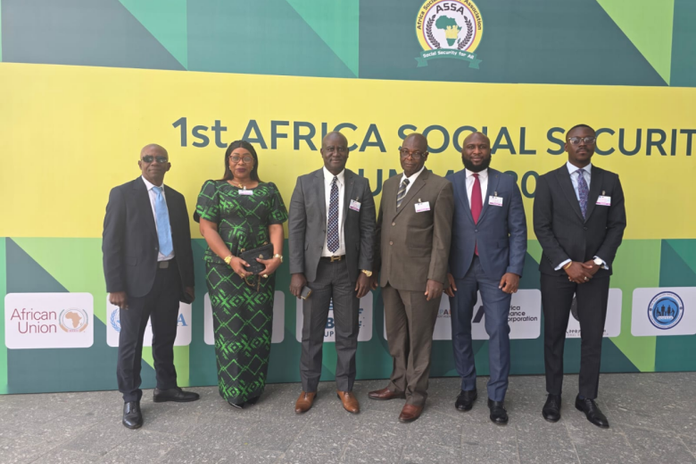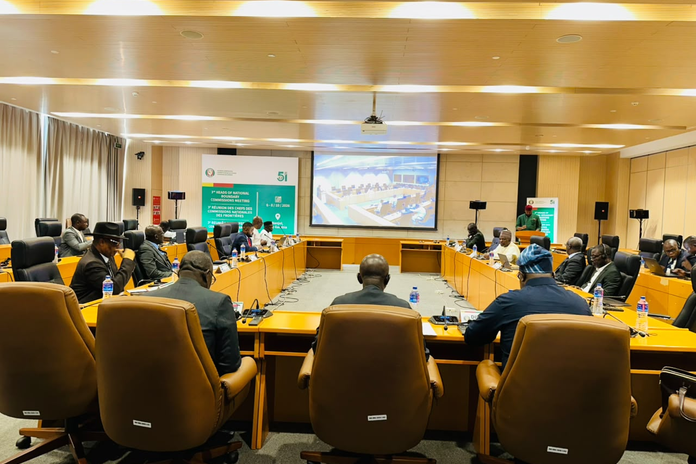
Monrovia – A delegation from the Economic Community of West African States Parliament has ended a four-day oversight mission to Liberia with a call for the expansion of the Interconnected System for the Management of Goods in Transit (SIGMAT) across West Africa.
By Emmanuel Weedee-Conway
Members of ECOWAS parliamentary delegation described the digital customs platform as a critical tool for facilitating trade, improving transparency, and reducing delays in the movement of goods.
During their visit here, the delegation assessed the implementation of SIGMAT, examined its benefits, and identified challenges affecting its operations, including poor road infrastructure, limited connectivity, and the need for additional training.
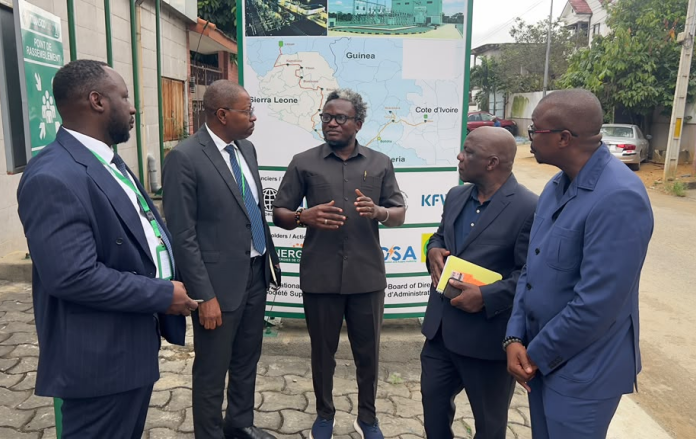
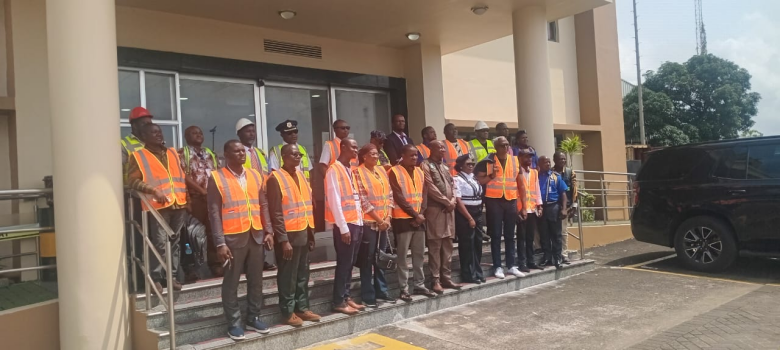
Speaking during a media stakeout on Thursday, October 29, at the Liberia Revenue Authority’s (LRA) designated inspection site at the National Port Authority, Amdiatta Diaby of Senegal, head of the delegation and chair of the ECOWAS Parliament’s Committee on Trade, Customs and Free Movement, explained that the mission had provided valuable insights into the system’s performance in Liberia.
Diaby asserted that the delegation had observed the advantages of SIGMAT over the traditional manual customs system and believed the platform should be extended throughout the ECOWAS region.
“We have seen that SIGMAT has really excelled in the sector of customs,” Diaby said, adding that the mission also helped the delegation identify challenges confronting the system on the ground.
According to him, SIGMAT accelerates customs operations, improves the tracking of goods, and provides better access to information about shipments in transit. However, he stressed that road infrastructure, connectivity, and training remain key obstacles that must be addressed to ensure the system operates efficiently across the region.
Delegation Commends Liberia’s Progress
Seno Soklingi of Togo, vice chair of the delegation, also commended Liberia for progressively implementing the digital platform, noting that the country could benefit from the experiences of other ECOWAS member states where the system is more fully integrated.
Soklingi said the delegation’s discussions with Liberian authorities had been productive and emphasized the need for countries across the subregion to move away from manual customs procedures.
He cited Togo and Benin as examples of countries where SIGMAT has been integrated into customs operations, saying their experiences could help Liberia strengthen its implementation.
“We congratulate the authorities of Liberia to continue in this line to improve the system,” Soklingi said, encouraging other countries, including Sierra Leone and Guinea, to advance implementation.
He further urged the ECOWAS Parliament to consider the delegation’s recommendations and support efforts to extend the system to more member states.
Gambian Lawmaker Calls for Broader Regional Coverage
Maimuna Cessay of The Gambia, a member of the ECOWAS Parliament’s Committee on Social Affairs, Gender, Women Empowerment and Persons with Disabilities, called for the system to be expanded beyond the countries currently implementing it.
Cessay explained that the oversight mission had exposed the delegation to practical experiences and challenges that were not fully understood before the visit. She stressed that stronger regional cooperation and effective monitoring were necessary to improve customs operations and address potential revenue leakages.
She also highlighted the importance of inspection scanners and other technological tools in strengthening oversight and preventing individuals from exploiting weaknesses in customs procedures.
Cessay expressed concern that SIGMAT’s implementation remained limited to a number of countries, including Liberia, Sierra Leone, Côte d’Ivoire, and Guinea, and called for its expansion to The Gambia, Senegal, Burkina Faso, and Guinea-Bissau.
She further urged ECOWAS to consider air freight as part of broader efforts to improve the movement of goods and people across West Africa.
According to Cessay, expanding the system would strengthen regional trade, improve customs efficiency, and support the broader goal of economic integration.
LRA Identifies Digitalization as Tool Against Corruption
For his part, Atty. William L. Buku, Assistant Commissioner for Customs Policy at the Liberia Revenue Authority, said the ECOWAS Parliament’s visit was part of its oversight responsibility to assess the implementation of regional programs developed by the ECOWAS Commission.
Buku explained that SIGMAT was designed to harmonize customs and transit procedures among member states, allowing authorities in different countries to exchange information and coordinate the movement of goods across borders.
He described the platform as an important component of regional economic integration, noting that international transit operations require cooperation among multiple countries rather than isolated national systems.
“Digitalization is an enemy of corruption,” Buku told reporters, arguing that the system promotes transparency, improves the accuracy of data sharing, and reduces unnecessary human intervention in customs procedures.
He added that faster processing and clearance of goods could help reduce transportation costs for traders, as prolonged delays often increase the cost of moving goods across borders.
Buku said the system was intended to make transit operations more efficient by reducing delays and strengthening coordination among customs authorities.
Poor Roads Remain a Major Challenge
Despite the progress reported by the delegation, Buku acknowledged that inadequate road infrastructure and weak connectivity remain significant challenges to the efficient movement of goods across the subregion.
He noted the delegation had heard from operators who reported that journeys that should take less than two days between Abidjan and Danané, Côte d’Ivoire, sometimes take three days or as long as two weeks because of transportation difficulties.
Buku also referenced complaints about goods remaining in Abidjan for extended periods, with some operators reportedly saying shipments could be delayed for as long as a month.
He maintained that improved road connectivity would complement the digital customs platform by enabling goods to move more quickly after clearance and transit processing.
On the overall, delegation expressed appreciation to the Liberian government and the LRA for their cooperation during the mission, while encouraging continued investment in digital customs systems and stronger regional coordination to facilitate trade and advance economic integration across West Africa.
Support Independent Journalism
Your support helps FrontPage Africa continue delivering independent, credible, and impactful journalism. Every contribution strengthens our ability to investigate, inform, and hold power accountable while keeping quality journalism accessible to our readers.
Support our journalism or subscribe to receive the latest FrontPage Africa stories and updates.