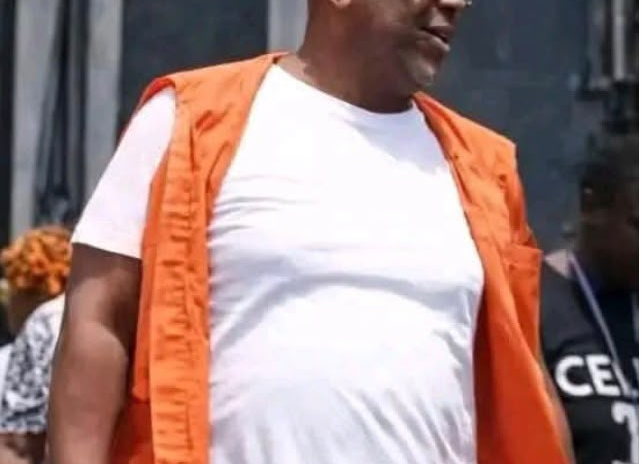
MONROVIA — Liberia’s Supreme Court will hear arguments Monday in the government’s appeal of a February ruling that ordered President Joseph Nyuma Boakai’s administration to reinstate — or fully compensate — Dr. Dougbeh Christopher Nyan, the biomedical scientist it removed a year ago as head of the country’s national public health agency.
By Rodney D. Sieh
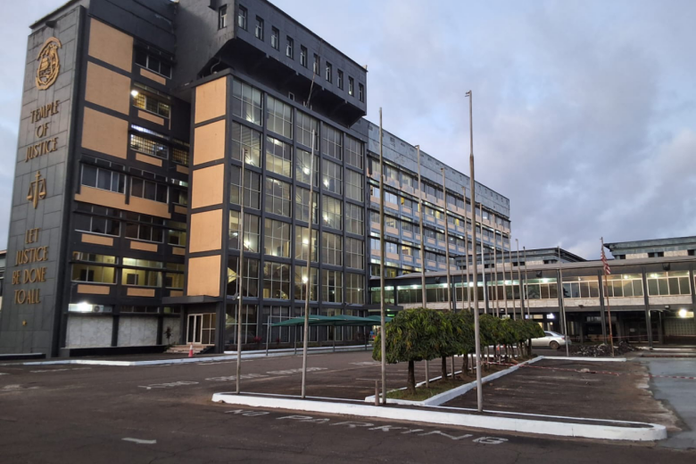
A notice of assignment issued Friday, Oct. 23, under the hand and seal of the court’s clerk, Cllr. Sam Mamulu, directs the court’s marshal, Brig. Gen. Emmanuel T. Nyenkan, to notify both parties that the full bench will hear argument on Oct. 26, 2026, at 11 a.m. at the Temple of Justice in Monrovia. Handwritten acknowledgments on the notice show it was received the same afternoon.
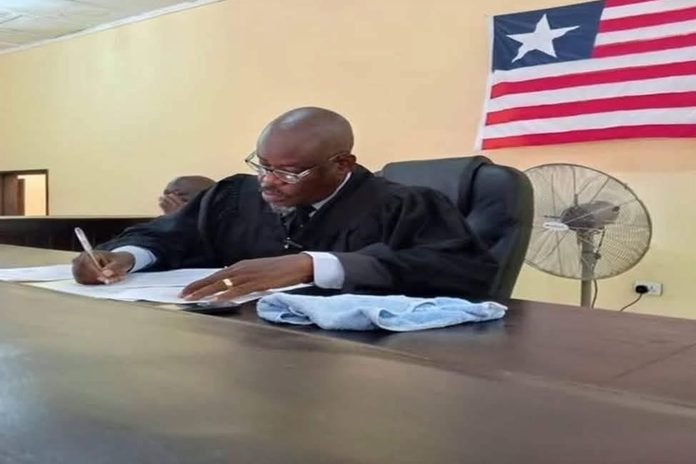
The case, styled The Executive Branch of Government v. Dr. Dougbeh Christopher Nyan, comes before the full court as an appeal from Nyan’s successful petition for a writ of prohibition. People familiar with the case confirmed to FrontPageAfrica that the Executive filed the appeal against the Feb. 16, 2026, ruling of Associate Justice Jamesetta Howard Wolokolie, who heard the matter sitting alone as Justice in Chambers.
The government is represented by the Ministry of Justice. Nyan is represented by the law offices of former Associate Justice Kabineh Ja’neh and Gongloe & Associates, the firm of prominent human rights lawyer Cllr. Tiawan Saye Gongloe.
The notice lists five justices: Chief Justice Yamie Quiqui Gbeisay Sr. and Associate Justices Wolokolie, Yussif D. Kaba, Ceaineh D. Clinton Johnson and Boakai N. Kanneh. Because Wolokolie authored the ruling under review, it was not immediately clear whether she would take part in deliberations.
A year-long standoff
The appeal is the latest turn in a dispute that has become a test of how far a Liberian president can go in removing officials whose terms are protected by law.
The National Public Health Institute of Liberia (NPHIL) was created by an Act of the Legislature in 2016 in the aftermath of the 2014–2016 West African Ebola epidemic, which killed more than 4,800 people in Liberia.
The institute leads the country’s disease surveillance, laboratory and outbreak-response work. Under the NPHIL Act, its Director General serves a fixed five-year term and may be removed only for specified causes — such as gross inefficiency or acts undesirable to the public interest — and only after due process.
Boakai appointed Nyan, a U.S.-trained scientist who holds several American patents for rapid diagnostic technology, on Aug. 1, 2024. During his tenure the institute led responses to mpox, Lassa fever and measles outbreaks, and was designated by the Africa Centres for Disease Control and Prevention as a regional center of excellence for national public health institute development.
On Oct. 15, 2025, Boakai dismissed Nyan and his deputy, Dr. Adams K. Lincoln, and named NPHIL board member Dr. Sia Wata Camanor as interim director general. The decision followed an 11-count resolution from the NPHIL Board of Directors, chaired by Dr. Stephen B. Kennedy, accusing Nyan of bypassing statutory oversight, making unilateral decisions, failing to involve the board in key matters and traveling abroad without informing the board.
The dismissal came after months of publicly aired friction between Nyan and Health Minister Louise Kpoto, whom he accused of interfering with the institute’s independence. Nyan rejected the board’s allegations, saying he was given about 48 hours to respond and was removed on the same day he submitted a detailed written rebuttal. He also accused the board of holding meetings that excluded him — though the Director General serves as the board’s secretary — while still claiming sitting fees. No Director General has completed a full term since the institute was established.
The Chambers ruling
Nyan petitioned the Supreme Court on Oct. 23, 2025, arguing that he had been neither charged with nor investigated for any wrongdoing. Justice Wolokolie held a conference on Nov. 13, 2025, and urged the two sides to negotiate a remedy. When no settlement emerged, she ordered the government to show cause, and heard arguments on Jan. 15, 2026. Government lawyers did not file written briefs, relying instead on the board resolution and affidavits from Minister Kpoto and board chair Kennedy.
In her Feb. 16 ruling, Wolokolie granted a peremptory writ of prohibition, finding that the Executive and the NPHIL Board had failed to follow the investigation and due-process requirements of the NPHIL Act and the Constitution. Relying on the Supreme Court’s 2024 opinion in Yealue et al. v. Executive Branch of Government — which held that tenured officials cannot be removed without investigation and a proper hearing — she ordered that Nyan be reinstated or paid all salaries, benefits and emoluments for the remainder of his term, which runs to 2029. The ruling also barred Camanor from performing the functions of the office.
Appeal and stay
Camanor has remained in charge of the institute. In a March 6 statement, the Ministry of Justice said the Executive had exercised its right to appeal the Chambers decision to the full bench, and that under Supreme Court practice the appeal automatically stays enforcement of the ruling until the full court decides.
Nyan’s supporters point to a General Auditing Commission review that reportedly rated NPHIL’s performance under his leadership at 81 percent, compared with 61 percent under the previous administration, and to the institute’s reported receipt in April of a government performance excellence award for 2025.
What is at stake
The full bench may affirm, modify or reverse the Chamber’s ruling. Legal analysts say the decision is likely to shape how Liberian governments treat officials in tenured posts across autonomous agencies — a recurring source of litigation since the Yealue decision. A ruling in Nyan’s favor would leave the government a choice between restoring him to office and paying out nearly three years of salary and benefits; a ruling for the Executive would strengthen the presidency’s hand in removing statutory officeholders on the recommendation of their boards.
The case is also being watched by international health partners who fund much of Liberia’s disease-surveillance system, and who have long pressed for stable, independent leadership at the institute created to prevent a repeat of the Ebola catastrophe.
Monday’s hearing is scheduled for 11 a.m.
Support Independent Journalism
Your support helps FrontPage Africa continue delivering independent, credible, and impactful journalism. Every contribution strengthens our ability to investigate, inform, and hold power accountable while keeping quality journalism accessible to our readers.
Support our journalism or subscribe to receive the latest FrontPage Africa stories and updates.