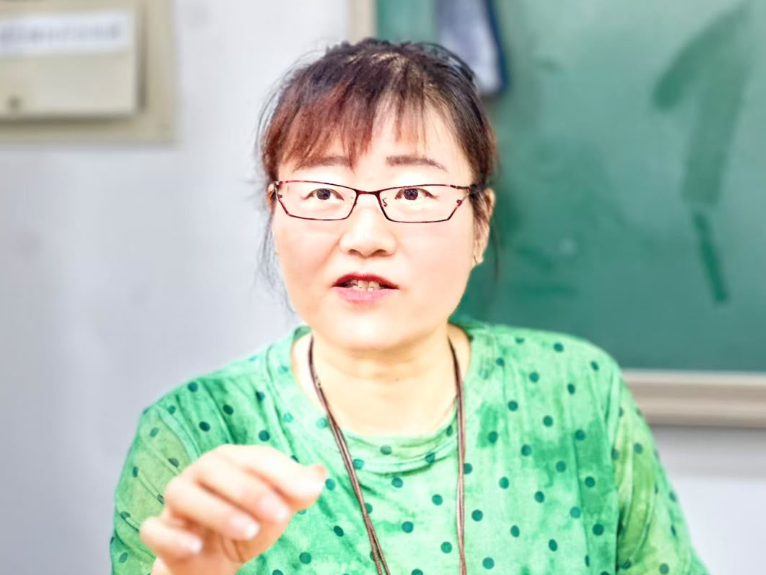
The Belt and Road Initiative (BRI) could accelerate the development of infrastructure, industrial parks and industrialization across Africa, according to Dr. Wenping, Research Project Director at the Institute of West-Asian and African Studies of the Chinese Academy of Social Sciences.
By J.H. Webster Clayeh [email protected]
They are asking for time, flexibility and a system that allows the opportunity they have been given to grow.
Speaking to African journalists after delivering an extensive lecture series on the Belt and Road Initiative, Dr. Wenping said the BRI is moving in the right direction.
She spoke during a session with participants of the China International Press Communication Center Second Session at the Teaching Building on the campus of Renmin University of China in Beijing.
The BRI, which has been in existence for more than 13 years, is an economic and infrastructure initiative designed to strengthen China’s connectivity and cooperation with countries across Asia, Europe, Africa and beyond.
However, questions remain over the extent to which the African continent is benefiting from the initiative, particularly in moving from the export of raw commodities towards local processing and the production of finished goods.
The Silk Road Economic Belt is currently facilitating the movement of goods between Asia, Africa and Europe.
A key question is how the BRI can help African countries move beyond exporting raw materials and develop local processing industries capable of producing and exporting finished goods.
Dr. Wenping stated that several elements need to come together to enable resource-rich countries to move up the value chain.
“One is technical know-how. All those resources underground, first thing you got to know where are they, then you got to know how to dig them out, and then you got to know how to make the value added on them and so Africa is now moving toward these directions. So with these transitions, of course you need outside support and now China is doing it,” Dr. Wenping intimated.
The Research Project Director added: “We (China) support investments, we support technical know-how, we even give financial support and so with these combining together Africa can gradually moves up.”
The Possibility of Africa’s Landlocked Countries
The BRI consists mainly of the Silk Road Economic Belt, which promotes land-based connections across Asia towards Europe, and the 21st-Century Maritime Silk Road, which focuses on sea routes and ports.
For Africa’s landlocked countries, however, access to international markets remains a major connectivity challenge.
Dr. Wenping said landlocked countries in Africa are among those that most need improved connectivity with the outside world.
“Those labdlock countries are no longer being locked completely, they have access link with outside to other countries and eventually link to the international market and that is mostly important for building infrastructure connectivity like the railway express way and make the market,” she said.
Professor Dr. Wenping added: “Now Africa is saying that building a single market, make the economy an integrated one, Africa Union is moving forward with great efforts with its 2063 Agenda and now China is offering our support of making this one single market from its infrastructural connectivity.”
The Belt and Road Initiative was launched by Chinese President Xi Jinping in 2013.
It seeks to promote infrastructure development, trade, investment, financial cooperation and people-to-people exchanges among participating countries.
BRI projects have included railways, roads, ports, pipelines, power infrastructure and telecommunications networks.
The initiative has created opportunities for improved connectivity and trade, particularly in countries with significant infrastructure needs.
At the same time, the World Bank has highlighted issues that require careful management, including debt sustainability, transparency, environmental and social impacts, and governance risks.
Support Independent Journalism
Your support helps FrontPage Africa continue delivering independent, credible, and impactful journalism. Every contribution strengthens our ability to investigate, inform, and hold power accountable while keeping quality journalism accessible to our readers.
Support our journalism or subscribe to receive the latest FrontPage Africa stories and updates.